
Tea Knowledge
Yingxiang, Cuiyu or Jinxuan? A Taiwanese Oolong Comparison
Three tea names need not become three exam questions. Choose an aroma that interests you, add one cup for comparison, and let a favourite find its place.
A Taiwanese oolong comparison starts with preferred flavour and the actual processing style. Look at Yingxiang for a floral-fruit direction, Cuiyu for a brighter floral comparison, and the finished Jinxuan description for softer sugar-sweet or roasted aromas. All three are cultivar names. Origin, harvest, oxidation, roasting and brewing help shape the finished cup, so there is room for more than one good choice.
When several tea descriptions sound fragrant, it is easy to end up asking, “So which cup should I begin with?” A small comparison table and three practical questions can help. There is no need to memorise parentage first. Our Taiwanese tea starter-set guide builds a broader flavour set; this article focuses on three names often found together on a buying list.
Taiwanese oolong comparison: match each name and number
Keep one line handy: Yingxiang is TTES No. 20, Cuiyu is TTES No. 13, and Jinxuan is TTES No. 12. Taiwan’s Tea and Beverage Research Station lists them among cultivars suited to partially oxidised tea, and notes high aroma in Yingxiang and Cuiyu. Jinxuan is suited to more than one tea category. Cultivar identifies the plant, while oolong describes a processing direction. A higher number has not quietly won a quality contest.
| Name | Cultivar | Read alongside it | Background |
|---|---|---|---|
| Yingxiang 迎香 | TTES No. 20 | Origin, harvest, floral and roasting notes | Yingxiang’s cultivar story |
| Cuiyu 翠玉 | TTES No. 13 | Lot and processing; harvest for winter tea | Cuiyu cultivar guide |
| Jinxuan 金萱 | TTES No. 12 | The finished tea’s milky, sugar or roast notes | Jinxuan and milk aroma |
Cuiyu is often sold as Green Jade. If an English label gives only “Jade,” ask for the Chinese name and cultivar number. Cuiyu, No. 13, differs from Biyu, No. 19. Names and numbers provide a firmer starting point for identity than the colour of one cup.
Why can three fragrant oolongs still taste different?
Floral oolong is an inviting starting point, but selection needs the finished tea’s description too. Different teas from one cultivar can follow a lightly roasted floral direction or develop warmer aromas with more roasting. Guessing today’s tea from its cultivar alone is rather like guessing a friend’s outfit from their surname: an interesting clue, with the useful details still missing.
ABoxTik’s current Classic Tea description gives Yingxiang orchid and floral-fruit aromas, Cuiyu high floral aromas, and Jinxuan roasted-sugar and cane-sweet aromas. The buying directions below use those product descriptions. Another producer or lot may offer a different style under the same cultivar name. The guides to oolong oxidation and roasting and roasted-tea aroma help keep plant identity and processing style in separate columns.
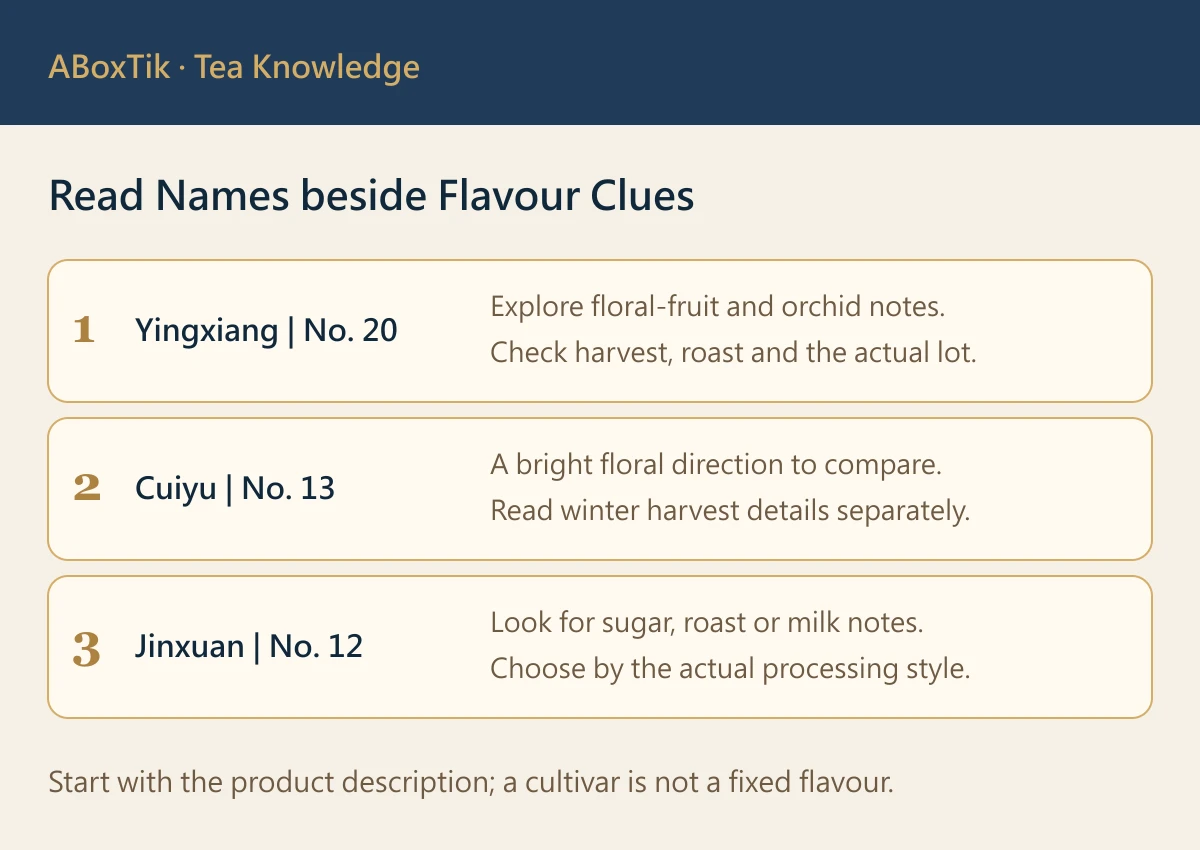
Three questions to choose a first tea and a comparison
First: which aroma sounds appealing today? A suggests floral-fruit and orchid notes, beginning with Yingxiang. B suggests a clearer floral direction, beginning with Cuiyu. C suggests roasted-sugar aromas, checking the Jinxuan described here. If all three appeal, start with two distinct directions and save the other for another day. Both the table and the palate can appreciate a little space.
Second: is aroma or drinking strength the priority? Read aroma notes when fragrance matters most, and check leaf quantity, water volume and time when a comfortable cup matters most. High aroma does not automatically mean strong liquor. Keep a line for the nose and a line for the mouth, with the aroma observation guide as a little help if needed.
Third: a mug or an established tea setup? Portioned tea bags suit a simple cup; loose leaf offers more adjustment for someone used to measuring and decanting. The whole-leaf and broken-leaf guide explores different uses. Choosing one tea need not require outfitting the kitchen with a new set of equipment.
A buying table for these three tea directions
| Preference | Start with | A comparison | Ask before buying |
|---|---|---|---|
| Floral-fruit and orchid aromas | Yingxiang | Cuiyu for another floral style | Harvest, roast and actual flavour notes |
| Bright floral aromas | Cuiyu | Jinxuan for a sugar-sweet contrast | Is this a winter lot? How is it processed? |
| Warm roasted-sugar aromas | Jinxuan described in that style | Yingxiang for a clearer aromatic contrast | Is it roasted? Does it emphasise milk aroma? |
| One tea for everyday drinking | A familiar flavour and format | A modest quantity first | Total quantity and brewing guidance |
The table helps shorten a list while leaving preference open. Read the current specifications for Yingxiang oolong, Cuiyu oolong and Jinxuan oolong. Compare prices alongside total tea quantity, portions and format. The cultivar number cannot settle that decision.
Yingxiang and Cuiyu make a useful conversation about floral differences. Yingxiang and the Jinxuan described here offer a floral-versus-sugar direction to explore. These are editorial tasting arrangements, with no need for a winner. If both cups are enjoyable, keep both answers and see which one fits an ordinary afternoon.
Must Jinxuan be milky, and must Cuiyu be winter tea?
Clarify these expectations before ordering. Taiwan’s Ministry of Agriculture explains that Jinxuan’s natural milk aroma depends on good fresh leaf and suitable processing, and that processing changes aroma. It suggests smelling the infused leaf after decanting to notice that aroma more clearly than in dry tea alone. If milk aroma is the aim, ask about the actual finished tea rather than relying on its cultivar name.
Cuiyu identifies the cultivar, while a winter lot describes harvest information. Ask both questions: “Is this Cuiyu, and which harvest and processing style does this lot have?” Include the winter description in the comparison when it is actually provided. Our Taiwan tea regions guide offers origin context, and the rare-tea buying guide considers special lots.
There is no need to assign a fixed liquor colour to each cultivar. Record colour as part of the tasting, while using source information for identity. Then, when another packet tastes different, it is easier to ask whether the cultivar, harvest or roast has changed.
A two-cup comparison with a repeatable beginning
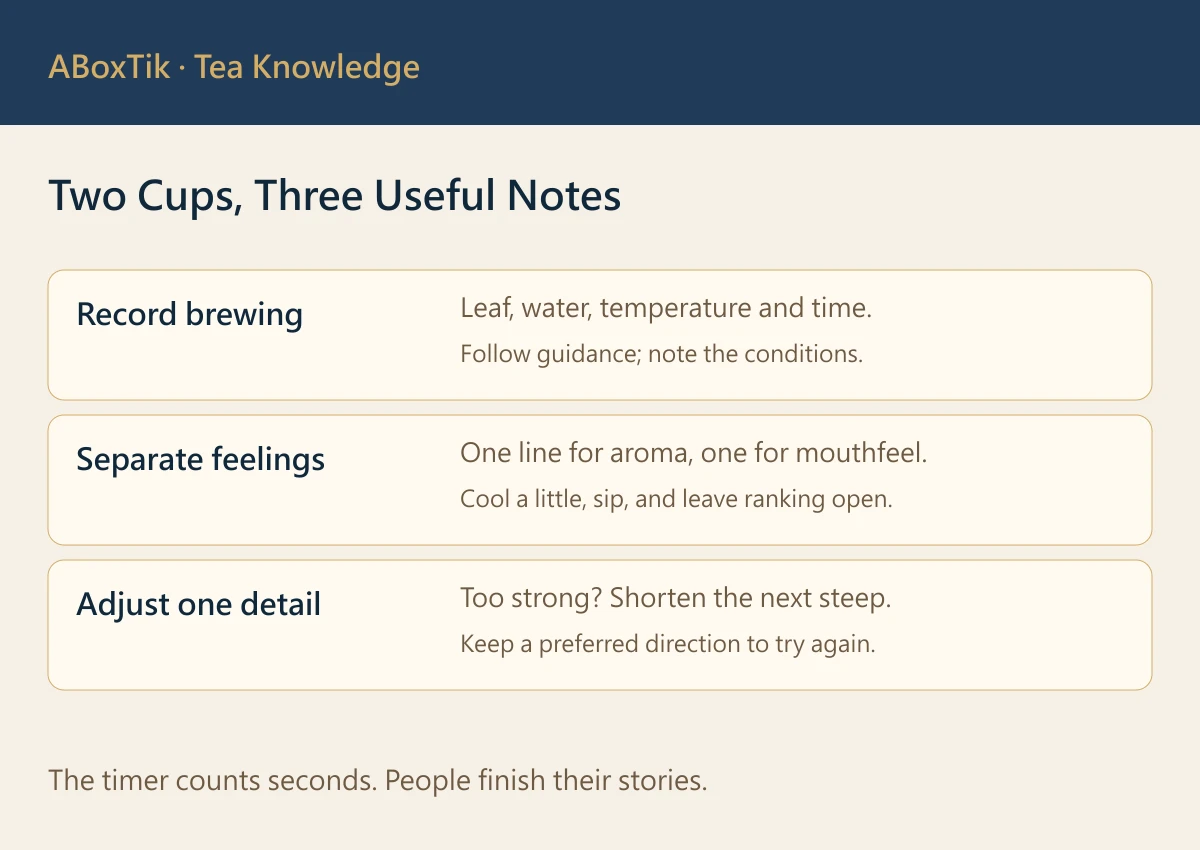
Start with two teas. For the first round, follow each packet’s instructions, use the same water and similar vessel capacities, and record leaf quantity, water volume, temperature and time. If instructions differ, follow them separately and label the notes “each tea’s recommended brew.” For a later comparison under identical conditions, choose teas with compatible guidance and hold those variables steady. The oolong water-temperature guide and steeping-time guide provide context.
- Label cups A and B. Keep names and brewing details alongside them.
- Separate tea and water on time. Remove the bags or decant, so conversation does not keep strengthening the cups.
- Let them cool a little and take small sips. Notice aroma and mouthfeel separately; use water and a short pause between cups.
- Change one detail next time. Shorten the infusion if too strong, and keep a repeatable starting point.
The timer can count seconds while the people finish their stories. Begin without sugar or milk to meet the tea itself. Adjust an uncomfortable strength before making a wider judgment. When a friend favours the other cup, asking whether they enjoy its aroma or body can keep the comparison a conversation rather than a debate.
One tea or a box? Count what will actually be used
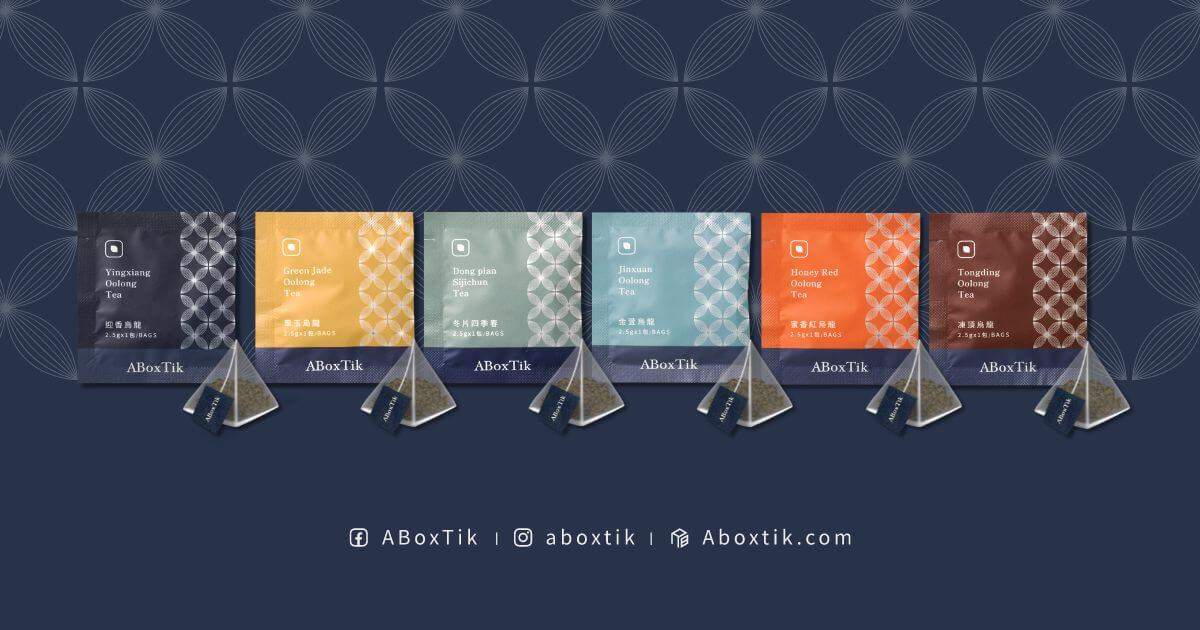
A single tea suits a clear everyday preference; two suit an initial comparison; a larger set suits a household that already enjoys exploring. ABoxTik’s four-selection Classic Taiwanese Tea box currently lists ten bags per selection, forty in total. Four selections means four tea boxes, rather than four individual tasting bags. Check the total before deciding whether it suits drinking pace and budget.
For a gift, begin with the recipient’s usual cup and familiar tastes. The gift-box selection guide adds the other practical details. For yourself, keep a familiar tea and add one you would like to know. Bring preferred aromas, equipment and quantity when talking with ABoxTik; specialist vocabulary is optional.
Follow ABoxTik | Floral or sugar-sweet: either can be a good beginning for the next cup.
Let this Taiwanese oolong comparison serve your next choice
A useful Taiwanese oolong comparison leaves a flavour to explore and a few questions to ask. Match names and numbers, read processing and flavour information, then keep a small two-cup comparison. Knowledge can help with the choice without taking over the tea table. Explore Taiwanese tea’s origins and craft for a broader picture, and confirm current specifications and availability before ordering.
Related recommendations
- Four-selection Classic Taiwanese Tea: check the choices and total quantity when exploring several teas.
- Taiwanese tea starter-set guide: expand towards roasted and honey-fruit directions.
- Tea aroma guide: keep a clearer note of the aromas enjoyed.
Sources
- Tea and Beverage Research Station: cultivars suited to partially oxidised tea (checked October 13, 2026)
- Research Station: TTES No. 12 (checked October 13, 2026)
- Ministry of Agriculture: Jinxuan aroma and infused-leaf observation (checked October 13, 2026)