
Tea Knowledge
How to Read Taiwan Tea Grades: Competition, Premium and Everyday Tea
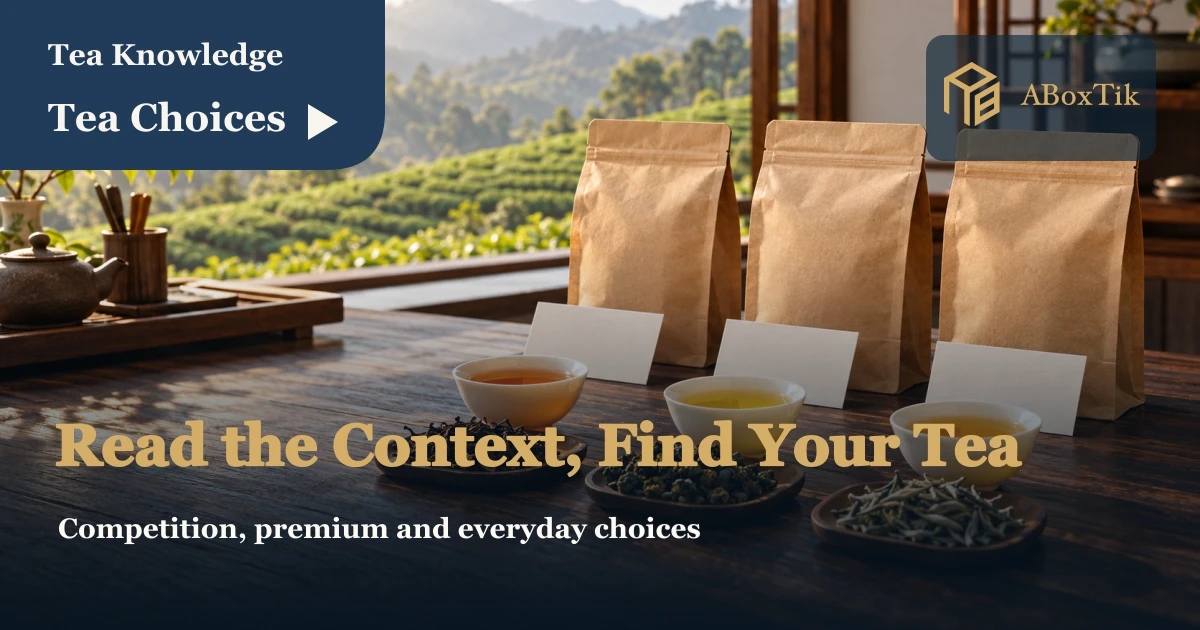
A tea grade is information worth following up, not a report card your palate has to agree with immediately.
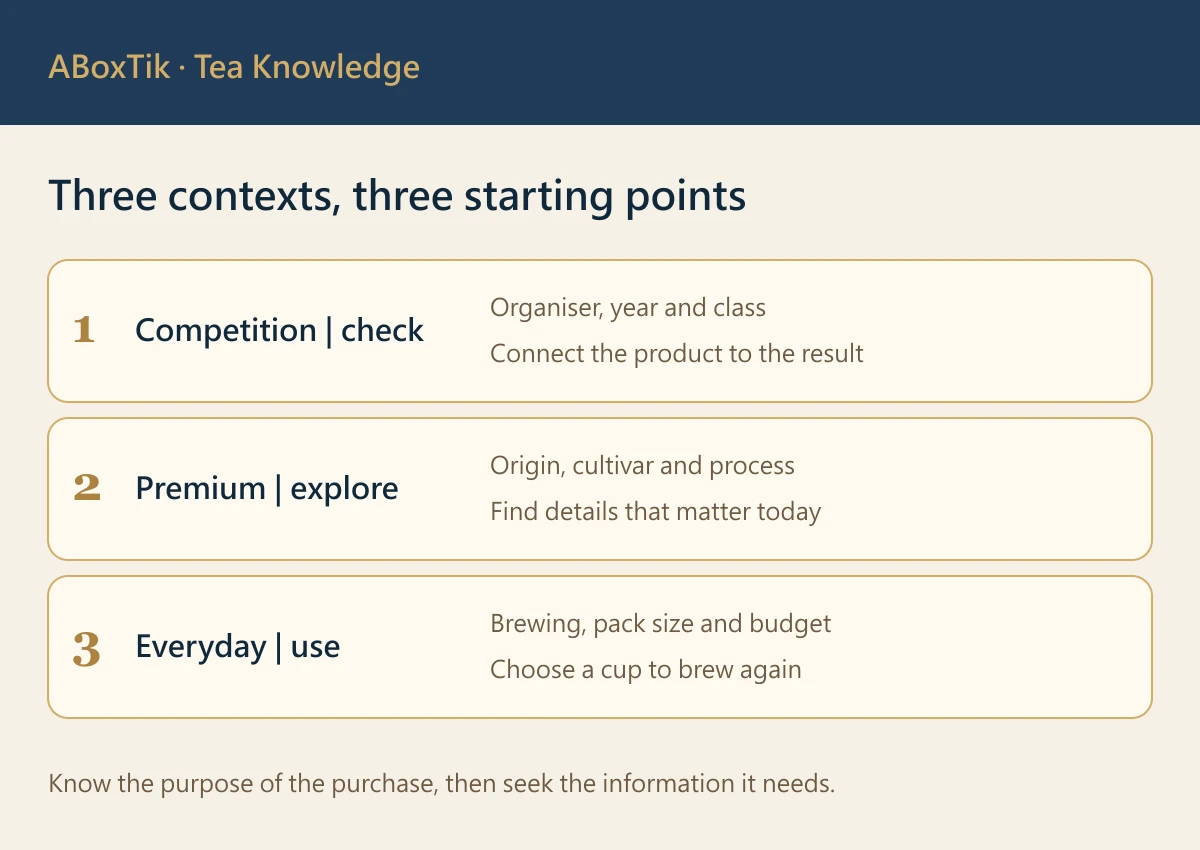
To read Taiwan tea grades, first separate competition results, premium positioning and everyday drinking choices. For competition tea, look for organiser, year and class. For premium tea, examine the origin and making details supplied. For everyday tea, return to brewing, availability and budget. Identify the question before asking a label to answer it.
Awards, selected leaves and floral notes can arrive together on a packet, as if the tea has submitted a rather elaborate CV. Start with a manageable reading order. The formal system has its own TAGs Taiwan tea guide; this article helps place buying information beside the cup you actually want.
Taiwan tea grades begin with three buying contexts
For competition tea, look for the event, organiser, year, class and result, then establish how the offered product connects to that result. The same award word used in different events belongs to different information. A medal image is a useful starting point for questions, rather than the end of the discussion about every tea the seller offers.
Premium can first be read as positioning. Ask what details support it: region, cultivar, harvest, maker, process, batch or selection method. A phrase creates interest; specific information supports a decision. Taiwan champion tea and Taiwan tea regions offer context for awards and place names.
Everyday tea may put convenience, suitable pack size, regular supply and a comfortable daily balance first. It need not occupy a lower place before earning a seat at breakfast. Practical card: choose the main purpose of this purchase—exploring flavour, giving a gift or preparing the daily cup. A clear purpose makes information easier to arrange.
Read organiser, year and product connection for awards
A direct question works well: which organiser, year and class does this result refer to, and how does this packet connect to it? Keep the answer with package details and any checkable information. If something is missing, ask before guessing a grade from its price.
The official sensory-evaluation introduction lists appearance, liquor colour, aroma, taste and infused leaf as areas of observation, with criteria and weighting varying by tea and purpose. This makes the tea style and evaluation context useful reading companions. How to read tea evaluation adds background without requiring a judging qualification before shopping.
Avoid putting different years, events and tea styles on one imaginary ranking ruler. Tea already has plenty of detail; an all-time league table is rather a lot to ask of a kettle before it has boiled.
For premium positioning, follow the details
A tea emphasising one origin invites a closer look at origin information. A cultivar-led tea invites the plant name. A roast-led tea invites processing and brewing guidance. The useful question is not how much text appears, but whether it answers what matters for this purchase.
Reading high-mountain tea quality places elevation beside other conditions, while light and roasted Taiwan tea helps organise styles. Flavour descriptions are directions for exploration rather than answers every sip must reproduce. Start by smelling and recording a simple impression.
Floral aroma and roasted aroma offer a vocabulary for preferences. A practical approach is to follow one field at a time: cultivar today, process next time, storage after that. Nobody needs to read an entire mountain in three minutes to make a thoughtful choice.
Put everyday tea into a repeatable routine
If tea usually meets a mug or tea bag, look for clear water, time and use directions. For gongfu brewing, note the vessel and infusion routine. Taiwan tea gongfu brewing and steeping time provide background; the actual tea’s guidance remains the starting point.
Pack size, opening frequency, storage and availability also shape the daily cup. Attractive packaging may still be the wrong quantity for the way tea is used at home. Tea storage offers everyday context. Ask which details may change with a later batch or season so repeat buying has a recognisable reference.
If a cup is too strong, record leaf, water and time before deciding that the grade was wrong. Adjust one item in the next round. Everyday value often lies in wanting another attempt and knowing where to begin it, rather than needing a grand first impression.
Keep product facts, brewing and impressions in separate columns
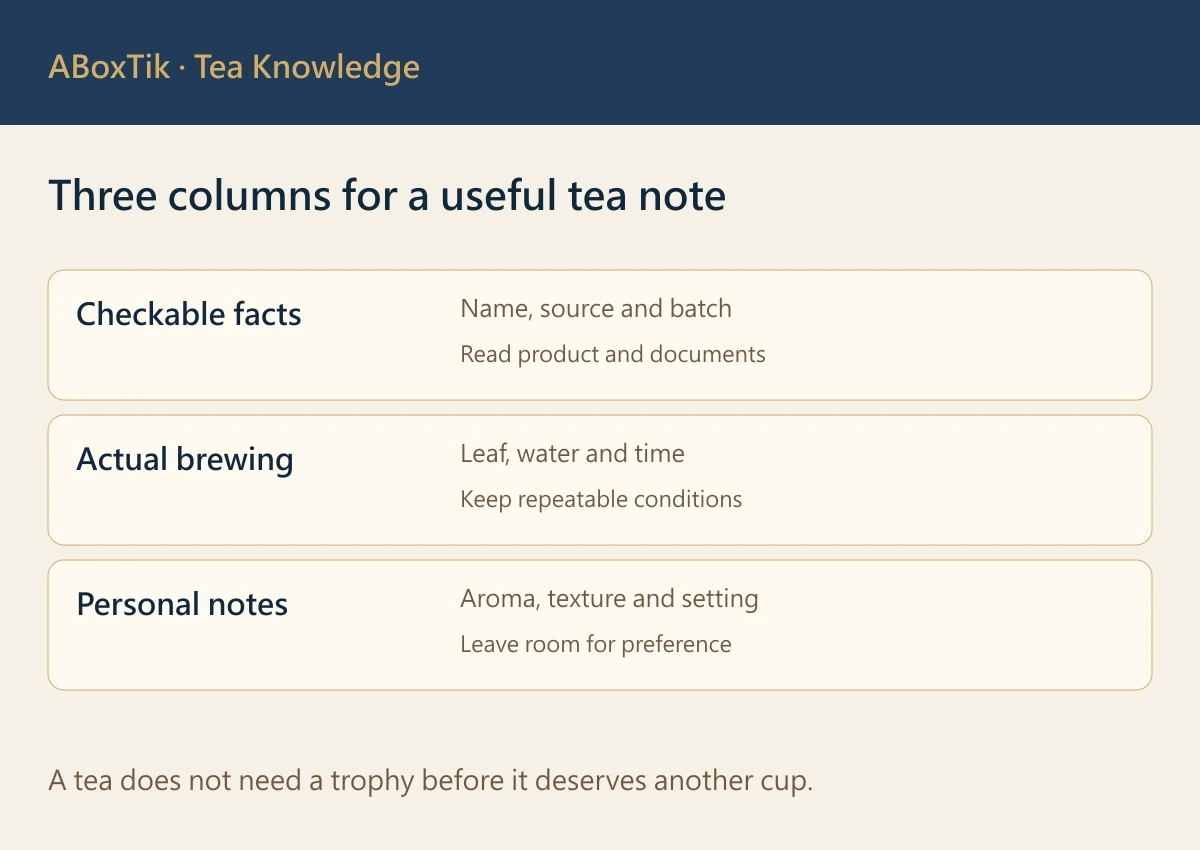
The first column records checkable information: tea name, source, cultivar, harvest, batch, net weight and evaluation details. The second records actual preparation: leaf, water, temperature, time and vessel. The third records personal impressions: aroma, strength, texture and whether you would buy again. This prevents a particularly good mood from becoming a universal definition of grade.
When TAGs information appears, read the official system introduction alongside the report for the relevant sample. It has a defined classification-and-grading framework and should be read separately from everyday merchandising terms such as premium. The specialist article covers that system; here the useful habit is to ask for the right information and let the cup add a personal answer.
Interactive card: write one aroma word, one texture word and one setting word. Floral, light, morning is enough. A tea-smelling order helps build the habit. Three words can begin the record; if they eventually become an essay, the tea table can make room for that too.
Return the choice to the drinker and recipient
For a gift, an award can offer a story while format and directions take care of use after opening. A busy recipient may appreciate convenience; someone who enjoys comparison may prefer several clearly described teas. Tea-gift quantity planning adds the practical questions of people and arrangements before a combination is chosen.
For a personal tasting notebook, review the current Classic Taiwanese Tea four-box set and two-box tea-bag gift set. Choose from the actual names, contents and brewing formats, then decide how much further evaluation information you want. Budget is a proper part of the choice and deserves a comfortable place at the table.
Which purpose leads today: A, understanding an award; B, comparing flavour; or C, brewing easily every day? Start with one, then find the corresponding details. A useful reading method helps make a decision instead of adding another layer of pressure.
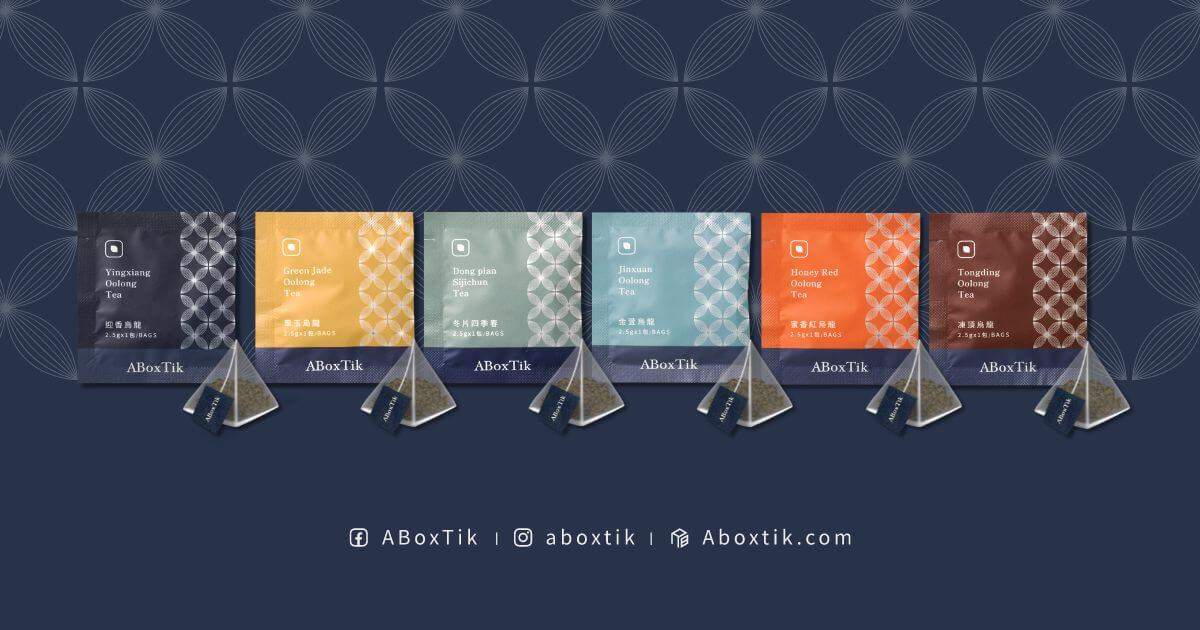
Follow ABoxTik | Read one useful clue and leave one cup for your own preference.
Read Taiwan tea grades, then keep room for a familiar favourite
Know why you are buying before reading organiser, year and product details. The TAGs Taiwan tea guide extends the formal system and flavour-report questions. Understanding information should make the choice more comfortable.
For an everyday format, start with the current contents of the tea-bag gift set. Leave three words after the next cup, giving both the tea and your own preference a little time to become familiar.
Related reading
- Tea evaluation: read awards in context.
- TAGs classification and grading: explore the system and reports.
- Taiwan champion tea: extend buying questions.
Sources
- Tea and Beverage Research Station: Introduction to the Taiwan-tea Assortment & Grading System (TAGs)
- Tea and Beverage Research Station: Introduction to Tea Sensory Evaluation
Sources checked 15 October 2026.