
Tea Knowledge
Tea Gifts for Elders: Roast, Packaging and Everyday Use
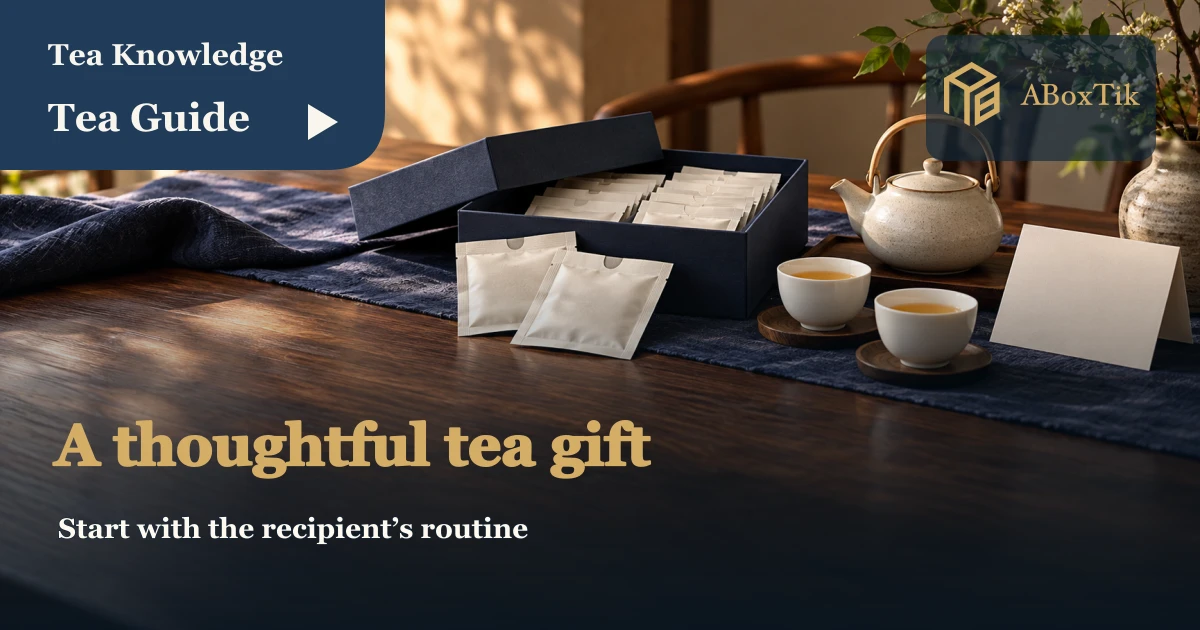
A thoughtful tea gift should feel welcoming when it is opened and practical when tomorrow’s cup is made. Start with the person’s habits, then give the packaging a small, friendly rehearsal.
Choose tea gifts for elders by asking about the recipient’s preferred tea and everyday cup, then checking how the package opens, dispenses, explains brewing and closes again. Roast level describes flavor, not an age group. A blank handling card helps compare options without assuming which one must suit someone.
This is a year-round guide to using the gift after it arrives. For holiday visits and the conversation around them, see Double Ninth tea-gift ideas. The Taiwanese tea introduction offers broader background when choosing a style.
Tea gifts for elders begin with the person’s own routine
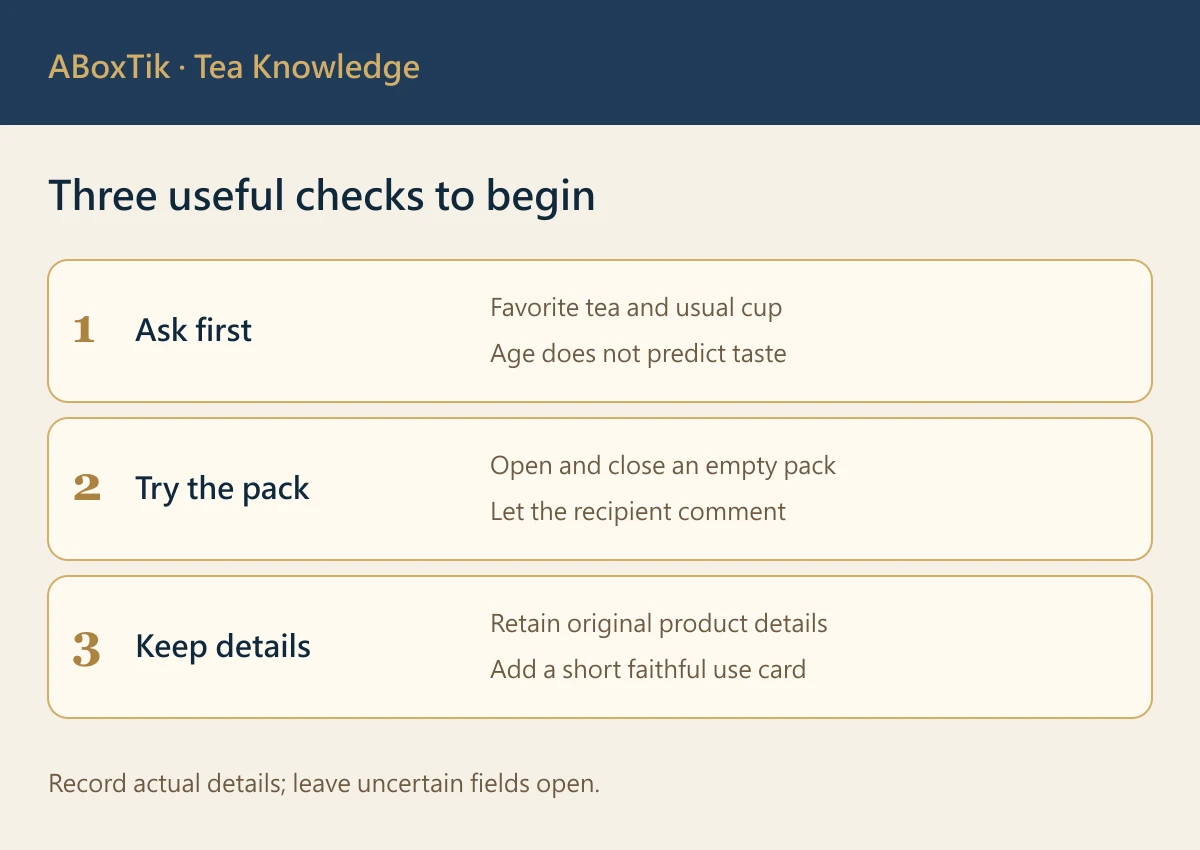
Ask three everyday questions: which tea do you enjoy, do you use a cup or a pot, and do you prefer measuring leaves or using a portioned packet? An answer such as the usual tea is a clear preference. A surprise does not require replacing it. If the recipient welcomes exploration, keep the familiar option central and ask about adding a small second choice.
Age alone does not tell you that someone prefers a stronger roast, dislikes bitterness or needs a particular serving format. Handling habits vary, and the person may not want a gift discussion to feel like an assessment. Asking which of two opening styles they would rather use returns the choice to them without making assumptions about ability.
If detailed questions feel unwelcome, begin with clear product information and a format that works with familiar equipment. Individual dietary or health questions cannot be settled by a gift recommendation. This guide concerns flavor and packaging use. Tea can invite a shared moment without becoming an instruction sheet for an entire age group.
Compare roast preferences with the brewing setup already at home
Light and roasted describe flavor directions; neither label alone predicts the strength of every cup. The light and roasted comparison can start a discussion about floral, grain-like or toasted impressions. Everyday words are welcome. Asking which recent cup the person enjoyed may be more useful than introducing a list of specialist terms.
Read the actual product’s preparation directions and compare them with the recipient’s cup capacity and filtering method. If the directions require measuring leaves but the person does not normally use a scale, ask the supplier about suitable portions or clearer guidance. Do not guess that an arbitrary packet equals one cup. The basic brewing guide helps explain the actions.
If comparing two teas, use familiar equipment and note each preparation. There is no need to stage a formal blind tasting. The current Jinxuan oolong product details and cultivar introduction can support a familiar starting point. The recipient’s preferred cup deserves more attention than the knowledge the giver hopes to demonstrate.
Rehearse opening and closing with an empty package
Before ordering, ask for clear packaging photographs, opening details, portion size and the intended way to reseal it. If a sample is available, invite the recipient to look at it only if they would like to. Use an empty package and cup to follow identifying, opening, dispensing, setting down and closing. Keep hot water out of this first rehearsal.
Notice actions involving tearing, twisting, pressing or a separate tool. If scissors are needed, check that the person actually wants that routine. Ask about alternatives if a narrow opening makes dispensing awkward. Also check what remains on the inner package after the decorative box is put away: the tea’s identity and useful directions should still be easy to find.
| Action | Option A | Option B | Recipient’s comment |
|---|---|---|---|
| Identify and read | __ | __ | __ |
| Open and dispense | __ | __ | __ |
| Set down and close | __ | __ | __ |
Leave the cells blank until the person comments. This is a preference worksheet, not a safety certification or a claim that one package serves all elders. If neither option feels right, returning to a familiar format is a useful outcome. Packaging has a job after its ribbon has finished making an entrance.
Keep product information available after the outer box leaves
Check the actual name, ingredients, quantity, storage information, date information and brewing directions. This is a reading checklist, not a statement that a particular layout meets legal requirements. If photographs are too small to read, ask for clearer ones. A polished product photograph cannot replace the practical information needed when making the tea.
A short companion card can faithfully copy the current product directions and retain the name and contact route. Avoid inventing a universal recipe because it looks tidier on the card. If the recipient wishes, write down the capacity of their usual cup so that future questions about quantity become more specific. Keep the wording simple enough to use at the counter.
Do not cover original labeling or discard the original inner packet merely to create a prettier container. The storage guide gives further context. Taiwan’s Tea and Beverage Research Station explains that tea absorbs moisture and odors and that packaging must address factors including light and oxygen. Those considerations support careful storage, not the assumption that any decorative jar is suitable.
Compare loose leaves and tea bags as complete routines
Loose tea allows portioning within a familiar routine, but it still needs a workable way to dispense, filter and close the packet. Individually packed tea simplifies some preparation while still requiring opening and a place for the used bag. Read about pyramid tea bags, then ask the recipient whether the format appeals to them rather than declaring it convenient on their behalf.
Match quantity to actual use. While reading a gift-box selection guide, compare each item with three questions: is the tea wanted, is handling comfortable, and can it return to storage easily? If answers remain unclear, narrow the options and let the person choose. A larger outer box does not need to become a challenge to drink more tea.
Keep the original packs intact before gifting instead of opening every sachet for photographs. Confirm the current assortment, packaging and availability with the supplier. This article does not guarantee that a specific combination remains available. Thoughtfulness can be planned in advance; stock must still be confirmed by the business fulfilling the order.
Ask one small follow-up question, then use the answer
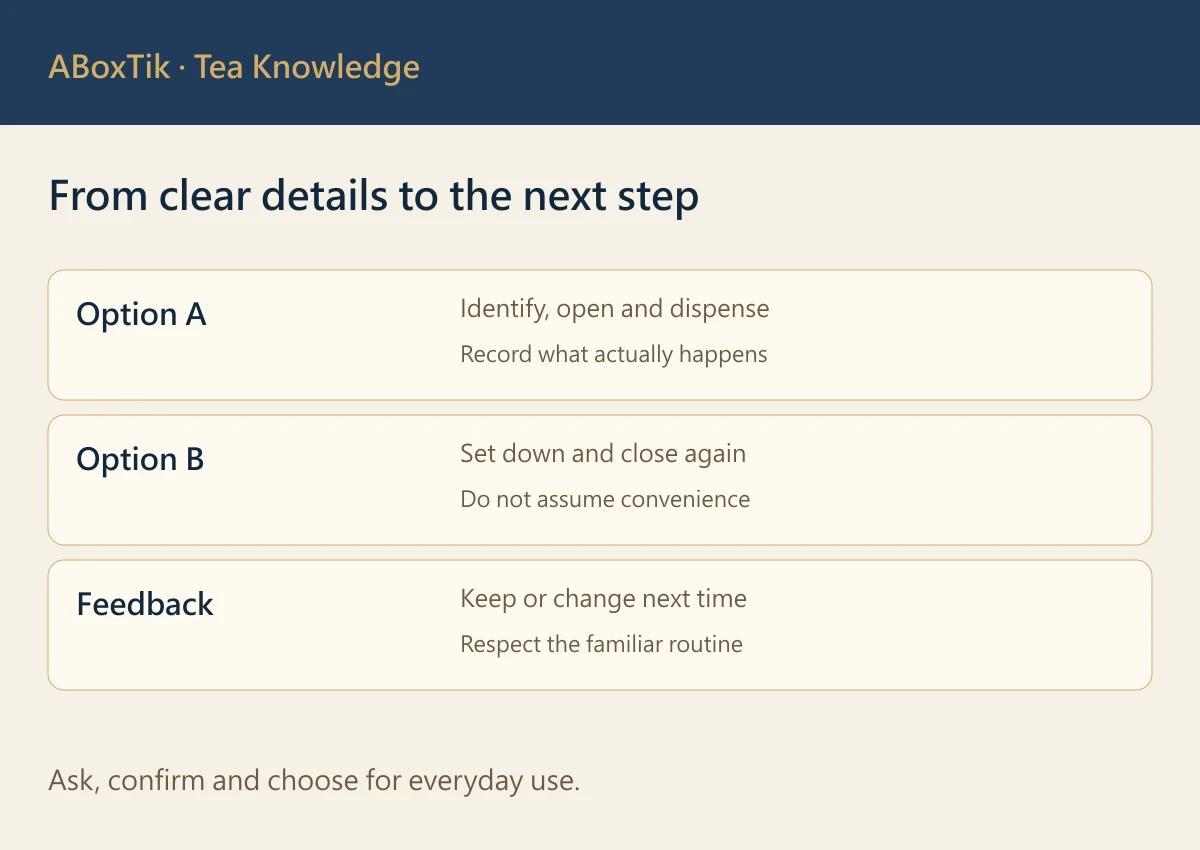
There is no need to ask for an immediate unboxing, tasting or score. Leave an invitation to mention which part felt easiest after using it. If the recipient wants to reply, ask whether the useful detail concerned dispensing, brewing or storage. A specific action gives the next gift a better starting point than interpreting polite thanks as a complete usability review.
If the tea was enjoyable but the packet was awkward to close, ask about packaging alternatives before replacing the tea. If the flavor was unwelcome, reconsider the tea first. If the recipient has already found a preferred method, respect it. The giver does not need to become a permanent project manager to make one thoughtful adjustment next time.
Keep two final fields: retain next time, and change next time. These are private gift notes, not a place to collect unnecessary personal health information. The practical kindness in tea gifts for elders comes from listening to a particular person. It cannot be supplied by drawing one routine around everyone of the same age.

Follow ABoxTik | Let a thoughtful gift join a familiar daily routine.
Choose a tea gift the recipient will enjoy using
ABoxTik connects flavor choices with the way tea is actually prepared. Review the current contents of the classic Taiwanese tea four-box selection or the specifications of the two-box tea-bag gift, then connect those options with the recipient’s own preferences.
Begin with one question: how do you most enjoy making your usual cup? Let the answer guide roast style, quantity and opening format. A gift that works well in everyday use can leave a comfortable invitation for the next visit and the next conversation around tea.
Related reading
- Holiday tea-gift situations address visits and conversation.
- Light or roasted tea explores flavor preferences.
- Tea storage supports the opened packet.
Sources
Sources checked 16 October 2026.