
Tea Knowledge
Taiwan Tea for Coffee Lovers: Roast, Body and Aroma
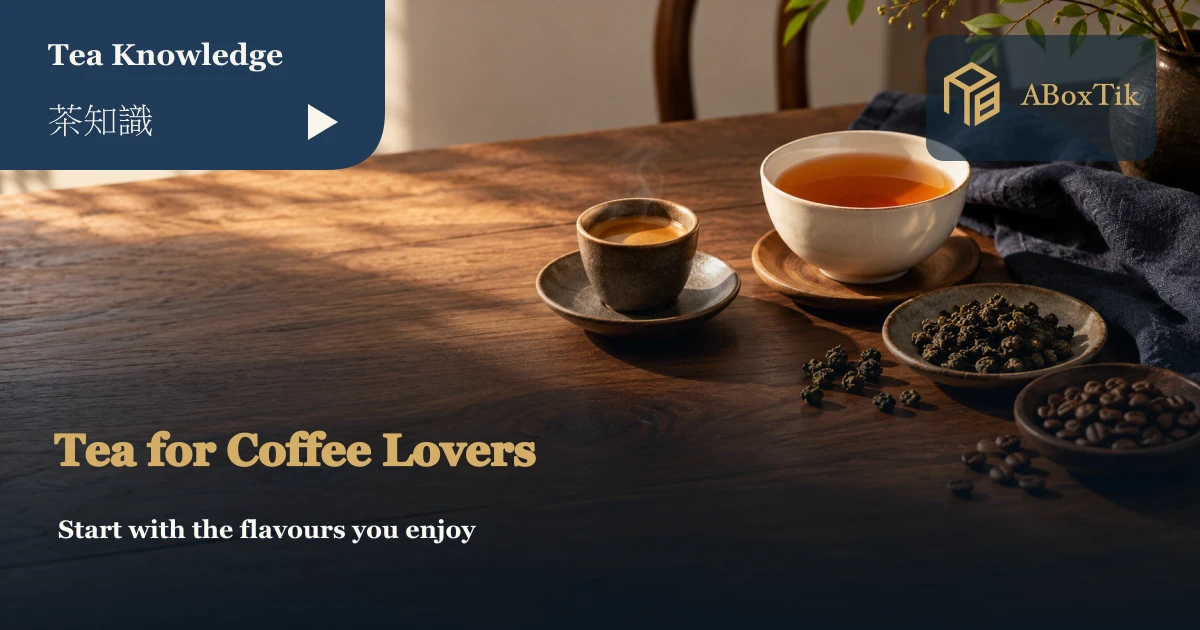
Moving from coffee to tea does not require leaving a preference behind; it simply opens another door for a familiar aroma.
Coffee lovers can start choosing Taiwanese tea through roast impressions, liquor texture and aromatic direction. Roasted oolong may suit someone drawn to roast notes, Taiwanese black tea can offer ripe-fruit directions and clear structure, and floral oolong can add a fresher rhythm in small samples. These are starting points, not fixed exchanges between coffee and tea.
Describe one coffee you enjoy, then ask whether aroma, texture or drinking method matters most. This guide concerns flavour and choice, not caffeine replacement or health strategies. Coffee and tea can happily share the same table.
Separate a coffee preference before calling it strong
“I like strong coffee” may mean prominent roast aroma, a full entry, clear bitterness or simply less water. Separate those possibilities before choosing tea. Bitterness, astringency and strength helps put sensations into different fields, so a search for roast aroma does not accidentally become a search for the harshest cup.
Write three words for a coffee you enjoy: perhaps roasted, round and ripe-fruit, or fresh, floral and brisk. These are personal observations, not an examination. If milk coffee is familiar, separate the softness of milk from the coffee itself before assuming that an unfamiliar tea should follow a fixed recipe.
Consider two familiar coffee orders before choosing tea. Someone who says ‘strong’ may enjoy a small concentrated serving, while another person may mean a pronounced roasted smell in a larger cup. Ask which feature matters most when the drink changes. That answer can lead to very different tea choices, even when both people started with the same word.
Try roasted oolong for aroma, not for a contest of bitterness
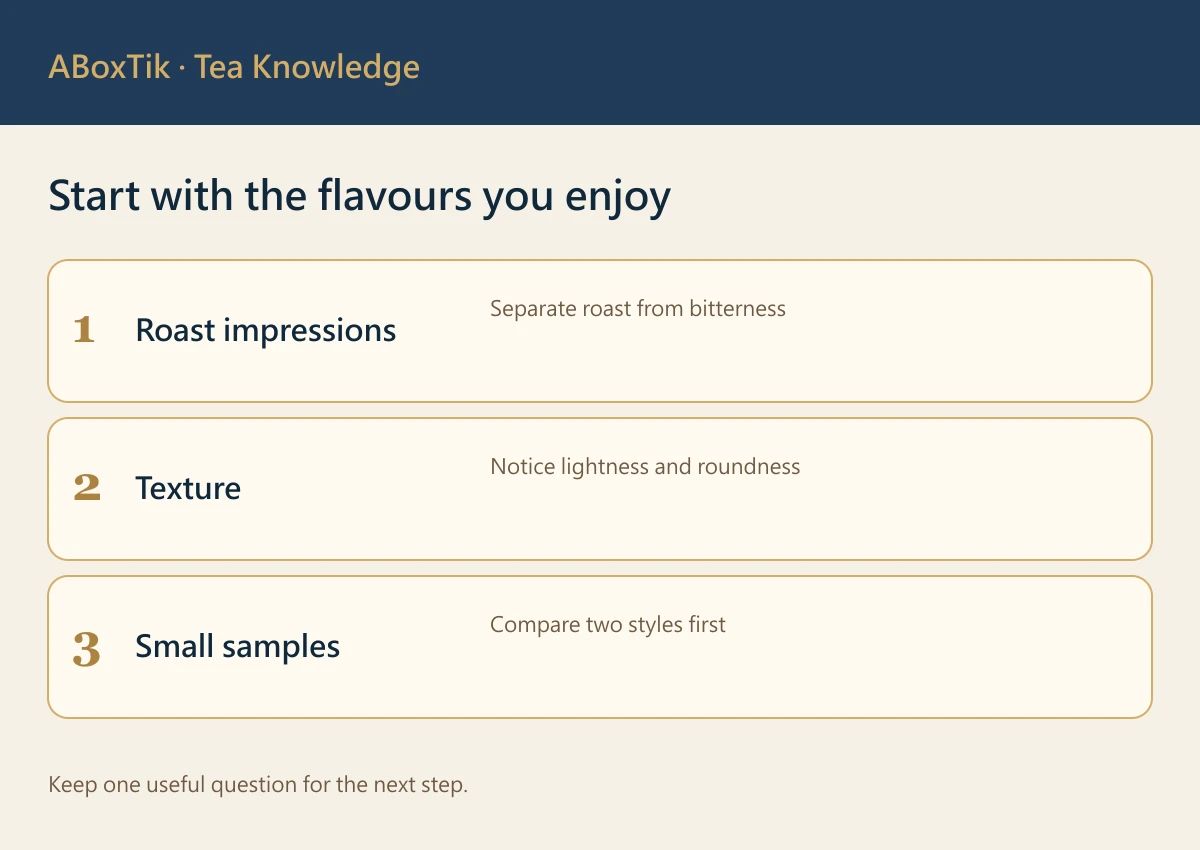
Roasting is a later heat treatment in tea making; it is not the same as oxidation. Light and roasted Taiwanese tea and oolong oxidation keep the two ideas distinct. Coffee drinkers who enjoy roast impressions can use roasted oolong as one route into tea, without requiring the liquor to be intensely bitter.
Roast, nutty or cooked-sweet associations still belong to the actual tea sample. Some teas show roast more directly while others keep floral or fruit notes beside it. Dong Ding style is best read through the product’s real origin and making, not as an automatic roast level. A cup you dislike does not award bravery points.
When the first roasted oolong arrives, smell it before deciding how closely it resembles coffee. Note one impression of the tea itself, then taste at a comfortable temperature. If the roast is enjoyable but the infusion feels too strong, record the actual leaf and water quantities before adjusting. A preference for roast does not require accepting a cup that feels uncomfortable.
Taiwan black tea offers ripe-fruit directions and clear structure
Coffee drinkers who enjoy ripe fruit, sweet aroma or a clear, present cup can include Taiwanese black tea among their first candidates. Cultivars and making methods create different directions; Taiwan Tea No. 18 is one concrete cultivar entry, not a stand-in for every black tea aroma.
Separate aromatic association from ingredients. A ripe-fruit impression does not mean fruit juice was added, and a round sweetness does not prove sugar is present. Read the complete ingredient list whenever flavouring or additions matter. Honeyed and fruity aroma offers a helpful next distinction.
Floral oolong is another route, not a detour
People who enjoy aromatic layers in lighter-roast coffee may also explore lightly scented oolong or Baozhong. This connects habits of attention, not people to a compulsory tea category. Aroma observation separates dry leaf, hot liquor and cooling aroma, so the first cup need not carry a long list of flower names.
Ask whether the aroma feels clear, whether the liquor is thin or rounded, and whether the finish is comfortable. Jinxuan cultivar and a Taiwanese tea start offer different doors. Two people can keep different candidates; coffee and tea do not need to organise a prizefight.
For a shared tasting, let each person choose one observation to follow: floral clarity, a rounded texture or a finish they want to return to. Nobody needs to agree on a single winner. Two different favourites can be a better outcome than a forced ranking, especially when the aim is finding useful drinks for different moments of the day.
Use a preference table as a starting point
A coffee impression can become a gentle tea question: roasted or nutty associations may lead to roasted oolong; ripe-fruit sweetness and a clear outline may lead to Taiwanese black tea; fresh, delicate aroma may lead to light oolong or Baozhong. The connections are starting points, not a conversion formula.
| Coffee impression | Tea direction to try | Question in the cup |
|---|---|---|
| Roasted or nutty | Roasted oolong | Is the aroma comfortable, beyond bitterness? |
| Ripe fruit and clear structure | Taiwan black tea | Do aroma and texture fit together? |
| Fresh, detailed aroma | Light oolong or Baozhong | Does lightness still have the body you want? |
Let small portions and ordinary equipment welcome new flavours
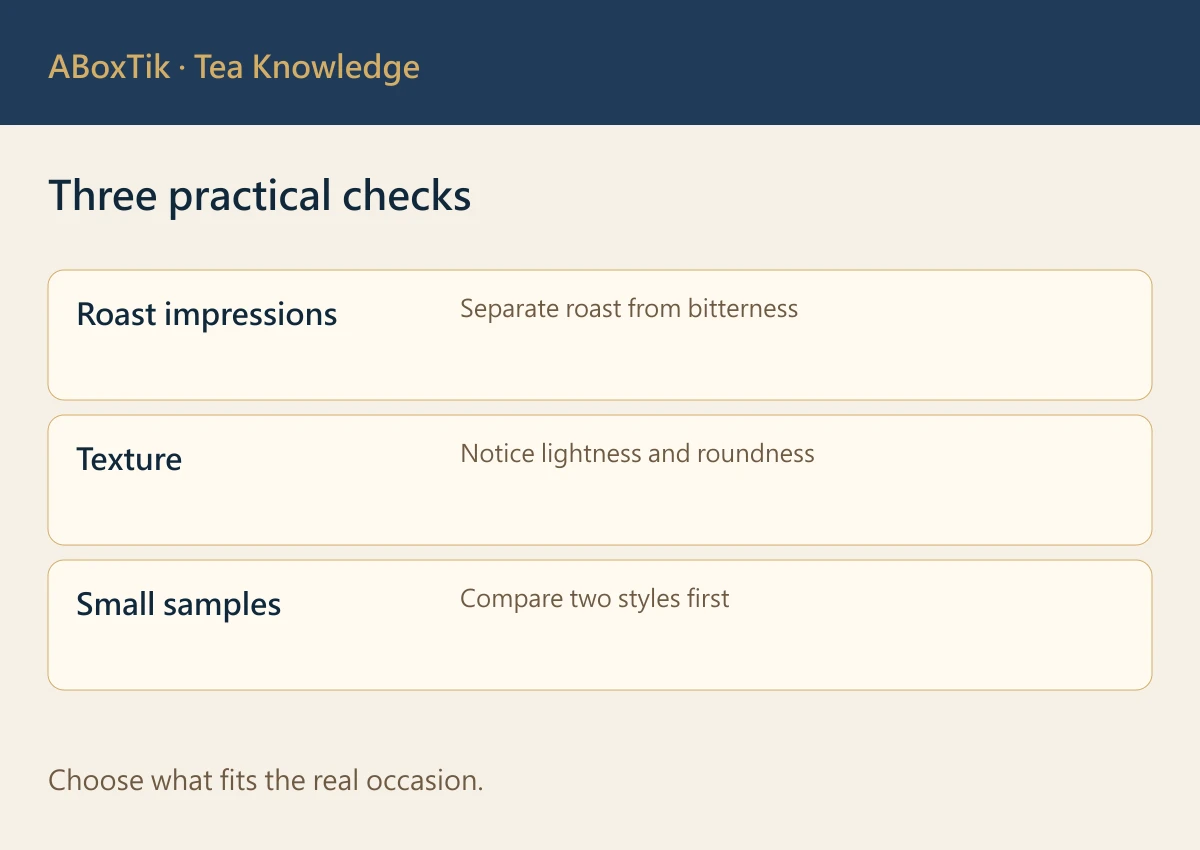
A mug at home can begin with whole-leaf tea bags, while a pot or infuser makes loose leaf easy to explore. Check the current contents and portions of a two-box tea bag set or multi-tea gift set before deciding what to compare; a larger outer box does not make a trial more useful.
Let storage suit ordinary life too. Tea storage supports small portions and notes on tea name and brewing. Give coffee beans and dry tea their own packaging and odour space. Today can be as small as one roasted oolong and one black tea; after drinking, ask only which feature you would like to keep.
If the first tea is not a favourite, keep the result specific: this product, in this format, under these brewing conditions. Try a smaller adjustment or a different style before ruling out all Taiwanese tea. A new drink is allowed an introduction rather than an audition for a permanent replacement role. Coffee can remain in the cupboard while tea gradually finds its own place.
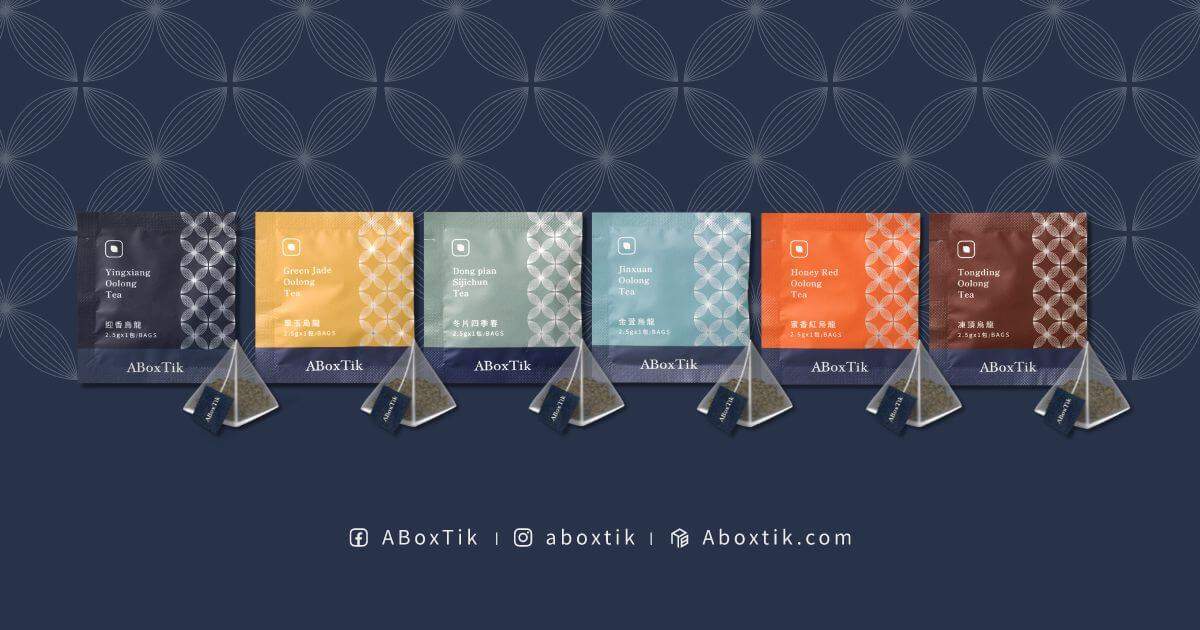
Follow ABoxTik
Let coffee preferences become a starting point for tea
ABoxTik does not rush to find a replacement for a familiar taste. Separating aroma, texture and brewing method makes a new flavour easier to understand.
Continue with Taiwanese tea terroir and craft and choose one curious direction to try. Coffee and tea can stand side by side in the cupboard, taking turns with different afternoons.
Related reading
Sources
- Tea and Beverage Research Station: Taiwan specialty tea classification and processing
- Tea and Beverage Research Station: Cultivar characteristics
Sources checked 21 October 2026.