
Tea Mixology
Black Tea for Milk Tea: Check the Base Before Adding More

Save a sip of plain tea first, then let milk and tea find a comfortable balance.
If black tea seems muted after adding milk, taste the plain base first, then separate milk amount, final volume, temperature, sugar and ice. A weak plain tea calls for checking extraction. A clear base that becomes less distinct with milk calls for a small comparison of dairy character and dilution. The aim is a balance you enjoy, not a contest over which ingredient gets the microphone.
The instinctive response to a very milky cup is often another handful of leaves. That may add bitterness without explaining what changed. Give the ingredients separate jobs before asking the tea to work overtime.
Taste the base without confusing aroma and strength
Reserve a small amount without milk, sugar or ice. At a comfortable drinking temperature, record aroma, body, bitterness and a drying sensation. Dark color does not guarantee a distinct aroma. Describe whether “weak” means a thin mouthfeel or a quiet smell. The bitterness guide and aroma guide help keep those impressions apart.
If the base itself is not enjoyable, check tea choice, leaf dose, water amount, time and water conditions. Begin with that tea’s directions and adjust one item while keeping the others stable. Do not give every black tea the same prolonged boiling treatment. The steeping-time, water and brewing guides offer general starting points.
Introduce milk, sugar and ice in separate small comparisons
Divide one batch of tea into small portions. Compare plain tea with tea containing milk and record tea, milk and final amounts. To explore dairy character more specifically, bring a water-only control to the same final volume and keep tasting temperatures reasonably similar. This organizes a comparison without assuming that a particular ratio will be best.
On another round, compare milk amounts while keeping final cup size and temperature similar. Give sugar a separate round, and ice another. Adding everything together changes sweetness, temperature and melting-water contribution at once. It becomes difficult to identify which adjustment should come next.
Prepare small quantities and drink them as they are made. Handle milk according to its refrigeration and use instructions rather than leaving it on the table throughout an extended tasting. A compact comparison is easier to manage and does not require an afternoon’s worth of finished drinks.
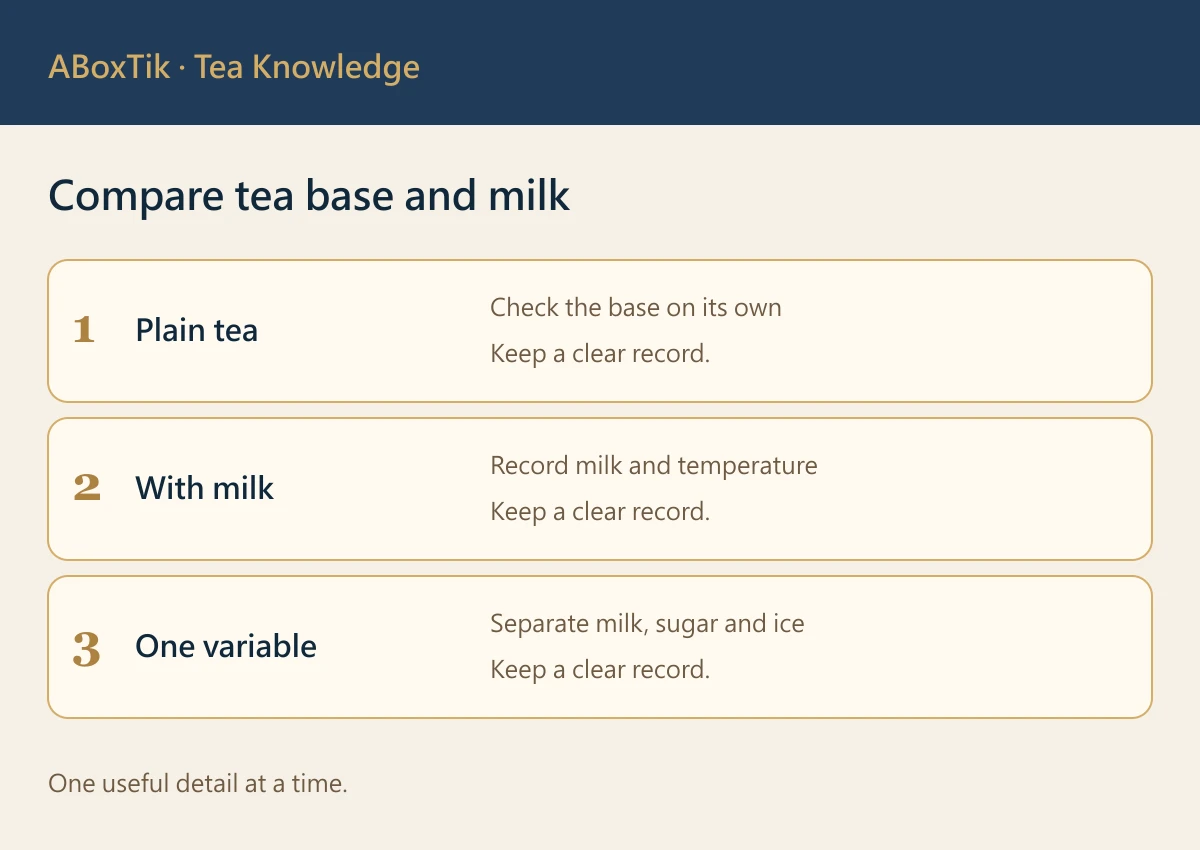
A tea-base and milk comparison table
| Observation | Check first | Try one change next |
|---|---|---|
| Plain tea already seems weak | Dose, water, time, heat and tea choice | Adjust one extraction condition using its directions. |
| Aromatic plain, muted with milk | Milk, final volume and tasting temperature | Compare milk amounts at one cup size, or try another tea separately. |
| Bitter yet lacking aroma | Was bitterness mistaken for enough tea? | Revisit the plain base rather than doubling leaves. |
| Pleasant hot, different cold | Temperature, ice and melting | Compare at one temperature before changing ice. |
| Different after sugar | Did sweetness and milk change together? | Keep the dairy constant and vary sweetness only. |
Add four record fields: tea lot, amounts of tea/milk/water, temperature state at tasting, and the reason for your preference. If an exact temperature was not measured, a clear note such as “after cooling” is better than an invented reading. Make the next round more consistent rather than filling the previous record with guesses.
Know what you want from another tea before switching
Compare the plain cups of two finished teas before choosing one for milk. A label such as strong or deeply roasted does not automatically establish suitability for every milk tea. The Sun Moon Lake region guide, Ruby black tea guide and Taiwan Tea No. 8 guide help distinguish names and styles.
When switching, record the brewing method as well as the tea. Changing both simultaneously makes the result harder to interpret. A distinctive plain tea that you do not enjoy with milk can remain a plain-drinking favorite. One packet is not obliged to perform every job in the kitchen.
A useful preference note names a positive feature: the plain base had an aroma you wanted to retain, or the finished cup had a softer texture you enjoyed. That makes the next purchase more precise than simply asking for a stronger tea. Strength can describe several different sensations, and the supplier cannot know which one matters without more detail.
A milk-like aroma is different from adding dairy
Milk-like can describe an aroma association. It does not establish that dairy was added or promise a particular result after mixing with milk. Read the ingredients and description of the exact product. The Jinxuan cultivar guide and aroma vocabulary help explain a common source of confusion.
Likewise, dairy character can be described through aroma, smoothness and mouthfeel rather than one vague word. Decide what you want to preserve before changing the amount. A clear floral base and a soft rounded texture may call for different choices, and there is room to prefer either.
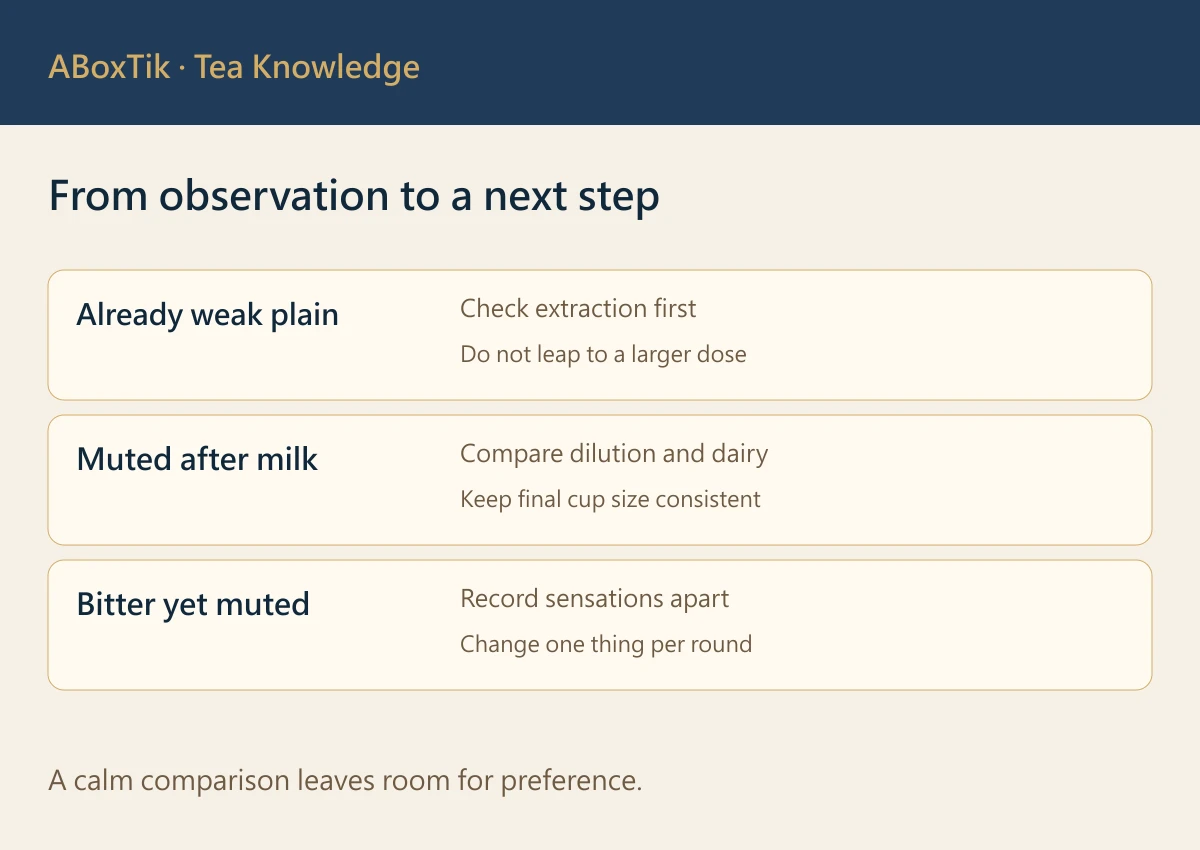
Write the comparison order beside the cups
Suppose the question is whether milk amount makes the base less distinct. Use one batch of tea and prepare two small samples with comparable final volumes. Record tea, milk and any added water, check their temperature state, then smell and sip each before stating a preference. This is an example of organizing a comparison, not a tested ratio.
If steeping time is the selected change, keep milk and final volume steady rather than switching dairy at the same time. If dairy type is the question, retain one tea batch and identify each milk from its packaging information. Small samples reveal differences without creating a large jug that someone feels obliged to finish.
End with an actionable sentence: “the plain base needs attention,” “I preferred less milk under these conditions,” or “the difference was unclear, so I will not change the tea yet.” A preference describes this session and this person. It does not need an explanation that applies to every household.
When sharing, invite each person to name what they enjoy before proposing changes. One may prefer a rounder milk character and another a clearer tea aroma. Separate cups can accommodate both. A family milk tea does not need one compulsory standard; understanding the choices leaves more room to enjoy them.
Follow ABoxTik: leave the base a chance to speak
Choose just one starting branch today. If the plain tea is weak, work on the base. If it changes mainly after milk, record milk and final volume. If sugar and ice changed together, separate them. When a result remains unclear, keep the notes and revisit another day; the fridge and tea cupboard do not need to be completed in one afternoon.
Finish the record with a plain sentence: “keep the tea and change the milk amount,” “compare at the same temperature,” or “return to the base.” A specific next step prevents the familiar cycle of adding leaves without learning whether the cup needed them.
ABoxTik’s Classic Taiwan tea selection offers different oolong styles for understanding plain tea, and the two-box tea gift provides current format information. Taste a tea on its own before choosing its use. For another design direction, explore non-alcoholic tea mixing. A comfortable balance often begins by changing one thing less.

Related reading and tea choices
Sources
Sources checked: 24 October 2026.