
Tea Knowledge
Charcoal, Electric and Infrared Tea Roasting: Flavour and Consistency
A tea can carry a comforting roasted aroma while leaving a few good questions open. Read where the heat comes from, then how it is managed; the equipment name does not have to tell the whole story.
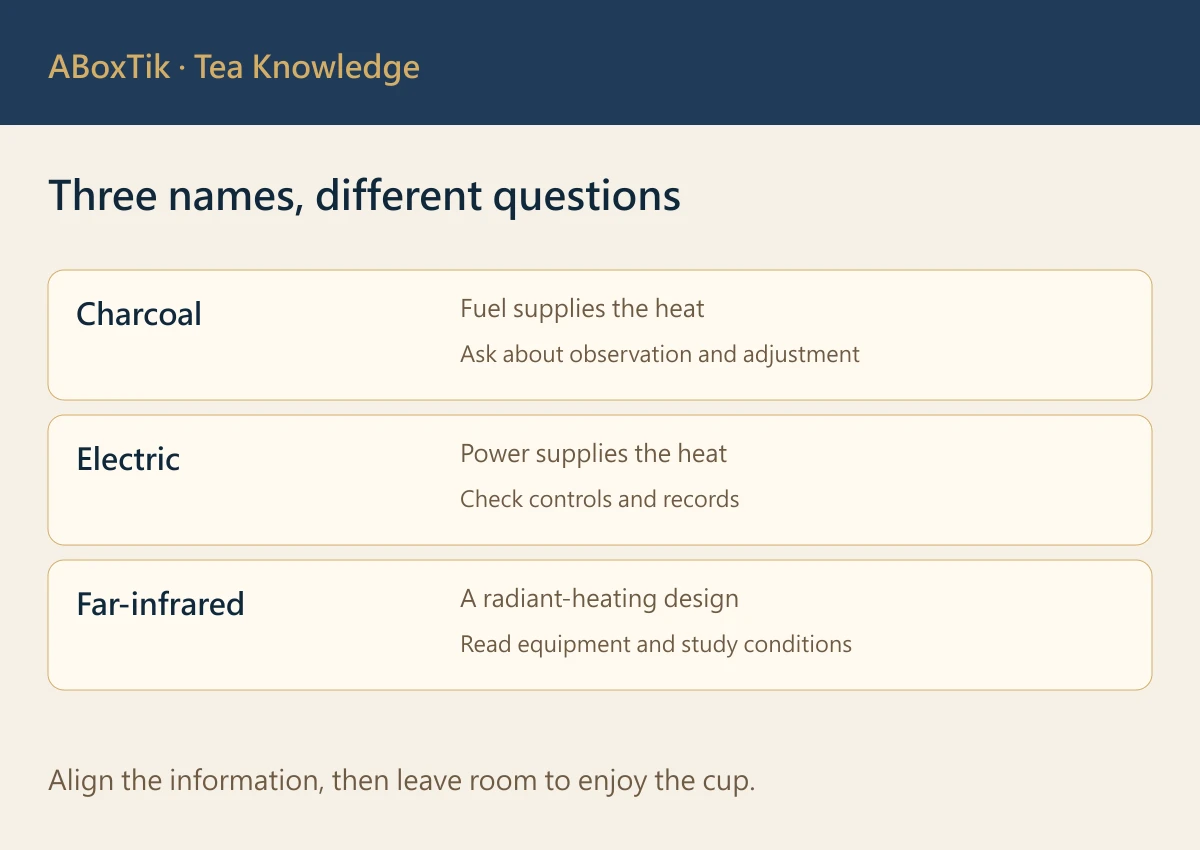
The charcoal vs electric tea roasting question starts with energy supply, while infrared describes a heating approach that can overlap with electricity. Charcoal supplies heat from fuel; electric roasting uses electrical power; far-infrared equipment emphasizes a particular radiant-heating design. These are different kinds of description. To compare finished teas, also read the leaf, processing background and actual batch information.
It is easy to picture charcoal as a craftsperson tending a basket and electricity as someone pressing a button. Both pictures leave work outside the frame. Here, three names become a practical reading card for choosing tea. The sequence of first roast, possible re-roast and resting belongs in the tea roasting process guide; this article concentrates on heat supply, equipment and the conditions that can be recorded.
Charcoal vs electric tea roasting: separate three kinds of information
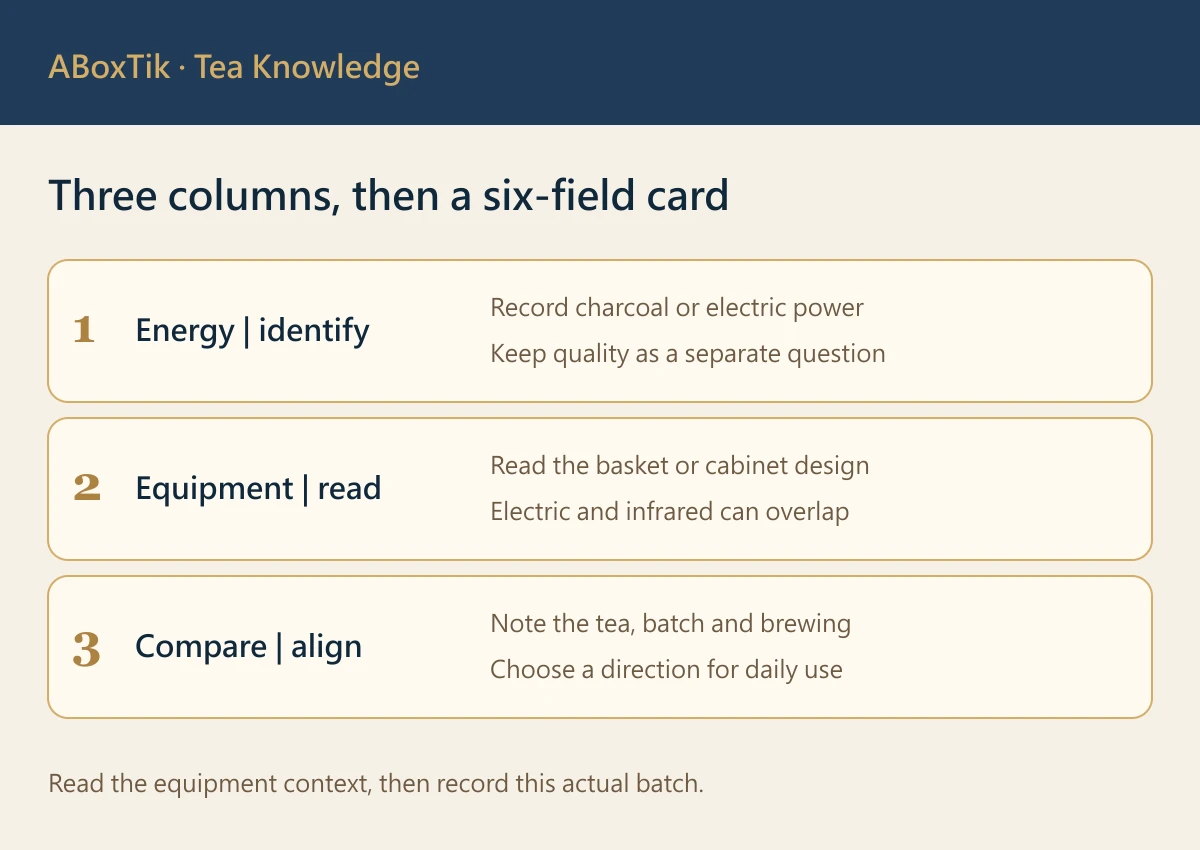
Give energy supply, equipment and heat transfer their own columns. A fuel name answers one question; a basket or cabinet answers another. Taiwan’s official far-infrared equipment research includes modified cabinets and an infrared panel added to an electric roasting basket. An electric machine can therefore also use an infrared design. The terms need context before they become a useful comparison.
A simple card can say: energy source, equipment description and available operating information. Leave an unknown field blank and ask the producer. Oolong oxidation and leaf handling describe an earlier part of the journey, while drying and moisture control have their own purposes. Reading each step separately makes the later roasting description easier to follow.
A heat source also leaves roast intensity open. Two teas can differ in raw material, season and earlier processing as well as roasting. Write down the background before treating them as a comparison of machines. Sometimes the useful question is simply which flavour fits an ordinary afternoon. That answer can be pleasantly smaller than a theory about every roasting room in Taiwan.
Charcoal roasting invites questions about observation and adjustment
A Ministry of Agriculture technical account describes the attention given to heat and leaf-turning during traditional charcoal roasting. It provides a reason to ask how a particular batch was managed, without assuming every workshop follows the same schedule. The producer is the useful source for the actual work, the observations made and the flavour direction being sought.
Try asking which part of the process used charcoal, and how the maker judged the point at which to stop or reassess. These questions reach further than a yes-or-no fuel label. The roasted tea aroma guide offers words for grain, nuts and sweet, mature impressions. Keep smoky, burnt or uncomfortable sensations in separate notes. Knowing the fuel does not require applauding every flavour in the cup.
A small work-history card could hold raw material, loading arrangements, observations during roasting and the later review. It is an editorial way to organize questions, rather than a production specification. Respect for a maker’s decisions can sit comfortably beside a very ordinary conclusion: this batch is enjoyable, or another style would suit the drinker better.
Electric heat and automatic controls answer different questions
Electrical power alone does not tell us how automated a machine is. A 2024 Tea and Beverage Research Station development report describes monitoring, programmable operation and process records. Those are features of the reported system. When reading another machine’s description, ask what can actually be set, observed and recorded, instead of assigning the entire feature list to the word electric.
A temperature setting needs other information around it: equipment, time, leaf quantity and batch background. A photograph of an oven dial would make an unusually short cookbook. Tea buyers do not need a factory’s complete operating file, but the tea name, picking period, flavour information and brewing directions offer a practical place to begin a conversation.
For repeat purchases, keep the earlier product information alongside the opening date and actual brewing notes. Tea storage and steeping time can change the experience too. A familiar routine makes a later comparison more meaningful, and helps avoid asking an equipment label to explain a change that happened in the cupboard or the cup.
Read infrared equipment through the conditions of the study
The far-infrared development account published in 2004 considers equipment layout and airflow as well as heating. A separate Ministry of Agriculture account from 2015 describes a flameless charcoal-roasting machine with a different design. Keep the year, equipment and study conditions attached to each example. They illustrate possibilities within particular systems, rather than a ready-made ranking of every tea sold today.
Infrared is a useful equipment clue, but it does not identify a tea cultivar or predict a favourite flavour. If a product mentions it, ask which processing stage is being described and what information is available about that batch. The aroma-observation sequence and sweet-aftertaste guide can help separate what is actually noticed from what the label led someone to expect.
Use a six-field card before comparing the cups
The card needs six fields: tea and batch, energy source, equipment description, roast style, storage and opening background, and actual brewing conditions. Leave gaps visible. If the immediate aim is an afternoon drink, a flavour direction, suitable portion and workable brewing method may settle the choice. The light and roasted tea comparison is a useful starting point.
For a first comparison, use the same water and similar cups with a common brewing baseline where appropriate. Write three short notes: aroma, first sip and the impression after putting the cup down. In a second round, follow each product’s own instructions. Give bitterness and astringency separate space. This exercise concerns two particular batches; it does not appoint the national champion of heat sources.
Bring the production information back to budget and daily use
Price can include raw material, production, packaging, service and source information. A heat label alone cannot account for a whole box. Use the tea price and value guide to align net weight or bag count, then think about how quickly the tea will be used. If the simpler option is the favourite, the tongue has not forgotten to read the price list. It has answered a different question.
For a roasted direction, read the current Dong Ding oolong product information. To explore several flavours, examine the classic Taiwanese tea four-box selection. Check each product’s own processing and flavour description; different tea choices do not automatically form a controlled heat-source experiment. A short question can be enough: which option offers a warming aroma and works comfortably in a mug?

ABoxTik|Read the source of the heat, then leave room to enjoy the cup.
Let a clearer question guide the next tea choice
Read the names in three columns, keep the background in six fields, and let a brewed cup add its own answer. For a smaller selection, the two-box tea gift set provides another way to examine current options. Confirm contents and availability on the actual product page. Production knowledge becomes useful when it supplies a reason that makes sense in daily life.
Next time a familiar roasting term appears, ask how to start with that batch’s flavour and brewing directions. One workable next step can be more useful than a league table of equipment, and much easier to carry back to the tea table.
Related reading
- Tea roasting process: connect first roast, re-roast and resting.
- Roasted tea aromas: find practical words for warming impressions.
- Light and roasted tea: choose a direction for daily drinking.
Sources
- Taiwan Agricultural Knowledge Portal: Far-Infrared Tea Roasting Equipment Development (2004)
- Tea and Beverage Research Station: Automatic Tea Roasting and Process Records (2024)
- Ministry of Agriculture: Flameless Charcoal Tea Roasting Equipment (2015)
Sources checked 15 October 2026.