
Tea Knowledge
How to Explain Tea Roasting in English: Roasted vs Burnt
Explain the process clearly, then leave the impressions to your guest. A simple invitation can carry the tea closer.
Introduce tea roasting with “roasted tea” or “roasted oolong,” then describe the cup’s aroma and texture separately. Roasted does not automatically mean burnt. The first word can describe processing or a style; the second commonly describes a charred impression. A short explanation and an invitation to smell are usually more welcoming than a vocabulary examination.
If roast, bake and toast suddenly compete in your mind while hosting, start smaller. You do not have to choose a permanent champion among the words. Explain the tea in front of you, then give the person across the table room to respond.
Separate process, aroma and preference
“This oolong has been roasted” introduces processing. “It has a toasty aroma” describes an impression. “Do you enjoy this style?” asks about preference. Each sentence has one job, and none needs to carry the whole introduction before the first sip.
The Tea and Beverage Research Station’s English flavor-wheel information uses roasted among its descriptive categories, alongside vegetal, floral, fruity and sweet. The word can therefore be a normal part of a tea description rather than a declaration that something went wrong. The roasting process guide provides production context, and the roast-aroma guide explores sensory language.
Roasted, toasty, nutty and burnt have different jobs
| Word | A useful tea-table phrase | Keep the meaning clear |
|---|---|---|
| Roasted | A roasted oolong | Processing or style, supported by the product information |
| Toasty | A toasty aroma | A sensory association, not bread in the ingredients |
| Nutty | A nutty note | An association; check actual ingredients separately |
| Caramel-like | A caramel-like aroma | Not proof that sugar or flavoring was added |
| Burnt | It smells burnt to me. | A particular impression, not the definition of all roasted tea |
Words such as like and note help distinguish an analogy from an ingredient statement. If a guest asks whether nuts or sugar were added, check the exact product’s ingredients. A polished explanation should not outrun the information available. The bilingual aroma vocabulary and tea flavor notes make useful references.
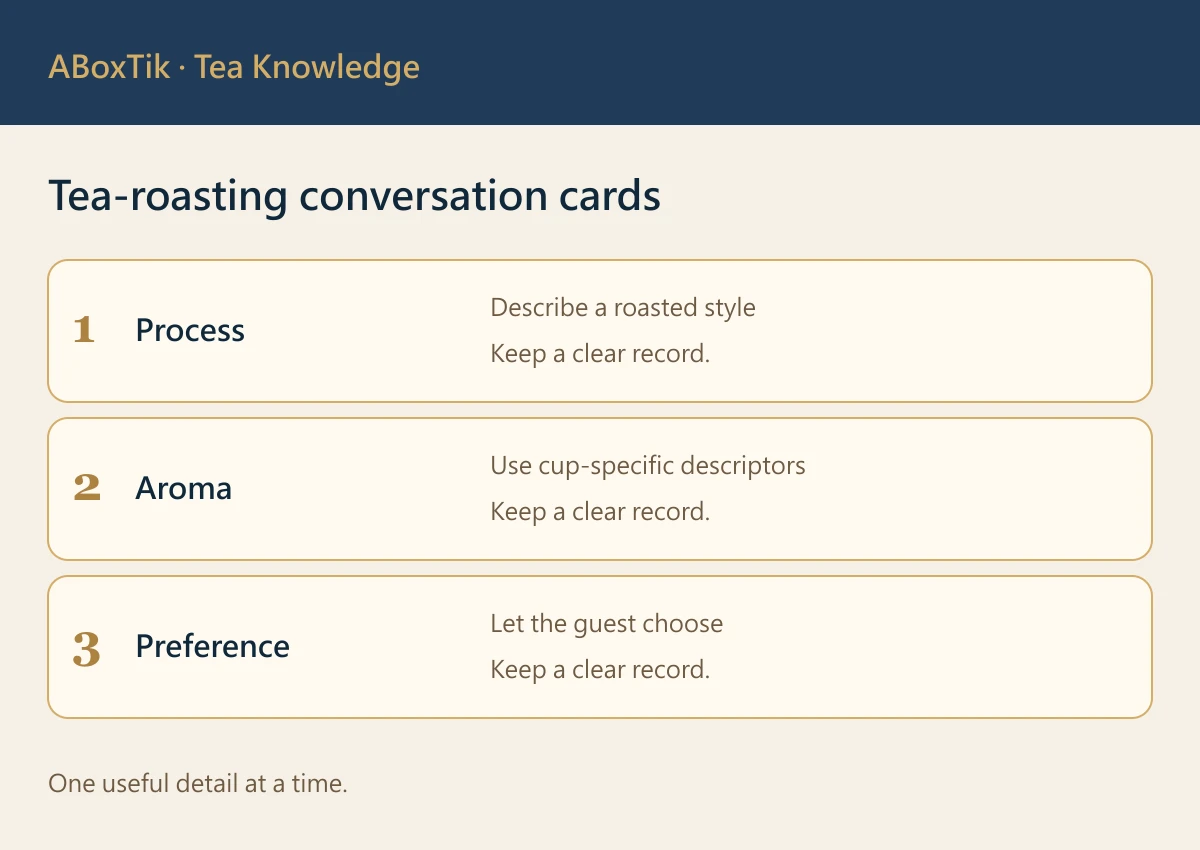
Three short conversation cards
Introducing a roasted tea for the first time
Host: “This is a roasted oolong. You may notice a warm, toasty aroma.” Guest: “What should I be looking for?” Host: “What does it remind you of?” The last question invites the guest to use a familiar food or smell rather than search for the host’s expected answer.
The phrase may notice leaves room for the actual cup. If you know only the product’s general description, do not announce that everyone will find precisely the same notes. A good introduction offers a starting point, then pays attention to what the guest says.
When roasted sounds like burnt
Guest: “Does roasted mean the leaves were burnt?” Host: “Here, roasted describes the tea’s processing or style. It doesn’t automatically mean burnt. We can describe the aroma separately.” That is enough for a first explanation. There is no need to produce a red pen and correct the guest’s entire vocabulary.
Choosing another direction
Host: “Would you prefer a lighter roasted character or a more floral style?” Guest: “I’m not sure.” Host: “Let’s taste a small amount first.” The light and roasted comparison can help choose a direction without turning a preference into a test of tea knowledge.
A small serving also keeps the invitation comfortable. Someone can explore a different style without committing to a full pot. They may enjoy it, prefer the first cup or decide that a floral tea suits them better. All three responses provide useful information for a host.
Discuss roast level with a clear comparison and source
Lightly roasted, medium-roasted and more deeply roasted can support a relative description, but different sellers may not use one identical scale. Where the maker supplies information for the lot, use that information. When comparing two cups on the table, “This one tastes more roasty to me” keeps the claim within the actual observation.
Do not infer roast level from liquor color alone. Tea type, oxidation, dose and infusion also affect what appears in the cup. The oxidation guide, roasting-method comparison and water guide answer different questions. There is no need to collapse them into one number during an introduction.
If the group wants more detail, ask which question interests them: how it was made, what the aroma resembles, or which tea to try next. Answering that question is more useful than presenting every technical term you know. The conversation can become more detailed as the guest becomes curious.
If a guest notices burnt notes, keep the conversation open
A genuine burnt impression does not need to be dismissed with “you do not understand tea.” Try “I can see why that word came to mind. Shall we compare another cup?” Acknowledge the description, then offer another direction if it is wanted. Different associations and preferences are part of tasting together.
For another comparison, keep tea dose, water amount and timing reasonably consistent and let both cups become comfortable to drink. Smell them separately before sipping. The smelling guide and steeping-time guide can organize the session. The goal is easier description, not persuading the guest to change an answer.
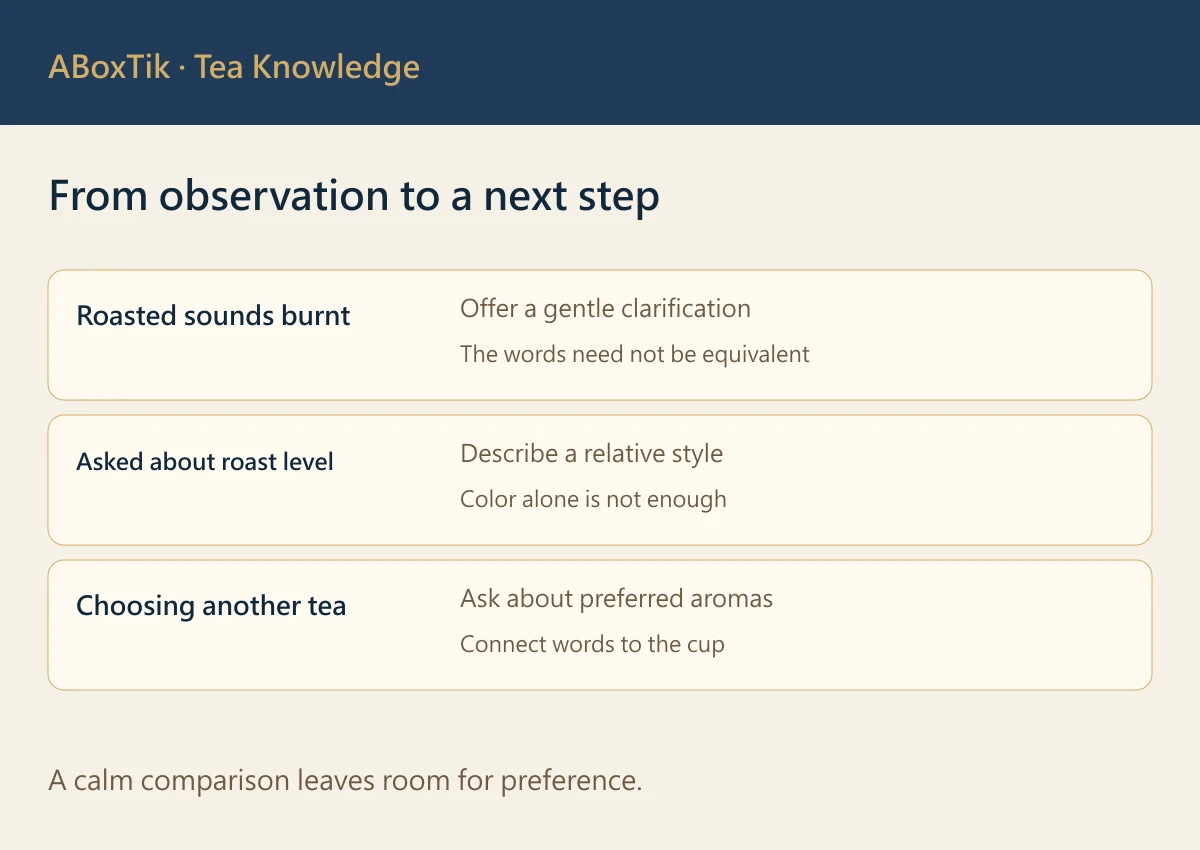
Turn one long explanation into two short sentences
A host may want to say that a tea has a noticeable roast character with nut-like and caramel-like associations. It need not become one long sentence. Name the style, describe one impression, then ask whether the guest would like another direction. Short sentences retain information and make it easy to pause at an unfamiliar word.
Keep three mental fields: processing information known from the particular tea, impressions observed in this cup, and the guest’s preference. The first comes from product information, the second from tasting, and the third from the guest. Keeping them apart prevents a personal favorite from becoming something everyone is expected to enjoy.
Use familiar associations when a specialist word does not help
A food-aroma analogy can provide a bridge, followed by a question about whether it makes sense to the guest. It is still an association, not an ingredient statement. Check actual labeling separately when ingredients matter. Hospitality can sound simple while remaining precise about what the tea contains.
Choose one word that fits the cup instead of reading every possible aroma aloud. If it does not connect, try another everyday description. A conversation that travels both ways feels more welcoming than a perfectly fluent monologue.
Afterward, keep two notes: a style the guest enjoyed and an aroma word that helped both of you. Next time, those details offer a comfortable beginning. If roasted tea was not their preference today, a familiar alternative can keep exploration relaxed.
Follow ABoxTik: make English part of the hospitality
Keep two sentences for today: “This is a roasted oolong” and “What do you notice?” State known information clearly and leave the sensory associations open. The Taiwan tea English guide offers a wider introduction, while the Lugu Dong Ding guide connects the vocabulary with place.
Current information for ABoxTik’s Tongding oolong and Classic Taiwan tea selection can provide a starting comparison. A welcoming tea introduction does not need to be long. If the guest understands, feels comfortable describing the cup and can say whether they enjoy it, the words have done their work.

Related reading and tea choices
Sources
Sources checked: 24 October 2026.