
Tea Knowledge
Why Winter-Picked Tea Supply Varies: Buds, Harvest and Making
The season does not deliver the same tea on the same calendar date every year. Read the buds, the harvest and the making separately, and a winter-picked tea becomes easier to understand.
Winter-picked tea production varies because it is not a guaranteed extra harvest. Taiwan’s Agriculture and Food Agency explains that, after the regular winter crop, warmer conditions together with suitable rainfall or irrigation may lead to another flush. Such tea is common in middle- and lower-elevation areas, with a small and irregular output. New buds, harvested leaf and finished tea are different stages; a few warmer days cannot establish a season’s supply.
If you have heard either “a warm winter means plenty” or “colder always means better,” leave room for the actual garden. This guide separates the production questions. For purchasing criteria, the tea-quality guide provides broader context without using a harvest story to rank a cup you have not yet tasted.
Before winter-picked tea production: read the season
Winter tea is a seasonal harvest description. Dong Pian, often described as winter-picked tea in English, refers more specifically to a subsequent flush after that winter crop under suitable conditions. The two should not be treated as the same lot merely because both relate to winter. Official information describes conditions that can allow the later flush and notes variable production; it does not promise one in every garden each year.
The Dong Pian Sijichun introduction and Green Jade winter-picked discussion offer tea backgrounds. Four Seasons and Green Jade are cultivars; winter-picked is a harvest description. Ask what cultivar the particular tea uses, when it was picked and where it was made. Keeping cultivar and harvest in separate fields prevents one appealing name from silently filling the entire information sheet.
Treat warmer weather as a condition, not a volume forecast
Read weather together with the state of the garden. Suitable moisture and the condition of the buds and leaves matter alongside temperature. A reader can understand that combination without trying to turn an online weather chart into a forecast for one producer’s crop. Regional weather information and observations from a particular garden are different kinds of evidence and should remain separate.
When reading a supply update, distinguish “another flush may develop,” “buds have been observed” and “leaf has been harvested.” If the information is still a possibility, retain that status rather than rewriting it as an available product. The Taiwan tea-region guide and introduction to environment and craft explain useful background. Neither can supply the same ending for every garden in the current year.
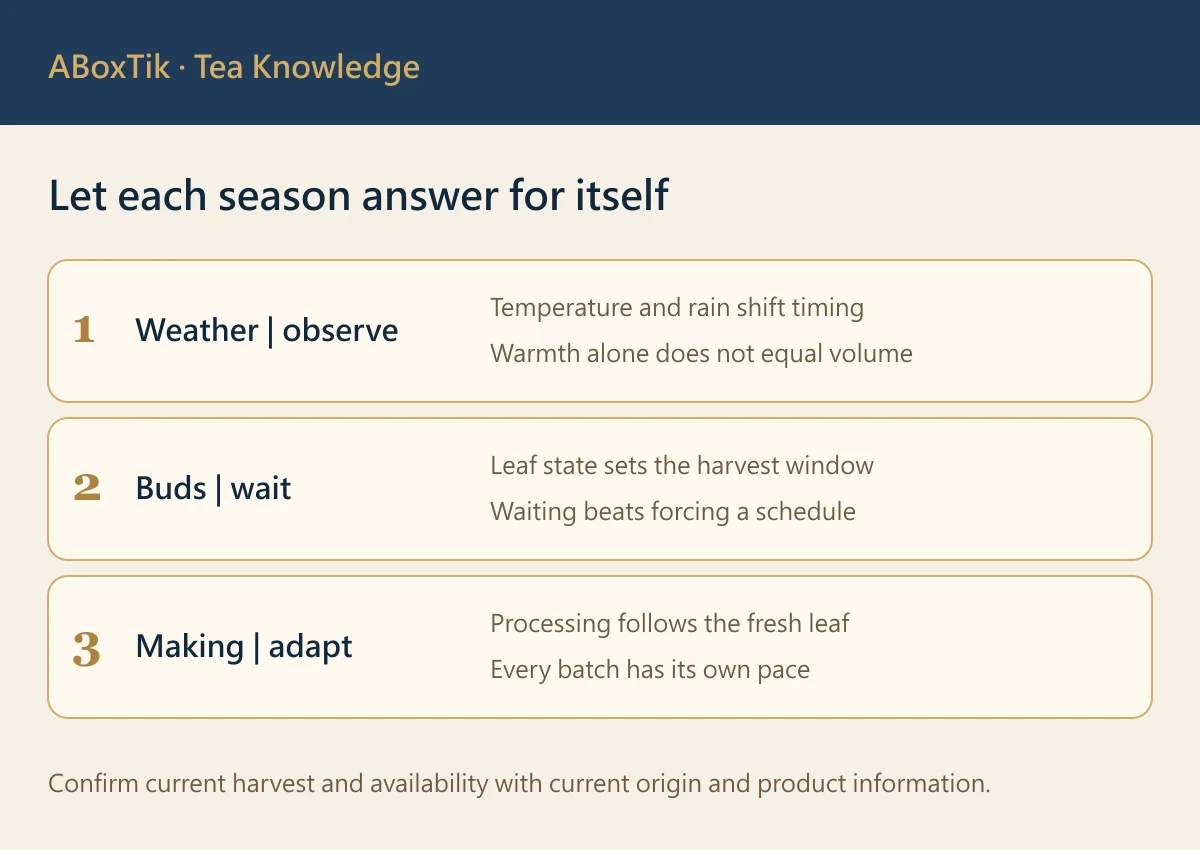
Separate new growth, harvested leaf and finished tea
After buds appear, there is still the question of harvestable leaf and the arrangements for picking. Once fresh leaf arrives, it must enter the relevant production process. Separating these steps avoids jumping from “there is new growth” to “an order quantity is confirmed.” Actual finished output and availability should be discussed using the producer’s information for the specific batch.
A three-field note can read: observed stage, harvest lot and finished-tea status. Leave unknown fields blank and ask which stage the current information describes. Consumers do not need every factory record to ask a precise question. If you are interested in reserving a lot, first confirm what specification and quantity can currently be offered. Interest in a future tea is welcome; it is not the same thing as a completed harvest.
A dated note makes the distinction easier to keep: record what the producer actually reported, when it was reported and which lot it concerns. On a later visit, add the next confirmed stage rather than deleting the earlier context. A seasonal announcement can then remain an observation until corresponding finished-product information becomes available.
A small amount of leaf still needs its complete process
For oolong, withering, oxidation management, fixation, rolling and drying each perform a different task. A small lot does not reduce the whole craft to drying alone. The oolong oxidation guide, withering guide and drying and moisture guide explain those stages. The actual maker must still judge the fresh leaf, equipment and intended tea style rather than follow a universal winter-picked recipe.
Useful questions include how the lot fits the available equipment and what processing information the maker can share. A time or temperature from another factory is not automatically transferable. Preparation, observation and finishing remain part of the work, while the final sale weight alone cannot reveal how much labor each step involved. Craft deserves attention without requiring an imagined story about details nobody has documented.
Keep quantity, quality and price as different questions
Quantity describes how much tea there is. Quality and personal preference still depend on source, making, storage and the actual cup. A small output cannot replace tasting, and price can include raw leaf, labor, sorting, packaging and service. The tea price and value guide helps separate those elements so the word rare does not answer every question in the purchase.
Before comparing prices, align net weight, bag count, tea type, harvest information and delivery contents. When brewing, follow the product guidance and use the aroma sequence to record what you notice. A strong first cup calls for noting water volume and time, then trying a steeping adjustment. An unusual or expensive tea can still be approached with familiar equipment, without deciding in advance that you must enjoy it.
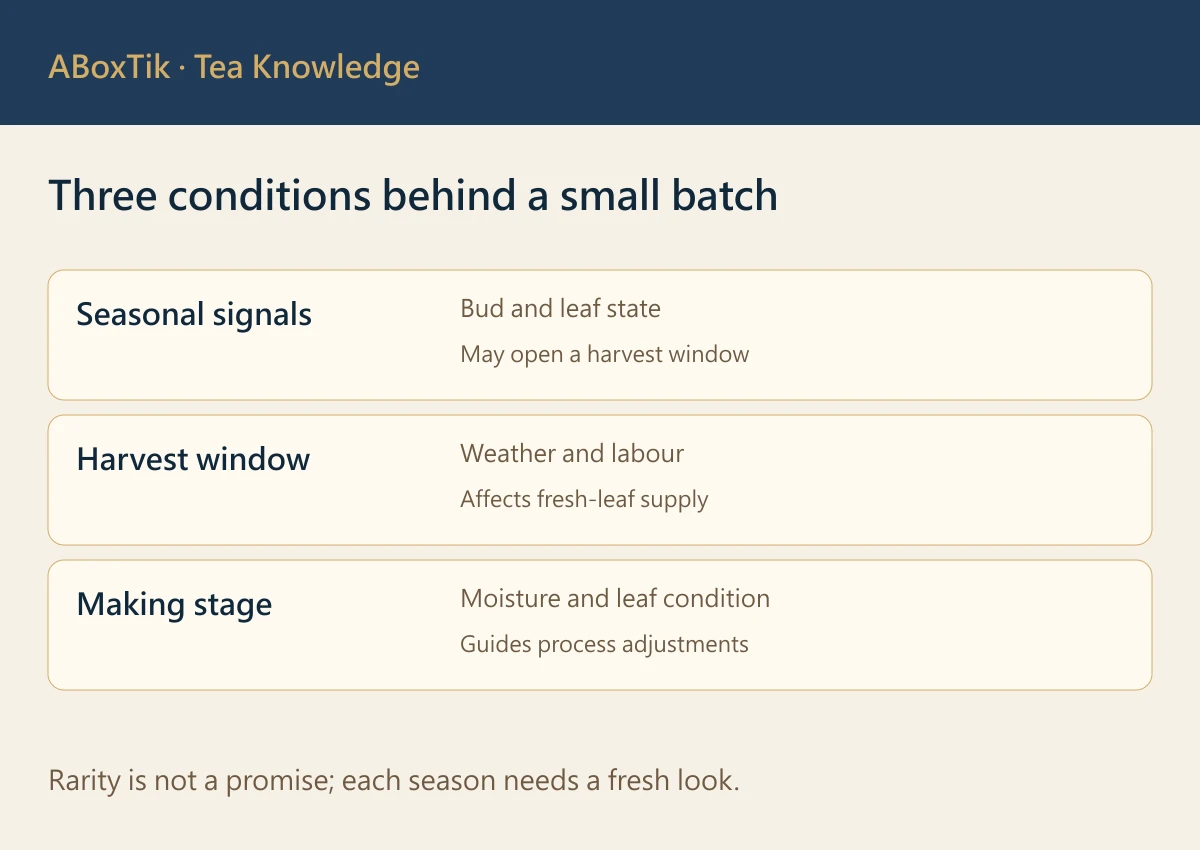
Turn the supply question into four useful questions
Ask: what cultivar and origin does this lot have; is this news about picking or a finished-tea specification; what quantity and packaging are available now; and how should it be stored and first brewed? The questions separate background, stage, supply and use. They are easier to answer than “Is this the best winter-picked tea?” and leave a practical record for a later conversation.
If the tea you hoped for has not appeared, enjoy a batch already at home or explore another fresh or roasted direction. Keep existing tea sealed, dry and away from light according to the storage guide. Refreshing the shop page cannot make a season arrive earlier. Making a familiar cup can be a more pleasant use of the waiting time than asking the refresh button to work overtime.

Follow ABoxTik | Leave time for the season and room for a considered choice.
Understanding variation can make choosing easier
The interest of winter-picked tea lies in how garden conditions and making meet in a particular season, rather than in identical annual output. Consult the current Dong Pian Sijichun information for an actual tea, or explore different oolong directions in the Classic Taiwanese Tea collection. Confirm harvest, specification and availability with the current product information and supplier response.
When the next update arrives, ask which stage it describes before moving on to a purchase. Reading the information clearly lets waiting remain unhurried and makes it easier to choose the next cup for a reason you can explain.
Related reading
- Green Jade and winter picking: separate cultivar and season.
- Drying and moisture: understand the next handover.
- Dong Pian Sijichun: check current product information.
Sources
- Agriculture and Food Agency: understanding winter-picked tea
- Tea and Beverage Research Station: high-mountain oolong
- Tea and Beverage Research Station: packaging and storage
Sources checked 15 October 2026.