
Tea Knowledge
Taiwan Cold Brew Tea Styles: Five Ways to Choose
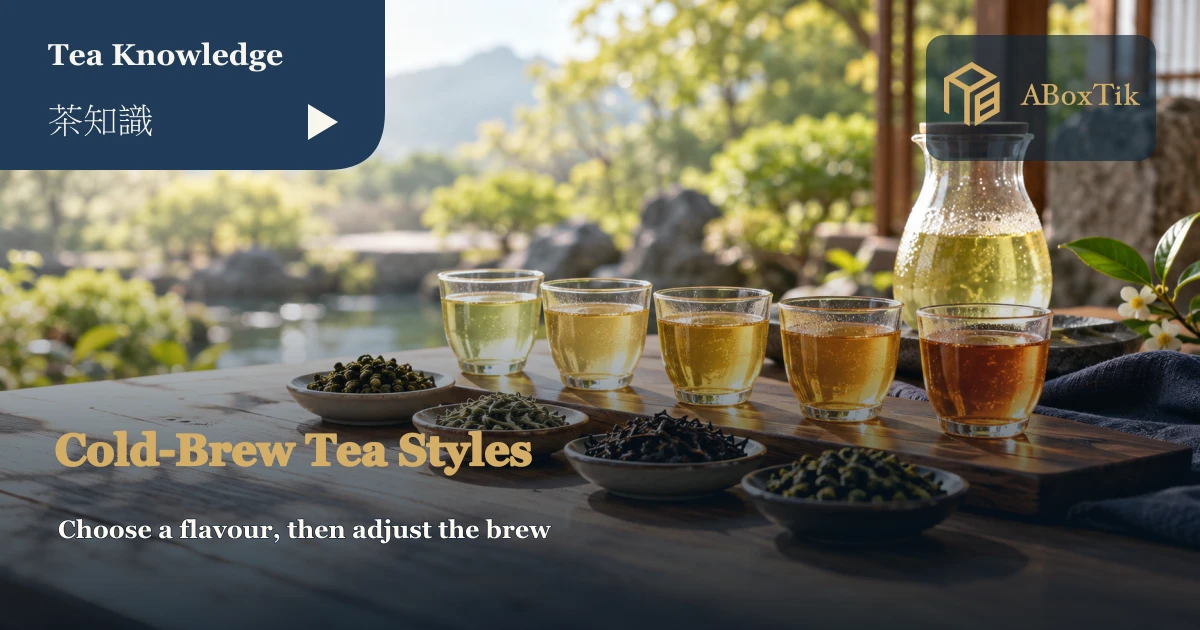
For cold brew, begin with the feeling you want to keep today.
The best Taiwan tea for cold brew is not one universal winner. A more useful first question is whether you want something fresh, floral, rounded, roasted or gently fruity. Green tea, Paochong, light-aroma oolong, roasted oolong and black tea each offer a different direction. Choose the direction first, then follow the package guidance for the tea in hand.
Begin with the flavour that would suit today, then compare two small servings and keep a short note. The five-style map below connects familiar preferences with the tea in the packet, giving the next purchase a practical starting point.
Choose a style before looking for one standard answer
There is no single best Taiwanese tea for cold brew. Tea type, cultivar, origin, processing and each batch can change the cup. For a lively plant-like impression, begin with green tea; for floral notes, consider Paochong or light-aroma oolong; for warmer, riper character, add roasted oolong or black tea to a small tasting list.
The six tea categories explain why Taiwanese teas can move from freshness and flowers to roast and ripe fruit. The Taiwan tea regions guide adds origin to the picture. The package information remains the guide for the tea in front of you.
Give the day one small question, such as “I want a tea that does not feel heavy” or “I want to see whether roast still feels comfortable at a cooler temperature.” A smaller question makes the first cup easier to understand. The leaves will not be offended if you do not taste all five styles at once; they are busy waiting for water.
Green tea: a starting point for fresh, plant-like character
For a bright, fresh direction with hints of young leaves or plants, green tea can be the first stop in a cold-brew comparison. The leaves are fixed early in processing, and the finished tea may suggest freshness, sweetness or a vegetal impression. Material, origin and product design still matter, so no two green teas need to behave like identical cousins at a family photo.
The appeal of green tea is not simply that it is lighter. It can suit someone looking for a clean cup that moves easily with the day. On a first tasting card, “Does it feel fresh?” and “Do I enjoy that plant-like character?” are enough to guide the next choice. Tea flavour foundations can help separate aroma from taste without demanding that every impression receive a complicated name.
If a green tea has more personality than expected, that is useful information. Look back at its name and package details, then decide whether you enjoy that brightness or would rather move toward the floral direction of Paochong. A fork in the path is not evidence that the walk went wrong.
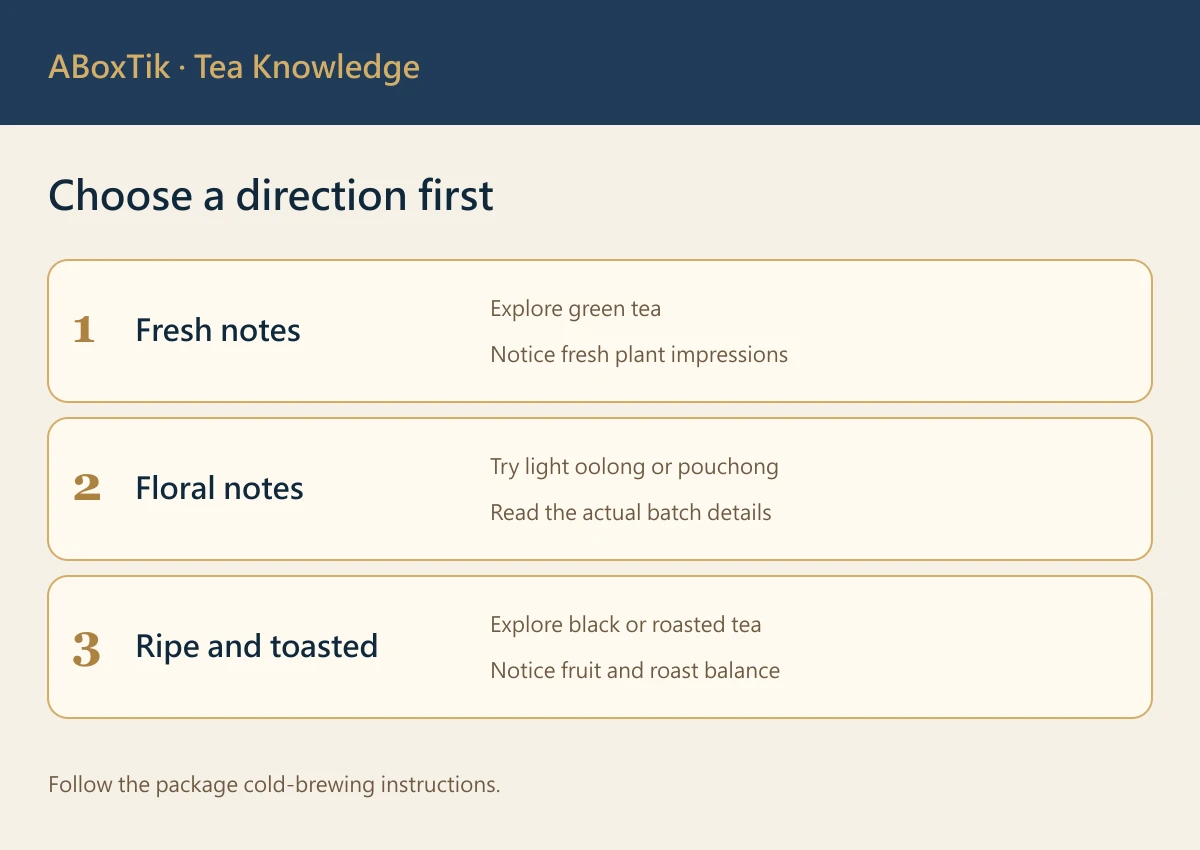
Paochong and light-aroma oolong: giving floral notes room
Paochong and light-aroma oolong can sit on the same comparison card, but they should not be treated as the same tea. Both may suggest floral aroma, sweetness or a lighter, more buoyant cup. Their actual expression still comes back to cultivar, origin and process. Ask whether you want a softer aromatic companion, or a little more roundness in the tea itself.
For anyone who enjoys smelling the cup and noticing aroma changes, these two directions are especially rewarding to compare in small portions. Use similar vessels and water, then ask which cup is closer to the feeling you want today. The sequence from dry aroma to warm aroma gives observation a calmer pace. It is not an instruction to find one correct flower name; it is a way to make the reason for your preference easier to return to.
For a next step between light and roasted directions, see light and roasted Taiwanese tea compared. Start on one side, then return to the other. That is usually more fun than choosing a lifelong tea team on the first day.
Roasted oolong: compare ripe aroma and cup structure
If you enjoy impressions of baking, nuts, caramel or a warmer character, include roasted oolong on the cold-brew tasting card. Roasting is a heat treatment in tea processing that can bring a different aromatic direction. It is not a tea category, and it does not make every cup automatically heavy. In a cooler cup, roast may speak more quietly while still appearing alongside sweetness and texture.
When comparing, do not ask only whether the roast is obvious. Ask whether the aroma feels clean, whether you want another sip, and which cup suits today’s meal or mood. The guide to tea astringency can help turn “too heavy” into a more specific observation, so one word does not cover the whole cup.
If you have teas with different roast levels, try each according to its own package guidance. They may all have oolong in their names, but they do not need to submit the same flavour report.
Black tea: for ripe fruit, sweetness and a fuller outline
Taiwanese black tea offers another route for cold-brew selection. Some drinkers enjoy its ripe-fruit, sweet or spicy suggestions and a cup with more outline. These are sensory directions, not promises that every black tea will show every descriptor. If you would like a tea with a little more presence while keeping an unhurried pace, black tea belongs in a small comparison.
Choose a tea with clear source information, then note whether aroma, texture or the feeling left after drinking matters most. The Taiwan Tea No. 18 guide gives context for one cultivar, not every Taiwanese black tea. Keeping “what I enjoy” separate from “what all black tea should be” leaves room to choose freely.
If a black tea feels stronger than expected, do not rush to decide that it is unsuitable for cold brew. Return to the package guidance and change only one condition next time. The Taiwan tea steeping-time guide can support repeatable notes without adding another set of numbers here.
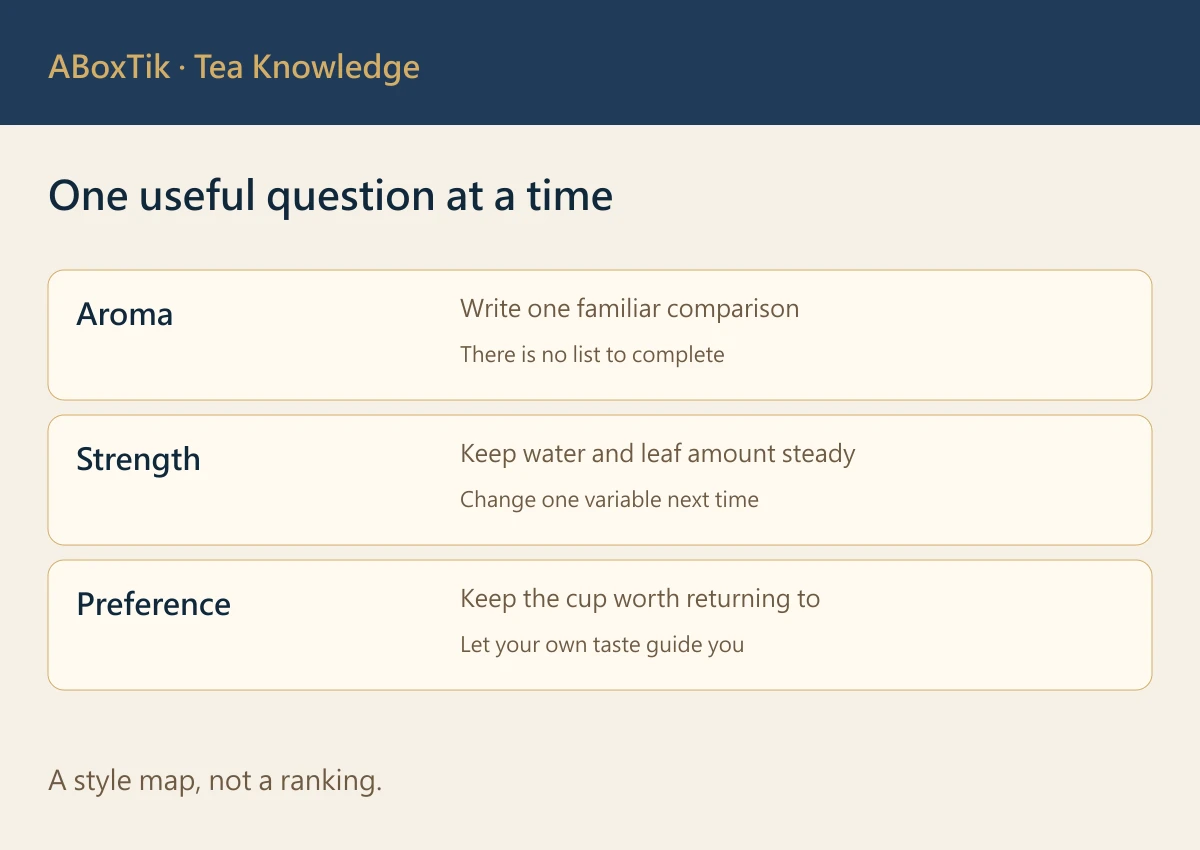
Compare five styles with a small tasting card
A side-by-side comparison does not need to turn the table into a laboratory. Choose two clearly different teas, use similar vessels and conditions, and pour a small cup of each. On the first round, note aroma direction, whether the cup feels light or rounded, and whether you want another sip. Leave another pair for another day.
| Direction you want | Tea to try first | What to note on a small card |
|---|---|---|
| Fresh, plant-like | Green tea | Does the freshness feel bright? Would you drink it again in the daytime? |
| Floral, gentle | Paochong | Is the aroma clear in the cup? Does the tea feel comfortable? |
| Floral, rounded | Light-aroma oolong | Do aroma and texture appear together? |
| Ripe, warm | Roasted oolong | Does the roast feel clean? Does the cup feel heavy? |
| Ripe fruit, sweetness, outline | Black tea | Keep sweetness, texture and personal preference separate. |
For another infusion of the same tea, the re-steeping guide can extend the observation. For the established cold-brew ratio and process, return to the cold-brew ratio guide. A tasting card is there to preserve your response, not to award a tea trophy.
Turn a preference into an easier next choice
After two or three rounds, write your preference in ordinary language: “I want freshness without feeling thin,” “I like roast but want a softer entry,” or “I am looking for ripe-fruit character.” These are more useful for finding the next box than “I want the most premium tea,” and they help a friend understand what to choose for you.
The Taiwan tea starter set provides a wider beginning across styles. For a cold-brew-friendly choice that can travel to the office or on a trip, whole-leaf tea bags raise different practical considerations. Check the current product page before choosing; a style guide should never imply that every box contains the same tea.
For gifting, the Classic Taiwan Tea Four-Tea Set gives a recipient several directions to explore, while the Two-Box Tea Bag Gift Set lowers the threshold for starting. To meet an oolong through its cultivar, see the current Jinxuan Oolong product information. A box does not need to decide anyone’s preference. It only needs to take good care of the first step.

Follow a Box of Tea
Let cold-brew tea begin with your own preference
At ABoxTik, cold-brew pleasure is not memorising a universal answer. It is gradually learning which freshness, floral aroma, roast or sweetness you enjoy. Choose a style, compare small portions, then let the next cup move closer to what you like.
For a wider view of Taiwanese tea terroir and craft, read what makes Taiwanese tea special. If you are choosing a gift for someone else, questions to ask before giving a tea gift box keep their own drinking situation in view.
Related reading
- Return to the established cold-brew ratio and package guidance
- Compare light and roasted Taiwanese tea
- Use an aroma sequence to remember a direction you enjoy
Sources
- Tea and Beverage Research Station: Taiwan tea industry and tea classification
- Tea and Beverage Research Station: Tea cultivar and processing information
- Taiwan Quality Tea Information System, Tea and Beverage Research Station
Sources checked 19 October 2026.