
Tea Knowledge
Fushoushan Tea: Names, Source Checks and a Thoughtful Buying Guide
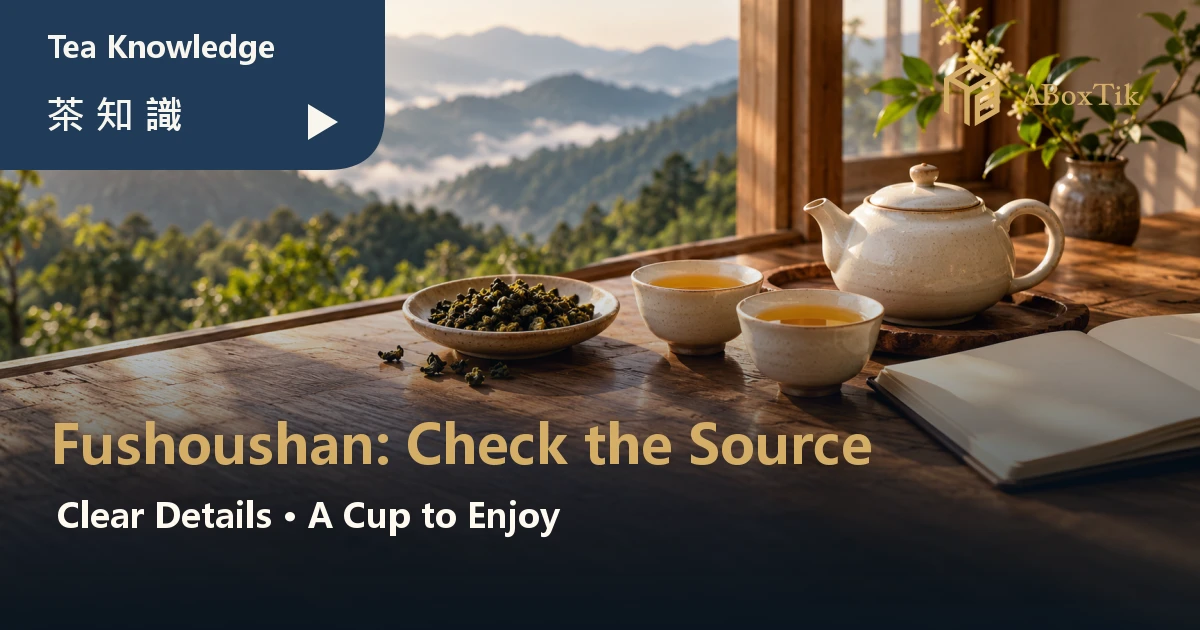
A mountain name invites curiosity; clear details give that curiosity a place to begin. Read the source slowly, then leave a little room for the cup to tell its own story.
Fushoushan tea is best checked by identifying exactly what the name refers to, then matching the producer, packaging and batch information. For canned Fushou Changchun tea sold by Fushoushan Farm, follow the farm’s instructions for the lid’s authentication label and the traceability label on the base. Aroma, leaf appearance and price help with comparison, but cannot establish origin on their own.
If a product page mentions Fushoushan, Lishan and Tianchi in one breath, it can feel as though three maps have opened at once. There is no need to become a tea detective overnight. Separate the place name, product identity and tasting experience, and ask one useful question at a time. the Lishan tea guide provides regional context; this guide concentrates on the packet or tin in front of you.
Fushoushan Tea and Fushou Changchun: Match the Name to the Producer
Fushoushan Farm is in Lishan Village, Heping District, Taichung, and sells its own Fushou Changchun tea. Treat a general Fushoushan description and the farm’s complete product name as different things to check. For the former, ask the seller for a specific source. For a product presented as the farm’s own, verify that identity against the relevant packaging and official information.
| Name on the page | What to check next | A useful question |
|---|---|---|
| Fushoushan tea | Garden, producer and batch | Who supplied and made this tea? |
| Fushou Changchun | Farm identity and relevant packaging checks | Can I see this tin’s labels and traceability details? |
| Tianchi or a high-section description | The location or product series intended | Which specific source does that name refer to? |
| Lishan tea | A more specific source within the regional description | Where was this batch produced? |
A longer mountain name does not earn a higher score. Nor does a place name tell us the cultivar or processing method. Read the Huagang and Lishan comparison and the Dayuling tea guide when neighbouring names need more context. Asking for a clear identity is a considerate way to begin a purchase, rather than an examination the seller must survive.
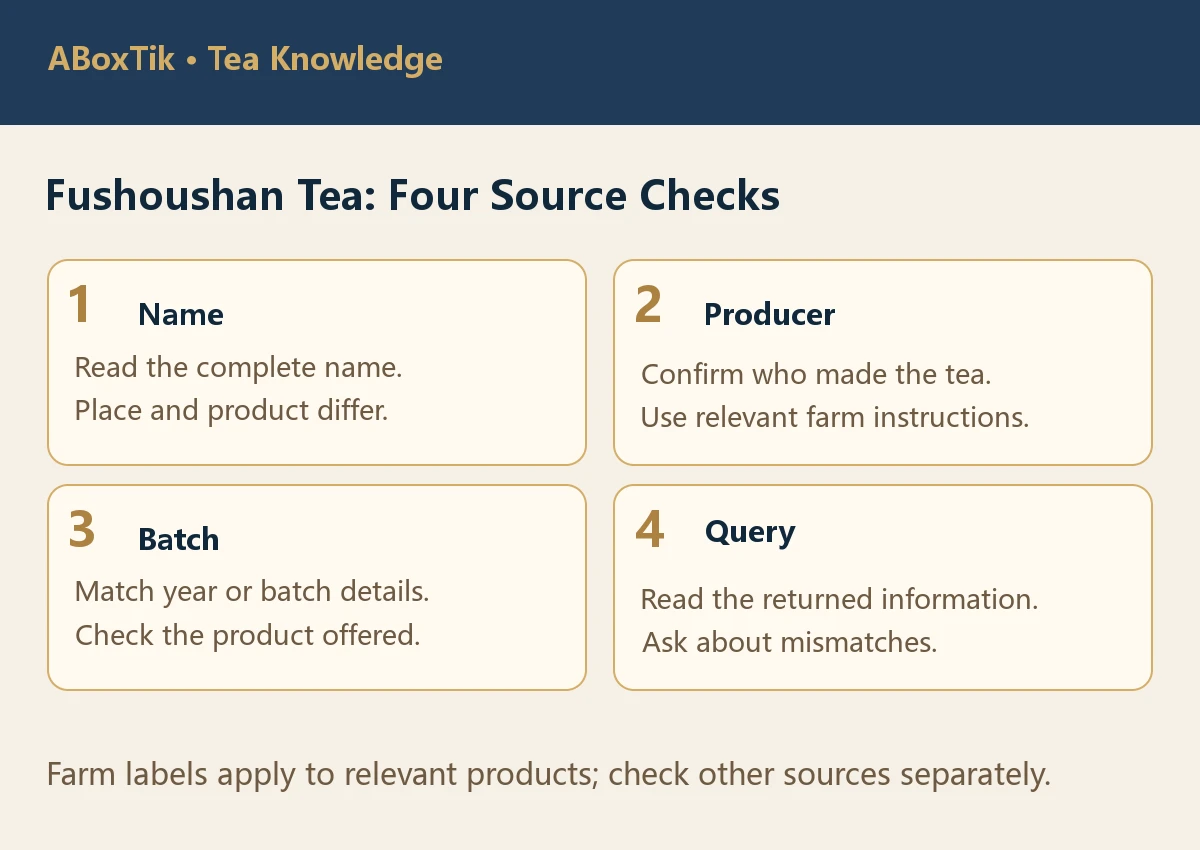
For the Farm’s Canned Tea, Check the Packaging as Instructed
The farm’s authentication instructions describe a dedicated label on the lid of its canned Fushou Changchun tea, with a mobile-app checking process. A separate packaging notice explains a change to manufacturing-date markings on tin seals and vacuum packs and directs buyers to traceability information on the base. Read the packaging and the query result together.
- Identify the complete product: compare its name, producer and size with the listing.
- Inspect lid and base: locate the relevant labels using the instructions for that packaging. Ask the farm about a different format.
- Use the official route: follow current farm instructions and compare the available product, producer and batch fields.
- Ask about mismatches: retain packaging photographs and the purchase record so the farm or seller can help.
Opening a query page is only the beginning: read whether its details correspond to this product. The farm’s label is specific to its own products. Another producer’s tea should be checked through that producer’s source and traceability information, rather than through a label it was never meant to carry. the tea traceability guide explains the wider landscape of tea traceability.
Let Aroma Describe the Cup, Rather Than Issue a Passport
The farm describes its tea using floral and fruit notes, golden liquor and a smooth, sweet impression. These are directions for observation, rather than a promise for every cup bearing a Fushoushan description. A pleasant floral note is something to enjoy and record; the nose does not issue origin certificates.
Smell the dry leaves, notice the warm aroma after brewing, taste once the liquor is comfortable to drink, then return to the cooling cup. A simple description such as “fresher at first, softer in the second infusion” is useful even without a professional vocabulary. the aroma observation guide offers a sequence, while the high-mountain tea quality guide puts source, processing and storage into a broader comparison.
If a cup feels unusually bitter or drying, record leaf weight, water volume, temperature and time before making an adjustment. An overly strong brew is not an origin test. the bitterness and astringency guide helps distinguish sensations; the light and roasted tea comparison adds context for lighter and roasted styles.
Three Questions Before Buying
A few specific questions can do more than a long exchange about misty mountains. The scenery can stay in the story; the next reply needs to concern the tea available for purchase. Try these sentences when choosing a first packet or comparing two listings.
- Source: “Is this a Fushoushan Farm product or another producer’s tea? Could you provide its full name, source and producer?”
- Batch: “Which year, harvest season or batch number is currently supplied, and how does it match the packaging?”
- Use: “Which tea style, cultivar and roast details are confirmed? How would you brew and store this batch?”
Not every listing publishes every field. Ask first, and mark unanswered items as unknown instead of filling them with a reassuring guess. A clear response and matching information are useful reasons to consider a seller. A memorable adjective is enjoyable, but it cannot do all that work.
For price comparison, put net weight, tea style, available batch details, packaging and shipping on the same line. A small tin and a larger pouch are not directly comparable, and different producers may be selling different products. Neither a high nor low price authenticates tea. Choose a quantity that fits everyday drinking before the cupboard needs a new floor plan.
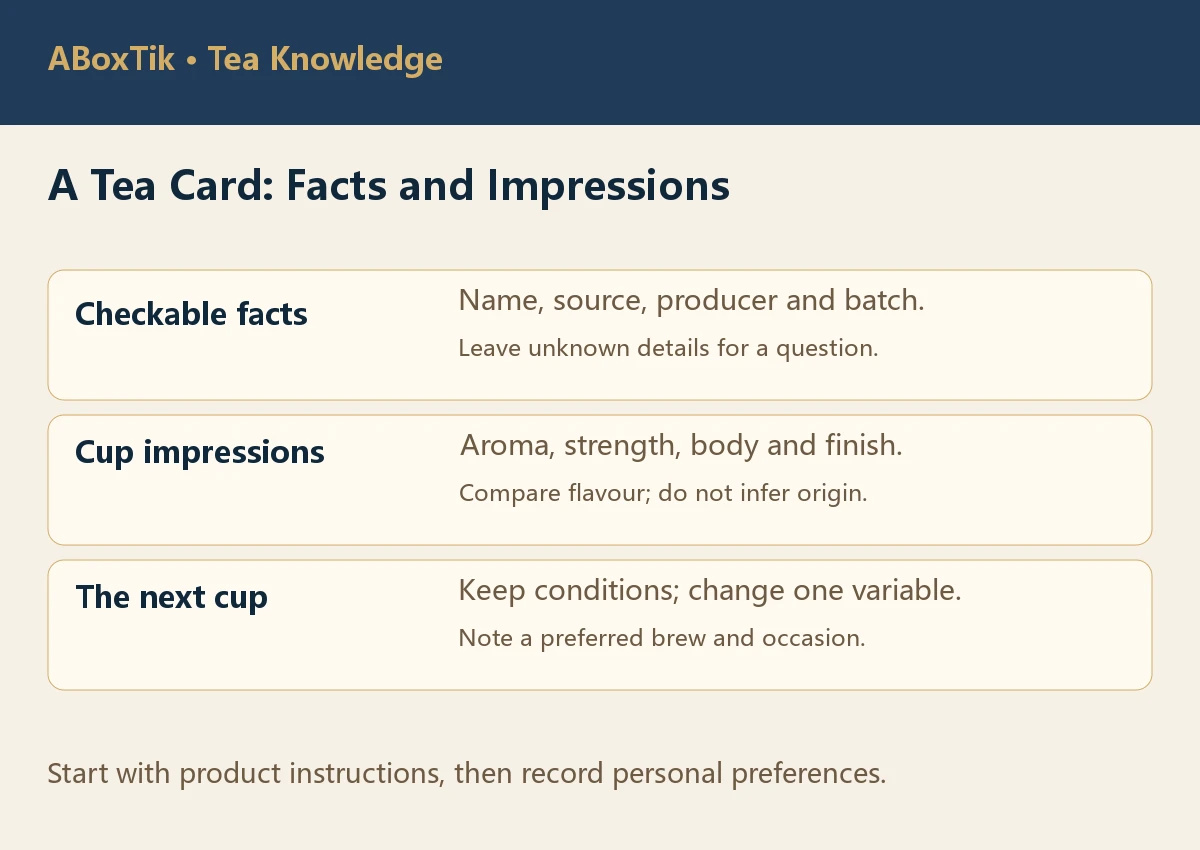
A Small Exercise: Keep Facts and Impressions in Two Columns
Fold a sheet of paper into two columns. On the left, record information that can be checked. On the right, record what this brewing session feels like. This editorial exercise helps keep a favourite cup from becoming the mystery of “that lovely tea whose name I forgot”.
| Checkable information | This session’s impressions |
|---|---|
| Name, source, producer and batch | Warm and cooling aromas |
| Confirmed tea style, cultivar and processing | Strength, body and finish |
| Vessel, leaf weight, water, temperature and time | Favourite infusion and next adjustment |
| Unanswered questions | A moment suited to drinking or sharing it |
Begin with the product’s brewing instructions, then adjust one variable. If the cup is too strong, shorten the next infusion while keeping other conditions steady. Changing water, vessel and leaf quantity together makes the answer harder to follow. the first-infusion timing guide offers first-infusion thinking, and the whole and broken-leaf comparison explains why leaf size can affect the pace of extraction.
With two teas, first find a suitable preparation for each, then compare under reasonably similar conditions. A single brewing session cannot rank whole regions. Finish with a personal question: “When would I enjoy this cup?” Keep preference in the right column and source in the left. The story and the evidence can share a table without competing for the same chair.
Common Questions About Labels and Flavour
Does a missing farm label mean the tea is fake?
No. First establish whether it is sold as the farm’s relevant canned product. Other producers and packaging formats need their own source checks. If a claimed farm product raises questions, ask the farm directly rather than deciding from a photograph.
What if there is no manufacturing date on the seal?
The farm has issued a notice about those date markings and traceability information. Match the product and packaging to current official instructions. This specific notice does not describe every tea package.
Does a lack of floral aroma mean the origin is wrong?
Aroma alone cannot answer that. Tea style, storage, preparation and sensory language all affect the experience. Brew again with steady conditions, and check source questions through product and batch information.
Should I buy by Tianchi names or altitude alone?
Ask what location the description refers to and what information supports it. Those details start a conversation; they do not replace a full product identity. There is no need to sacrifice a preferred flavour for a larger number.
Follow ABoxTik: Clearer Questions, a More Personal Cup
Understanding Fushoushan tea begins with knowing what to ask next. Read the name for source, compare the packaging with its relevant information, and taste for preference. the Taiwanese tea regions guide and the guide to Taiwanese tea open a wider view of Taiwan’s tea landscapes.
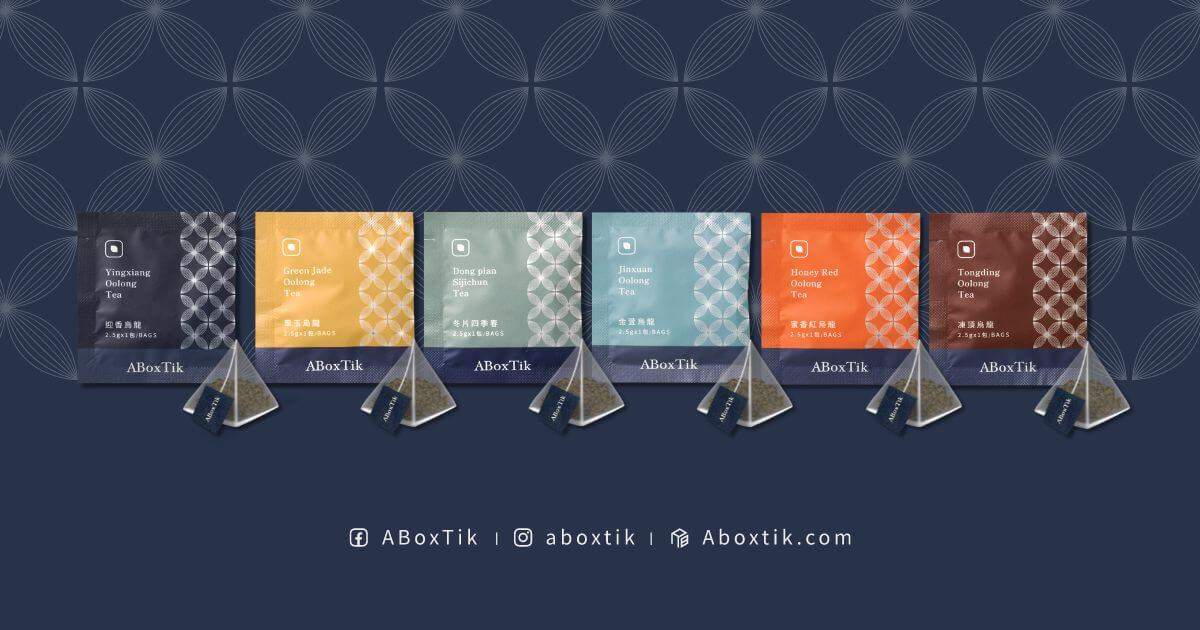
For other Taiwanese high-mountain styles, explore Yaba high-mountain tea (Traditional Chinese product page) and its current tea options. For smaller portions and easy sharing, the four-box Taiwanese pure tea gift offers another way to begin. Choose one interesting flavour, keep a short record, and expand at a comfortable pace. Bring today’s questions to the tea shop; a thoughtful tea gift becomes easier to explain, too.
Sources
- Fushoushan Farm: Fushou Changchun tea
- Fushoushan Farm: authentication label instructions
- Fushoushan Farm: packaging dates and traceability notice
Sources checked: 11 October 2026. Questions and tasting card: editorial guidance.