
Tea Knowledge
Build Your First Taiwanese Tea Set: Four Flavours to Explore
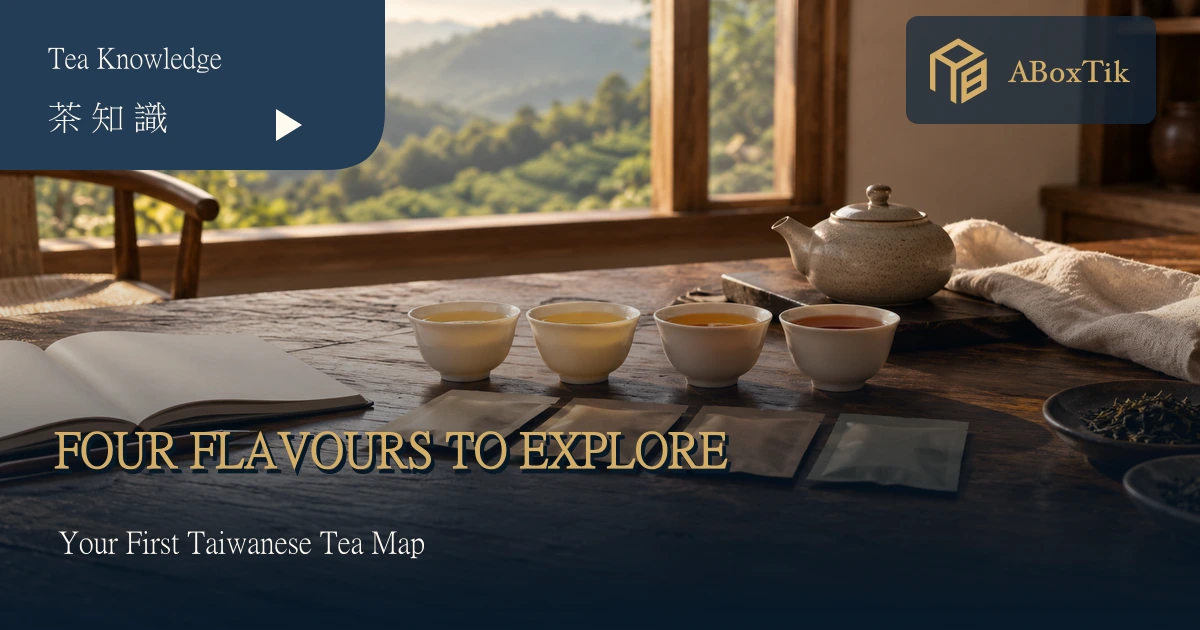
Your first cup need not be an entrance exam. Give four flavours a place at the table, let flowers, sweetness and roast take their turns, and notice which cup you would gladly make again. That is a perfectly good place to start.
A Taiwanese tea starter set can begin with floral, sugar-sweet, roasted and honey-fruit flavour directions. Try Yingxiang, Jinxuan, Dong Ding and Honey Red Oolong across two sessions, with two teas in each. Follow the brewing instructions, use comparable cups and note aroma, texture and preference. A useful contrast teaches more than a cupboard full of unfamiliar names.
“What if I don’t know enough to choose?” Start with a smaller question: do light floral aromas appeal, or do toasted and ripe-fruit notes sound inviting? Names can come later. For the wider story, read what makes Taiwanese tea distinctive. Here, we will put together a first set that actually finds its way into a cup.
A Taiwanese tea starter set with four useful roles
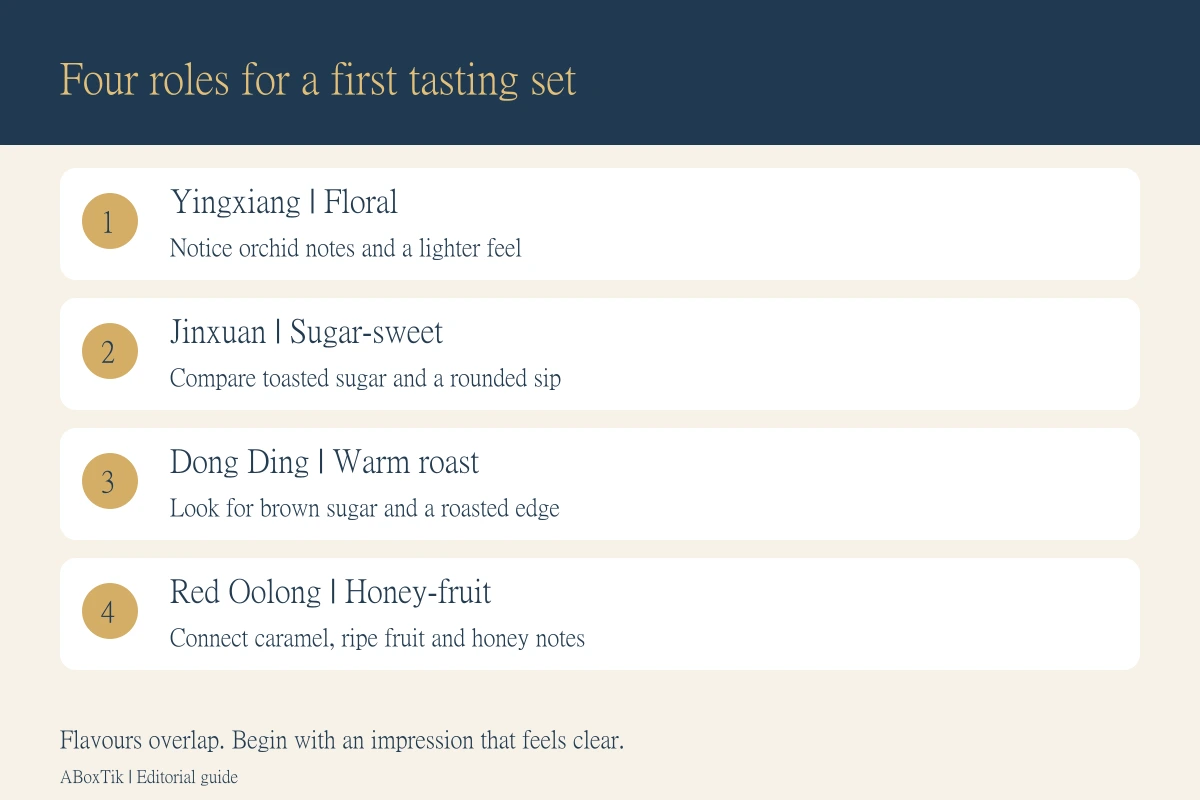
Four teas are useful when they offer something to compare. Four different names with very similar floral descriptions may leave only one note: “All quite fragrant.” Read the flavour and processing descriptions before filling the four places.
| Flavour direction | A tea to consider | What to notice first |
|---|---|---|
| Lifted floral | Yingxiang Oolong | Orchid and floral-fruit notes; whether the aroma and first sip feel equally light. |
| Gentle sugar sweetness | Jinxuan Oolong | Toasted sugar, sugar-cane sweetness and a rounded texture. |
| Warm roast | Dong Ding Oolong | Brown-sugar and candied-chestnut notes, with a lightly roasted edge. |
| Ripe fruit and honey | Honey Red Oolong | How caramel, ripe-fruit and honey-like aromas connect. |
These starting points follow ABoxTik’s product descriptions: Yingxiang highlights orchid and floral-fruit sweetness; Jinxuan focuses on roasted sugar and sugar-cane notes; Dong Ding lists brown sugar and candied chestnut; and Honey Red Oolong offers caramel, ripe-fruit and honey-like directions. Let the brewing session reveal which details stand out.
The roles overlap. Jinxuan can have roasted notes, and Red Oolong can have sugar sweetness. That makes a useful question possible: when both cups smell sweet, which feels more toasted and which more fruity?
Keep one familiar flavour and one small adventure
For a floral preference, keep Yingxiang and consider a comparison with Green Jade Oolong. For toasted aromas, keep Dong Ding and add a lighter contrast. A black-coffee drinker need not automatically prefer a strongly roasted tea: ask whether the attraction is toastiness, body or bitterness.
Jinxuan deserves an extra moment with the description. Jinxuan is a tea cultivar, and its teas do not all have equally prominent milky aromas. This selection uses a toasted-sugar direction. If milkiness is the goal, say so when choosing rather than asking every Jinxuan to report for milk-tea duty.
If four teas exceed the budget or the pace of drinking, start with two clear contrasts. Keep something familiar beside something new, then add another direction later. The cupboard does not need to graduate before the drinker. Once preferences emerge, a guide to choosing rare teas can help with the next step.
Choose bags or loose leaf around the cup already there
A mug and kettle make measured tea bags an approachable starting point. A teapot, strainer and habit of weighing leaves give loose leaf more flexibility. Choose a format that is easy to repeat; assess quality through material, origin, storage and the brewed tea. A new set of equipment is optional. The gaiwan and teapot comparison can help if equipment is the next question.
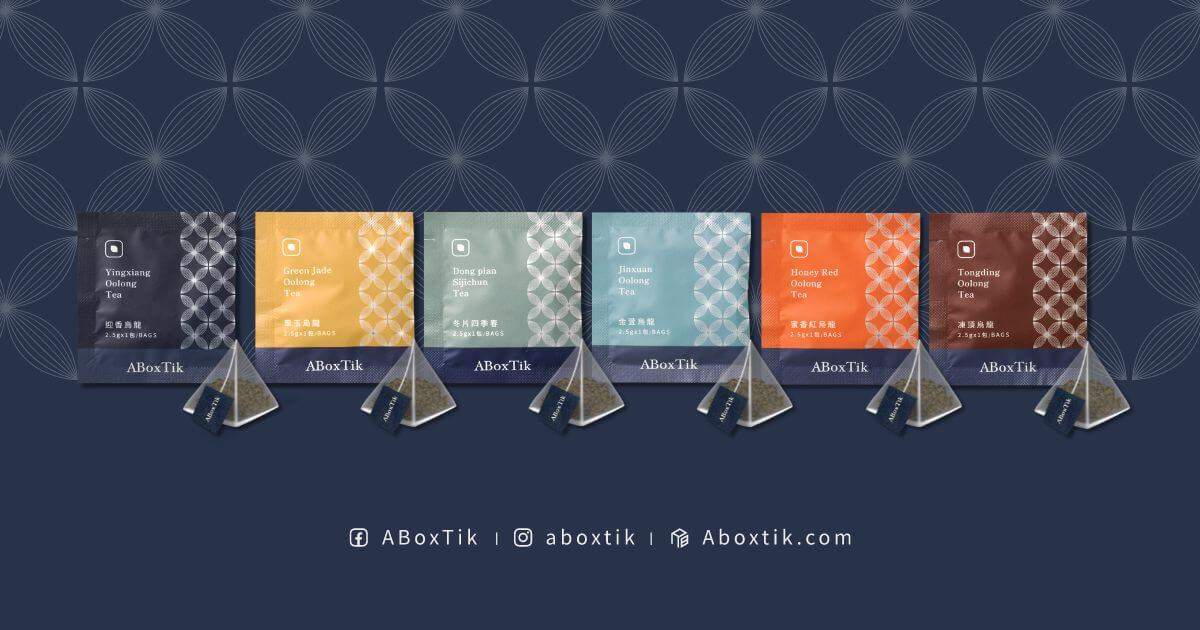
At the time of review, the Classic Taiwanese Tea four-selection gift box allows four choices from six teas, with ten bags per selection: forty bags altogether. Four selections means four groups, not four single tasting sachets. It suits repeated exploration or sharing; for a very small trial, compare individual pack sizes first.
A first comparison is easier within one format. Mixing loose leaf and bags introduces different amounts, leaf shapes and equipment conditions. If the set is a gift, consider the recipient’s mug and habits with the tea gift selection guide.
Two sessions, two cups: make the contrast memorable
Compare Yingxiang and Jinxuan first, noticing floral and sugar-sweet directions. Another day, compare Dong Ding and Honey Red Oolong for roast versus ripe fruit and honey. There is no deadline, and no need to finish every cup. Finding one worth lingering over is progress too.
- Write down the conditions. Follow each package for tea amount, water volume, temperature and time. Use the same water source and comparable cups. Where instructions differ, follow each and note that difference.
- Separate leaves and water when ready. Remove the bags or strain the tea. Label the cups A and B before conversation makes their identities a little mysterious. Let the timer remember the seconds while people listen to each other.
- Taste once comfortably cool. Smell, then take a small sip and notice texture. Pause with plain water between teas. Start without milk or sugar to get to know the tea itself.
- Write one sentence per cup. “A has a lifted aroma; B feels rounder” is enough. Return when the cups are cooler and see whether that first impression changes.
A comparison under identical conditions is a separate exercise: choose teas whose guidance allows the same setup, then keep amounts, temperature, time and equipment consistent. If each tea used different recommended instructions, record impressions under those respective recipes. For adjusting one brew, use the first-infusion timing guide.
Three columns are enough for a first tasting map
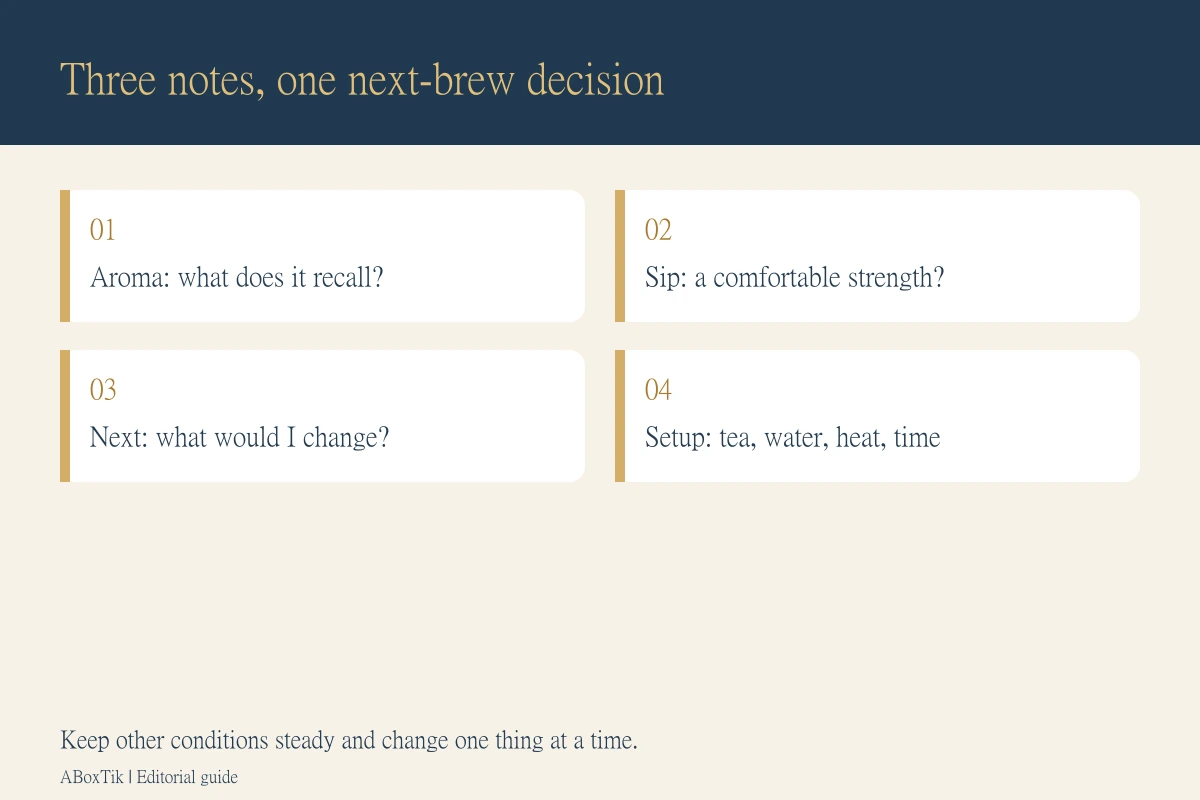
The Tea and Beverage Research Station’s Taiwanese tea flavour wheel provides shared vocabulary for describing impressions. A home journal can start simply: flowers, fruit, sweetness or roast; then light, rounded or full; finally, what to do next.
| What does it smell like? | How does the sip feel? | What would I try next? |
|---|---|---|
| Floral / ripe fruit / sweet / roasted; strong or gentle | Light / rounded / full; a comfortable strength? | Repeat / brew lighter / try another tea |
| Example: B smells like toasted sugar | Example: smooth, slightly too strong today | Example: shorten the next brew; keep the rest unchanged |
“I can smell flowers, but which flower?” “Flowers is fine. The exact name can take the afternoon off.” Record what feels certain and use the dry, hot and cooling-aroma sequence when more detail is welcome.
The station’s sensory evaluation introduction considers appearance, liquor colour, aroma, taste and infused leaves together. At home, looking beyond the first burst of aroma is useful too. If strength feels wrong, change one brewing condition and try again before making a final judgment.
A few first-set questions, without a ranking contest
Will four oolongs taste too similar?
Not necessarily: processing and roasting create useful contrasts. This set explores oolong first. Later, the six tea categories offer routes into black or green tea. Four flavour directions do not mean four tea categories, or all of Taiwan’s tea.
Should beginners start floral and “advance” to roast?
There is no required order. Begin where the aromas sound inviting. A lifted aroma need not mean a weak cup, and roast need not mean bitterness. Brew to a comfortable strength and keep the preference that actually belongs to the drinker.
What if a friend prefers a different cup?
Keep both answers. Ask whether they enjoy the aroma or the body rather than which cup is “better.” For the background, explore Taiwan’s tea regions. A shared table has room for different favourites.
Follow ABoxTik: a first map can begin with “I’d like another cup of this.”
Make the first set one worth opening again
A Taiwanese tea starter set succeeds when it reveals a preference and a repeatable way to brew. ABoxTik connects Taiwanese tea craft with daily use; the brand story offers that wider perspective, while the next cup supplies the personal detail.
Keep a favourite as a reference. If the choice is still open, talk with ABoxTik about cup size, preferred aromas and budget. “Something a little lighter” is plenty to begin a useful conversation.
Related recommendations
- Classic Taiwanese Tea four-selection gift box: build flavour contrasts and check the total bag count.
- Jinxuan Oolong: explore this tea’s toasted-sugar and sugar-cane direction.
- Tea aroma guide: record how a favourite changes with warmth and time.