
Tea Knowledge
TTES No. 21 Hongyun vs Ruby Red: Two Taiwanese Black Tea Cultivars
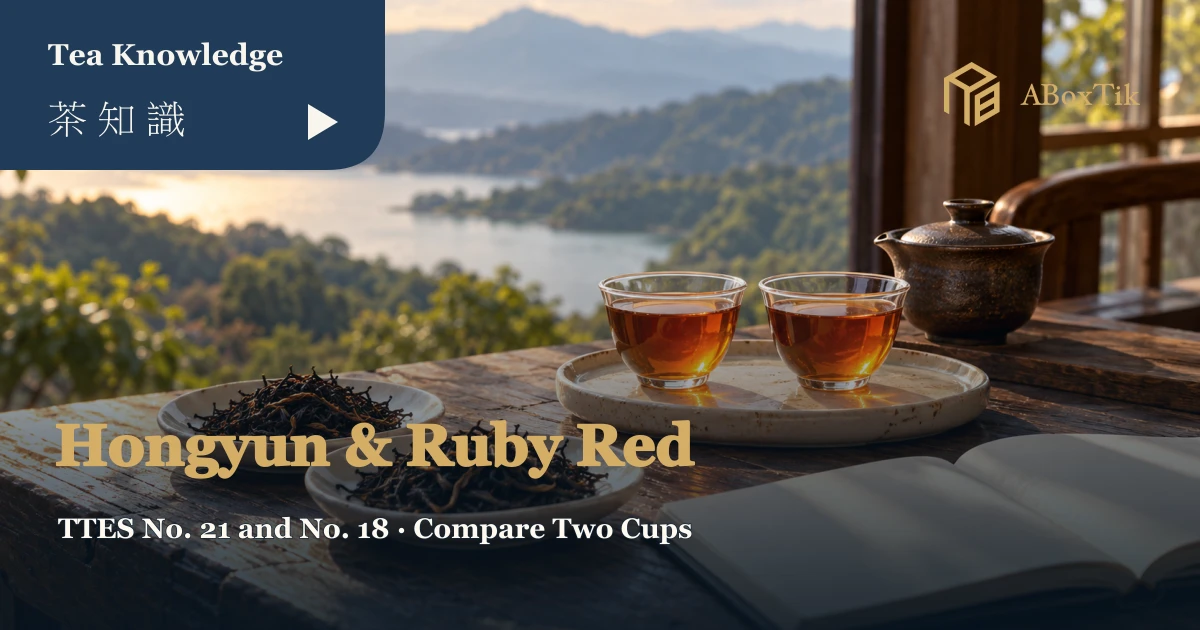
Two cups of black tea do not need a winner. Let the floral notes and the spice-like notes take their seats, write down what you want to keep today, and leave the numbers to your notebook.
Hongyun vs Ruby Red begins with cultivar identity: TTES No. 21 Hongyun is often approached through citrus-floral notes, while TTES No. 18 Ruby Red is often described through mint and cinnamon-like notes. Both can be made as black tea, but they are not one tea with two labels. Check the cultivar, actual origin and batch first, then compare under similar conditions; a larger number does not arrive with a tiny crown.
Two packs can look very alike, so the hesitation is perfectly reasonable. There is no need to memorise a breeding chart before making tea. This guide separates the names, aroma language and a simple two-cup comparison. For the broader category, see our Taiwanese black tea guide; for a closer look at No. 18, visit our Ruby Red tea guide.
Hongyun vs Ruby Red: what is TTES No. 21 Hongyun?
TTES No. 21 is the formal cultivar number for Hongyun. The National Taiwan Science Education Center records its formal naming on 17 October 2008 and its suitability for black-tea manufacture. TTES No. 18, also called Ruby Red, was named in 1999 in the cultivar record of the National Cultural Memory Bank. These are identity dates, not picking dates or pack dates.
“Black tea” names the tea category; “TTES No. 21” and “No. 18” name cultivars; “Sun Moon Lake” describes a place and a local tea-making context. They may share a label, but answer different questions. A Sun Moon Lake black tea still deserves a cultivar check, while a tea labelled Hongyun still deserves an origin and maker check. Our Sun Moon Lake tea factory story, TTES No. 8 Assam guide and tea types overview offer useful neighbouring context.
How do the breeding histories differ?
For Hongyun, begin with two careful phrases: it is a natural-hybrid descendant of FKK-1, and FKK-1 has Kyang and Kimen in its background. The science-center record describes Hongyun as an FKK-1 natural-hybrid descendant; the cultural record lists FKK-22 as its original line. Read these as two stages of selection: the FKK-1 background first, then the line that became Hongyun.
Ruby Red has a separate recorded route: an artificial cross between Burmese large-leaf tea B-729 and Taiwanese wild tea B-607. The cultivars have their own selection histories; subtracting 18 from 21 does not produce a ranking. The table records identities that can be checked. The strength of a particular cup belongs to its tea, batch and brewing.
| Point of comparison | Hongyun | Ruby Red |
|---|---|---|
| Formal number | TTES No. 21 | TTES No. 18 |
| Breeding clue | Natural-hybrid descendant of FKK-1; original line FKK-22 | Artificial-cross descendant of Burmese large-leaf tea and Taiwanese wild tea |
| Cultivar naming year | 2008 | 1999 |
| Aroma entry point | Citrus-floral, pomelo-blossom direction | Mint and cinnamon direction |
| Also check when buying | Actual origin, picking or production batch, processing and storage | |
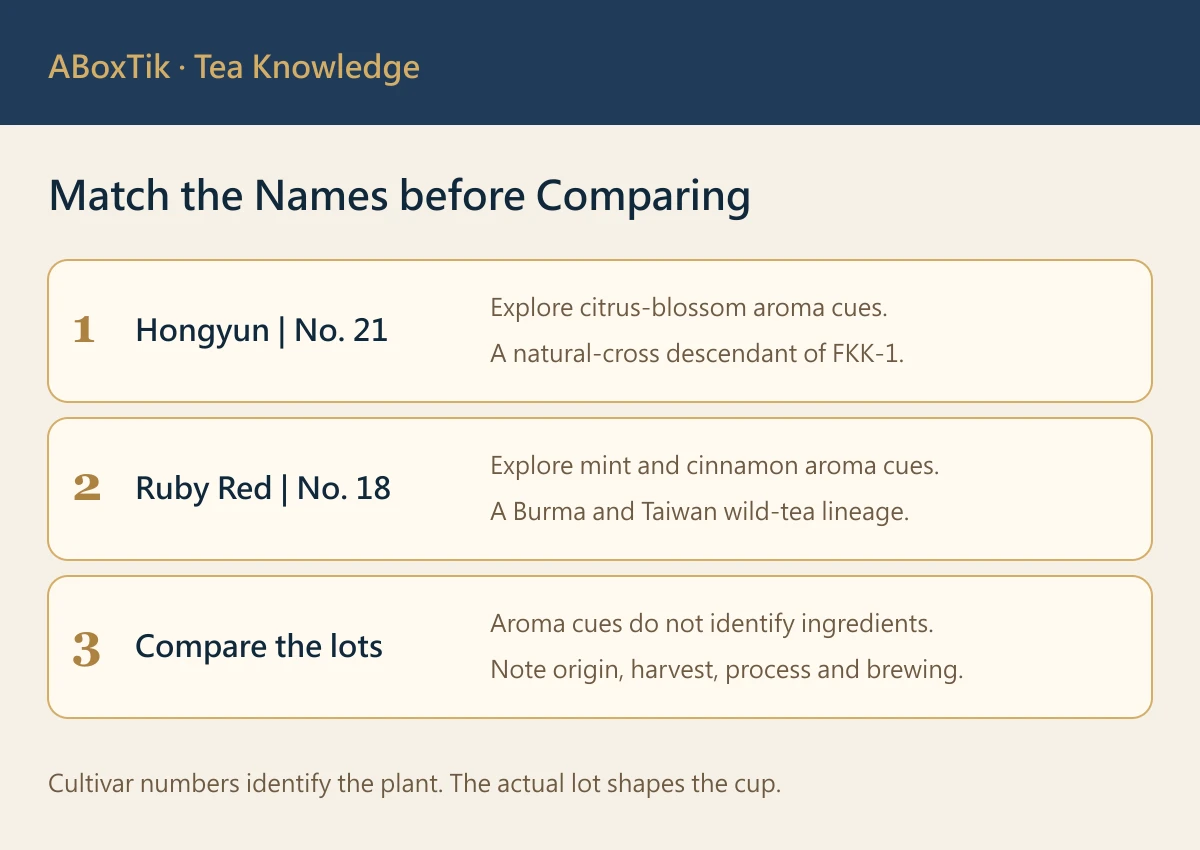
How should pomelo blossom, mint and cinnamon be understood?
The science center introduces Hongyun with pomelo-blossom aroma, and the cultural record uses citrus-family floral aroma. Start with the image of a citrus blossom; it does not mean pomelo juice has been added to the tea. Ruby Red’s mint and cinnamon language works in the same way: familiar scents help describe an aroma. Ingredients and flavouring are matters for the label, not a verdict supplied by one aroma word.
For a first comparison, “more floral,” “fresher,” “more spice-like,” or “riper-sweet” is already useful. If pomelo blossom does not appear today, there is no retest for the nose. Harvest timing, raw material, manufacture, storage and brewing all shape expression. One gentle cup does not prove every Hongyun is lighter than every Ruby Red.
Keep aroma and palate in separate columns: “fresh on the nose” is one note; “full, light, drying or soft on the palate” is another. Our tea aroma guide can help you note dry leaf, warmed leaf and cooled-cup changes; the bitterness and astringency guide gives vocabulary for texture. Your own clear words are more useful than an invented complete tasting list.
Try a small two-cup comparison
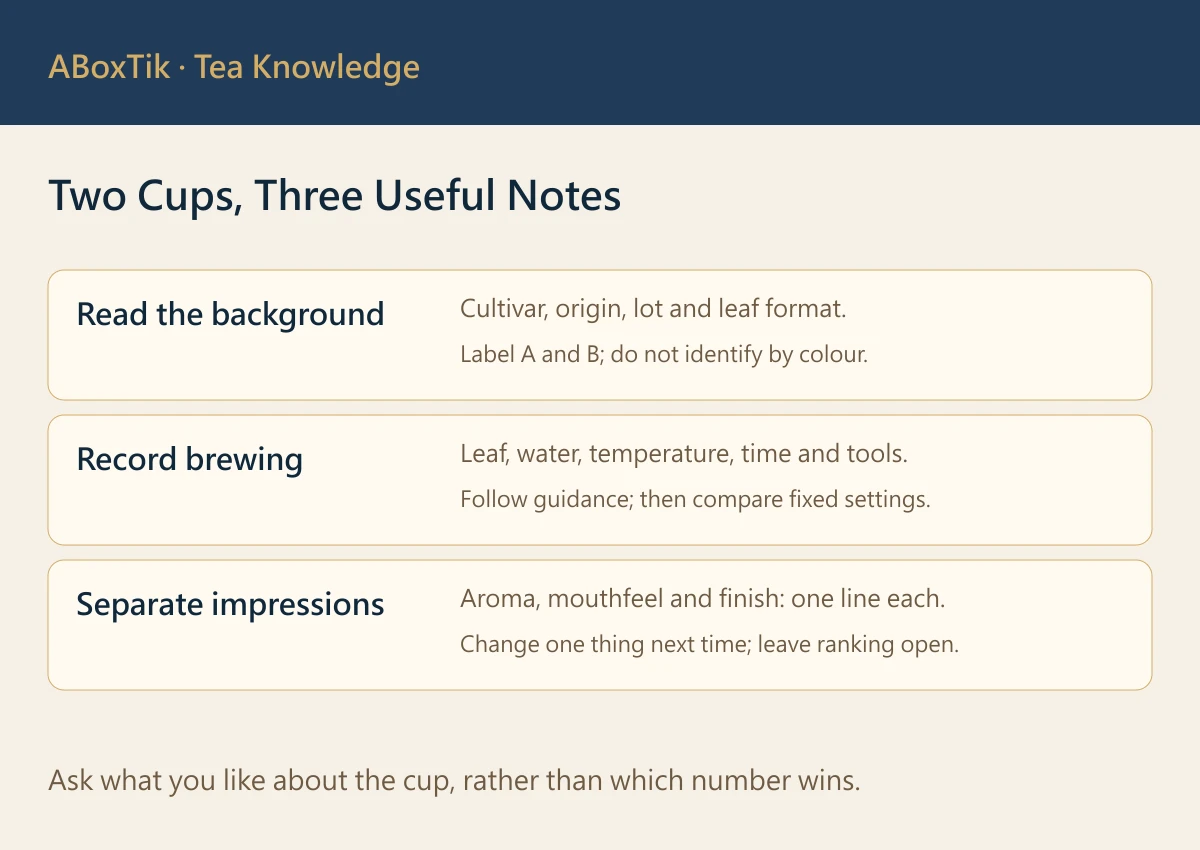
For the first round, brew each tea according to its pack or maker’s guidance. Note leaf amount, water, temperature, time and vessel. Different recommendations should remain different: this round lets each tea show its comfortable setting. For a second round, choose teas suitable for the same setting and hold the conditions steady. Our brewing guide and steeping-time guide are useful bench-side notes.
- Label the cups A and B: write tea name, batch and method beside each cup; colour is a poor identity card.
- Separate leaves when time is up: do not let one cup grow stronger while the conversation wanders.
- Compare after a slight cool-down: smell first, sip slowly, then take water and a short pause between cups.
- Change one thing next time: if a cup is too strong, shorten time first; do not change water, leaf and time all at once.
A small prompt: finish three sentences: “I first noticed …”; “on the palate it felt …”; “next time I would adjust …”. If a friend chooses the other cup, ask whether it was the aroma, concentration or finish that spoke to them. Neither cultivar needs a defence lawyer; liking both is an admirably complete result.
What should you check before buying Hongyun or Ruby Red?
First match the cultivar name and number. Then check actual origin, tea format, harvest or production batch, ingredients and storage guidance. Whole-leaf tea and broken-leaf tea bags should not be compared by one identical steeping time alone; our whole-leaf tea bag guide helps make format visible. The single-origin Taiwan tea guide separates place information from supply information.
A useful question is: “Is this batch TTES No. 21 or No. 18, and how are origin and batch identified?” Ask for a suggested brewing method too. If a field is not published, let the seller fill it in. Compare price with net weight, packaging and format; our premium tea price guide can help. Fame and a cultivar number are not a price list for every packet.
After opening, keep the date with the inner bag and follow the product’s instructions for a sealed, dark, dry and odour-free place. Our tea storage guide offers a practical routine. If two teas were opened far apart, make that part of the comparison background before crediting the difference to cultivar.
Which one should you try first?
If citrus-floral associations sound inviting, start with a clearly identified Hongyun. If mint- and cinnamon-like associations are the curiosity, start with Ruby Red. When preference is still undecided, choose smaller amounts with comparable formats and similar processing information. This only sets up a first round; it does not require a final judgment on a whole cultivar before the kettle boils.
If milk tea is your usual comfort, taste each tea plain first and note the original aroma, then reserve a small portion for milk. The favourite with milk and the favourite without it may be different cups. For the same comparison habit with oolong, our Yingxiang, Cuiyu and Jinxuan comparison is another gentle practice.
Hongyun and Ruby Red questions
Is Hongyun a newer version of Ruby Red?
No. TTES No. 21 and TTES No. 18 have different breeding histories. The numbers identify cultivars; they do not mark upgrades in one product line.
Does “Sun Moon Lake black tea” prove that a tea is Hongyun?
No. Place and cultivar are different pieces of information. Read the cultivar name, number and actual source; our Ruby Red guide has details for No. 18.
Is Hongyun always sweeter or less astringent?
That cannot be stated for every tea. Batch, storage, concentration and brewing change the experience. Compare under steady conditions, then adjust to taste.
If I cannot smell the official aroma note, did I buy the wrong tea?
Check the label and origin first, then review brewing. Sensory words are directions for observation, not substitutes for cultivar or origin checks.
Keep one useful thing from two cultivars
The practical value of meeting Hongyun and Ruby Red is knowing what to ask for and what to try next. Match name to number, keep origin and batch clear, then let two labelled cups teach your preference. A tea table can hold difference without appointing a champion.
Tea with ABoxTik
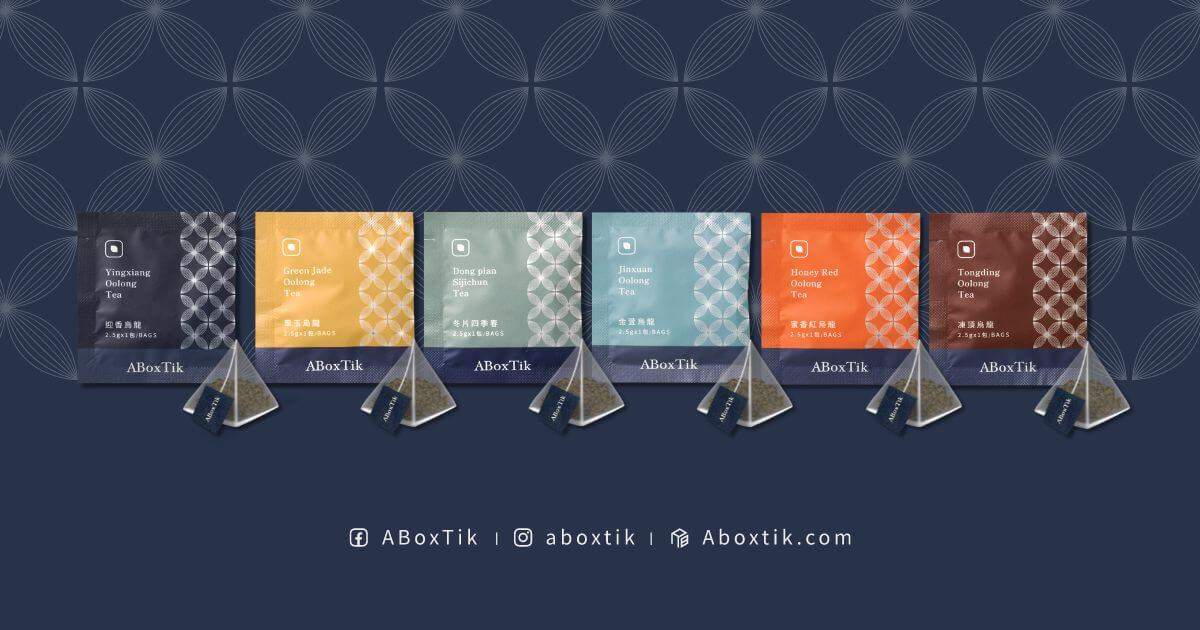
To keep practising with different Taiwanese teas, view the current teas and portions in the Classic Taiwanese Tea Set, then plan around the equipment at hand. You may also read about Taiwanese tea terroir and craft or ABoxTik’s selection story. The next cup may bring a little more clarity and rather less pressure.
Related recommendations
- Classic Taiwanese Tea Set: review the current tea selection, quantity and brewing occasions.