
Tea Knowledge
Winter-Picked Four Seasons vs High-Mountain Tea: How to Choose
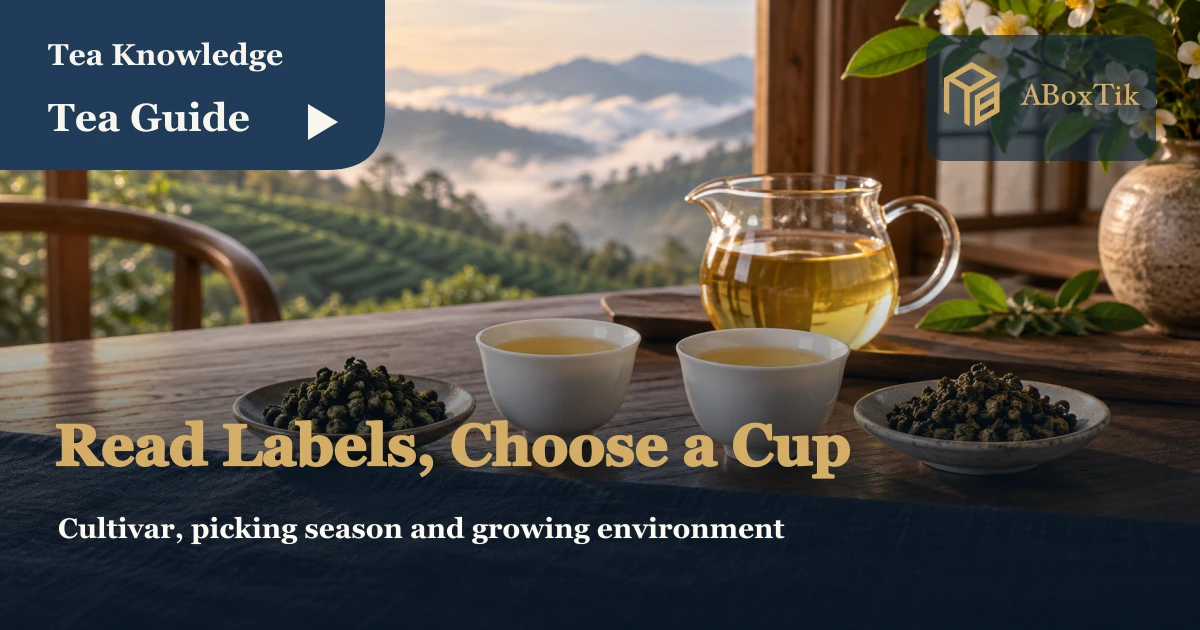
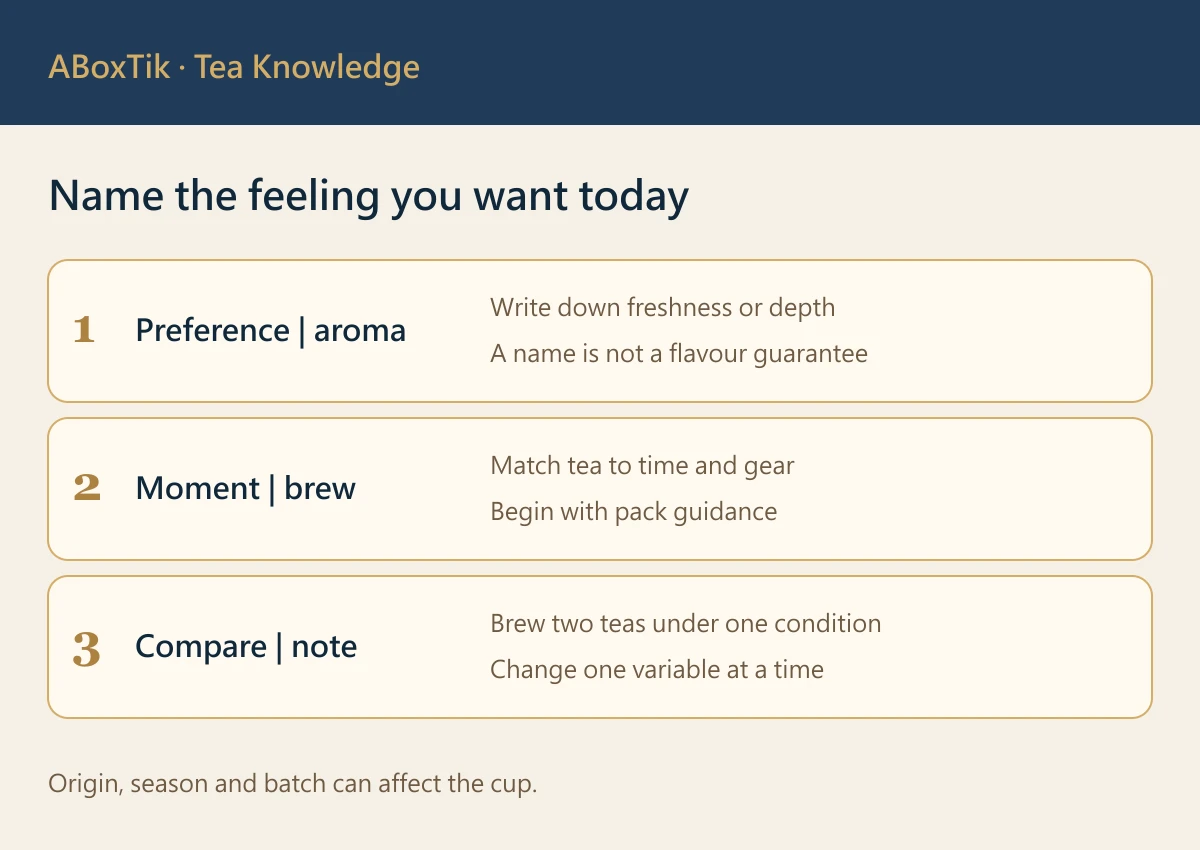
Set two teas on the table without giving altitude or season the best seat in advance. Read the names, prepare the cups, and leave the preference to the person drinking.
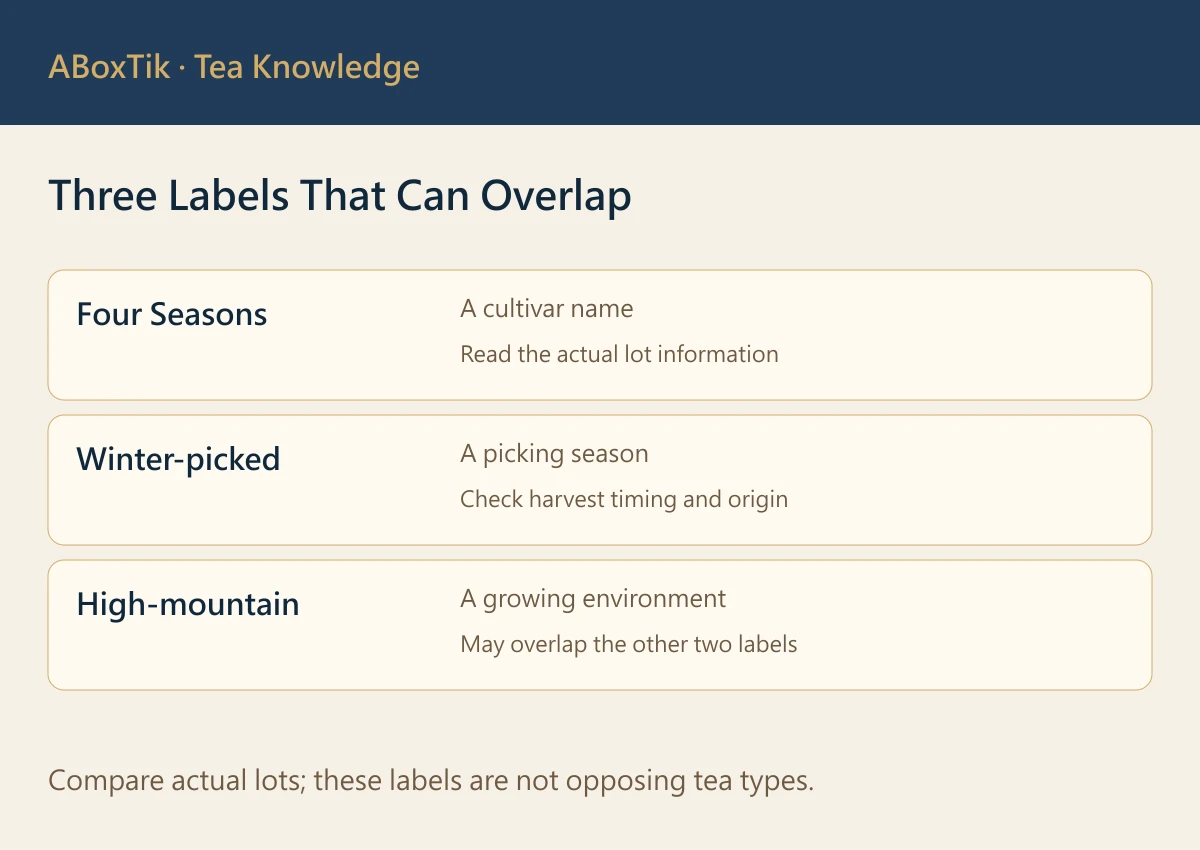
Winter-picked Four Seasons tea and high-mountain tea describe different things. Four Seasons is a cultivar, winter-picked refers to a picking season, and high-mountain describes the growing environment. The labels can overlap. They are not opposing tea categories or a ready-made ranking of quality and price. Compare the cultivar, harvest, origin, processing and actual quantity of the two products in front of you.
Words such as sweetness, cool character and mountain depth can make a simple choice feel surprisingly complicated. There is no need to earn a tasting certificate first. Begin with everyday descriptions of aroma, strength and texture. The high-mountain tea-quality guide covers the broader factors; this article focuses on reading the labels and making a useful comparison at home.
Winter-Picked Four Seasons tea: read three label axes
Four Seasons, or Sijichun, names the tea cultivar. Winter-picked describes a later crop that develops after the usual winter harvest under suitable conditions. High-mountain points to growing environment. Taiwan’s Agriculture and Food Agency describes winter-picked tea as common in middle- and lower-elevation areas, with small and variable production. The Tea and Beverage Research Station discusses high-mountain oolong in relation to its environment and processing. These descriptions answer different questions.
Write three fields from the packet: cultivar, picking season and growing area. Leave an unknown blank and ask the supplier rather than completing it from the tea name. Do not assume every high-mountain tea is Qingxin oolong or that every Four Seasons tea is winter-picked. Green Jade and its winter-picked batches offer another way to see how cultivar and season can appear together without replacing each other.
Use flavor descriptions as clues with a background
Floral, fresh, rounded and cool are useful ways to discuss a cup, but they are not equipment fitted to every packet carrying a particular name. Fresh-leaf condition, oxidation, roasting, storage and preparation can change the result. Read whether a product description is discussing that specific tea or a general style. Then ask whether the direction suits what you actually want to drink.
A floral preference does not automatically point to lower elevation, and a wish for body does not automatically point to a mountain. Ask whether the tea is fresh or roasted in style and whether its harvest and processing information are available. The fresh and roasted tea guide and oolong oxidation guide explain those separate choices. Let the name introduce the tea rather than write a complete tasting note before the kettle is on.
If the phrase cool character feels vague, ask for an observable description. Does it mean the aroma after cooling, a fresh impression at first sip, or the finish after swallowing? Record your own words beside it. A sensory phrase is a conversation aid rather than a test of origin, and the exercise does not require drinking cold tea.
Align quantities before comparing prices
Record loose-leaf net weight, tea weight per bag, bag count and recommended water volume separately. A larger presentation box does not necessarily provide more cups. The number of further infusions also depends on the actual tea and preparation; a very light final infusion may not be everyone’s idea of another satisfying cup. The tea price and value guide helps separate packaging, source information and service.
Make a seven-field comparison card: tea name, cultivar, harvest and origin, processing and roast, weight or bag count, intended preparation and actual cost. If the products serve different purposes, such as a single office mug and a slow weekend pot, first compare how well each fits that routine. There is no need to declare one universally better value. Attractive boxes can share the table; arithmetic still appreciates having its units written out.
Give the first tasting round comparable conditions
Choose two teas with reasonably clear information and similar processing directions. Use the same water, similar vessels and the same leaf-to-water ratio, temperature and steep time for a common first round. If the packets recommend different methods, make a separate second round following each product’s guidance and record it separately. A strong cup and a light cup cannot fairly explain the effect of altitude or season alone.
This is a home exercise for discovering preferences, rather than a study of an entire tea category. Leave prices aside for the first taste and write three observations: aroma, strength at first sip and what changes as the cup cools. The aroma guide, bitterness guide and astringency guide can help with vocabulary. With only one suitable pot, brew sequentially and record conditions; the worksheet does not require buying a second tea service.
Change one thing before choosing the next packet
For a cup that feels too strong or astringent, shorten the steep or reduce the leaf dose, changing one variable at a time. For a weak cup, increase time gradually. Consult the steeping-time guide alongside the product instructions and record the actual water volume and vessel. Changing water, pot, dose and time together makes it difficult to know which adjustment helped.
A score-free note can read: “I liked __. I would adjust __. Next time I will change only __.” If the less expensive tea suits you better, that does not mean you have failed to understand tea. If a particular mountain lot is worth more to you, try naming the reason: source information, craft, flavor or service. A clear personal reason is more useful than allowing elevation to answer on your behalf.
Keep the first purchase manageable
Start with an amount you can finish comfortably and packaging that fits your rate of drinking. Follow the tea-storage guide and the actual label, keeping dry tea sealed rather than leaving both packets open for a long comparison session. Note the opening date. If you return to the teas a week later, that small detail gives the observations a more useful background.
When a friend asks which is better, try: “With this method, I preferred this lot because __.” The answer is specific while leaving them room to feel differently. For further context, explore the Taiwan tea-region guide and Taiwanese tea introduction. Two cups can begin an enjoyable conversation without having to produce a champion for the whole island.
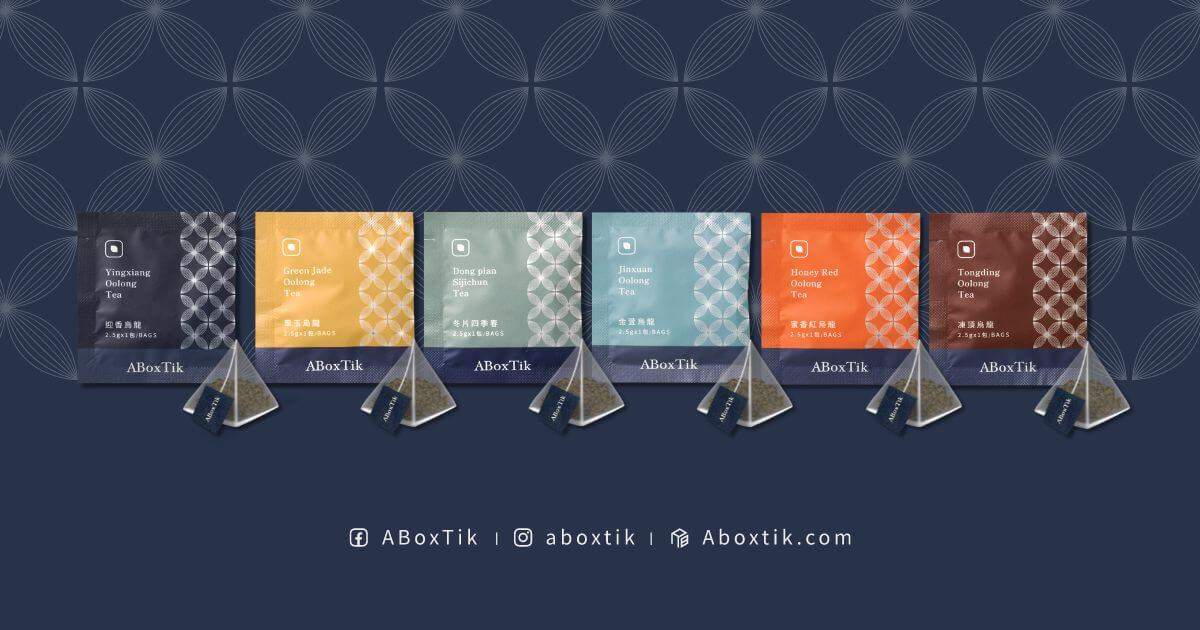
Follow ABoxTik | Read the label clearly and let the cup reveal your preference.
Choose an actual lot without ranking every tea
Begin with the current Dong Pian Sijichun product information if winter-picked Four Seasons interests you. To explore several oolong directions, see the Classic Taiwanese Tea four-box set. Use product names as an introduction, then return to origin, processing and the routine the tea will fit.
Next time two packets arrive, fill three columns before brewing two cups. Being able to describe what you enjoy is more useful than rushing to choose a single winner, and it makes the next purchase easier to discuss.
Related reading
- High-mountain tea quality: look beyond altitude.
- Green Jade and winter picking: separate cultivar and season.
- Dong Pian Sijichun: check the actual product information.
Sources
- Ministry of Agriculture: Taiwanese oolong cultivars
- Agriculture and Food Agency: understanding winter-picked tea
- Tea and Beverage Research Station: high-mountain oolong
Sources checked 15 October 2026.