
Tea Knowledge
Design a Mini Home Tea Bar: Tea, Tools and Storage
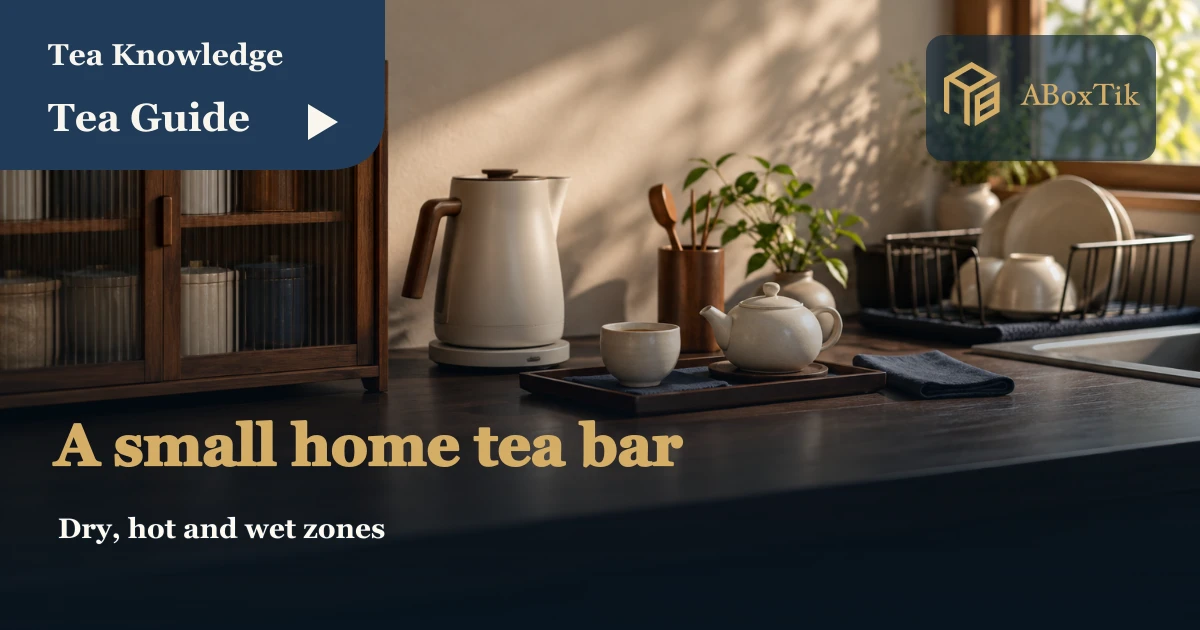
Give tea a place within reach, and give yourself a little room to pause. A small tea corner earns its place through everyday use, one comfortable cup at a time.
A home tea bar works best when its layout follows the actions: collect dry tea, handle hot water, put down wet tools, then clean and return them. Keep dry leaves away from steam and heat, follow appliance instructions and give used cups a clear landing place before buying more furniture.
If making one cup involves crossing the kitchen three times to find a spoon, the difficulty may be the layout. This guide helps sketch a practical corner with equipment you already own. Explore teapot materials separately; the Taiwanese tea introduction offers background when choosing the tea itself.
Start a home tea bar with actions, not a shopping list
Remember yesterday’s cup. Where did you collect the tea, add water, wait, pour and wash the cup? Circle the point where you walked back or reached across another task. One person needs a better place for leaves; another needs a small dish for a wet spoon. Describe the action before choosing the object that might solve it.
Sketch the existing counter, sink, outlets and shared passageways. Mark the places other people already use. Position hot-water appliances according to their manufacturers’ instructions, including their required surroundings and operating conditions. A paper layout is an organizing tool, not a replacement for appliance guidance or a recommendation for electrical installation.
Walk the route empty-handed first. Notice whether a cup would travel across a cord, a hand would reach over a spout, or a tray would obstruct the refrigerator. Move the tray before buying a cabinet. A tiny tea station can work beautifully; an unnecessary detour does not become more useful because it looks coordinated.
Give dry tea, hot-water work and wet tools separate places
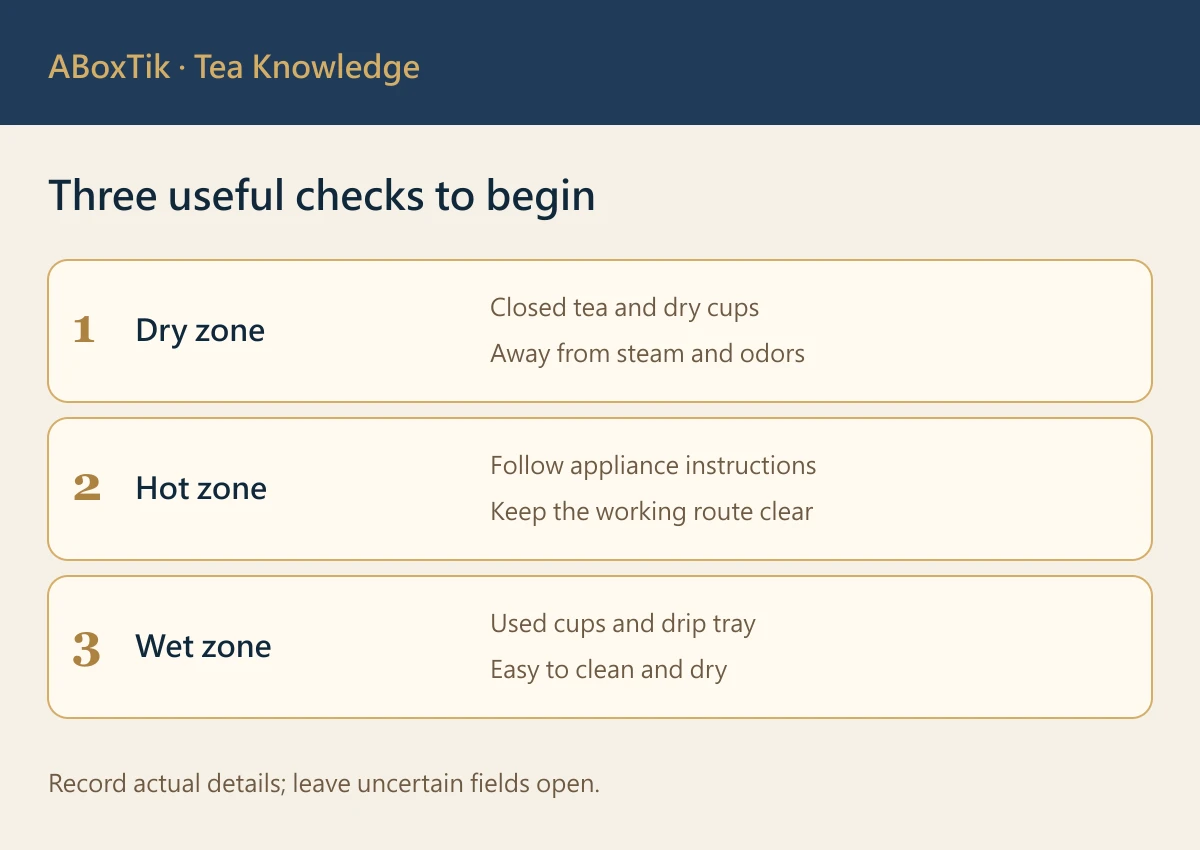
The dry zone holds unopened or properly closed tea, clean dry cups and a short tea list. Keep it away from steam and splashes. Taiwan’s Tea and Beverage Research Station notes that tea absorbs moisture and odors, while light, heat and oxygen affect quality. That supports thoughtful dry-leaf storage; it does not make a shelf suitable for wet leaves.
The hot zone holds only the equipment needed for the current task and a stable place for the cup. Follow the equipment instructions and consider how family members pass through the space. The wet zone receives used strainers, cups and drips. If one tray serves several purposes, close and put away the dry tea before handling wet tools.
| Zone | Typical contents | Question to check |
|---|---|---|
| Dry | Tea, dry cups, tea list | Separated from steam and odors? |
| Hot | Appliance used as instructed | Stable with a clear route? |
| Wet | Drip tray, used cups, strainer | Easy to carry to cleaning? |
Record opening information and storage directions where they are easy to find. The tea-storage guide explains that separate question. Do not open every packet just to fill matching glass jars: an attractive label does not perform the protective work of suitable packaging.
Choose two tea roles and match tools to the people
Begin with one familiar everyday tea and one rotating choice. The familiar option reduces decisions on busy days; the second leaves room for discovery. These are suggested roles, not a required inventory. The light and roasted style comparison can help identify a useful contrast without turning the shelf into a full catalogue.
A filter cup or tea bag may be enough for one person. Giving the corner a name does not obligate it to become a six-person tea ceremony. For shared tea, check the capacity of your current equipment before adding a serving pitcher. The gaiwan and teapot comparison is useful when a specific handling question remains.
Sort equipment into daily, occasional and spare. Daily tools deserve the easiest position; occasional items can live in a clearly identified box. Spare cups need not occupy the front row. Pyramid tea bags can form a complete daily routine. The number of objects on display is not a measure of how thoughtfully you drink tea.
Try an empty-cup rehearsal before changing the layout
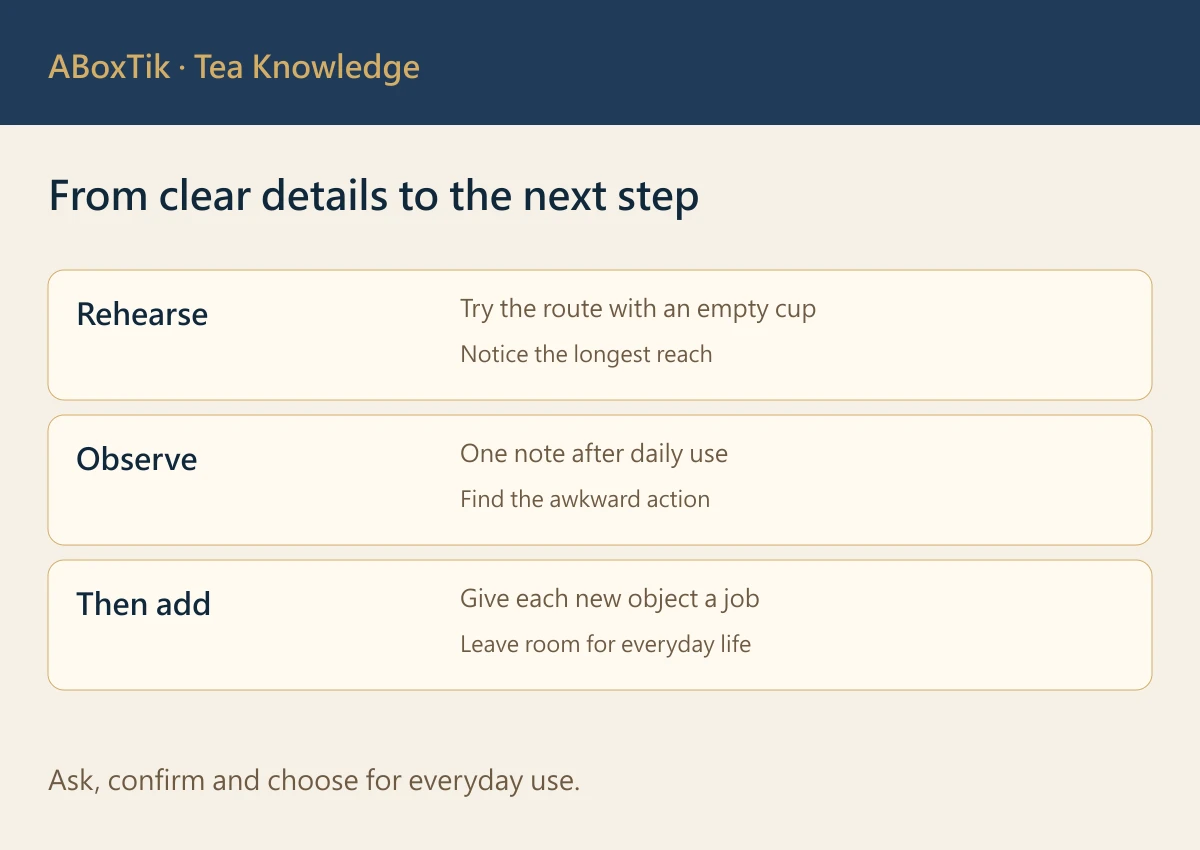
Without hot water, move an empty cup through collecting tea, placing the cup, reaching for tools and returning them. This reveals awkward positions and hand movements; it is not a certification that the arrangement is safe for hot use. Actual operation still follows the relevant equipment instructions. Invite regular users to try rather than assuming everyone reaches in the same way.
Write three observations: the longest reach, the object most easily bumped and the item with no obvious home afterward. Move one item and repeat. If easier access to tea creates a longer trip for wet cups, reconsider the wet zone. Symmetry should not make an ordinary kitchen work like a showroom with visiting hours.
For visitors, add a tray that collects used cups rather than rebuilding the whole station. Keep a short card with the capacity and preparation you normally use, referring to basic brewing guidance and the tea’s own directions. The point is to leave more attention for conversation, not to host a treasure hunt for clean cups.
Design the cleanup so tomorrow’s cup remains inviting
Deal with spent leaves and collected water after use. Clean each tool according to its own instructions and let it dry appropriately before storage. A wooden tray, a strainer and a clay pot need not share identical care. The clay-pot care guide addresses a particular tool rather than every possible material.
A short reset card can say: close the tea, clean the cup, dry the strainer and clear the work surface. It is a reminder, not a substitute for looking. If clearing the station means moving five decorative objects every time, remove two and see whether the next day feels easier. Convenience can be a considered design choice.
Separate unopened stock from open tea rather than opening packets to fill empty spaces. Before adding a new choice, read the current Jinxuan oolong product information and the cultivar introduction for context. An empty shelf position does not mean a lonely box of tea must immediately be recruited to fill it.
Use an observation week to decide what to add
This is a suggested observation period, not a test we have conducted. Each day, leave one sentence about what worked smoothly and what still caused a detour. If most days require one cup, another display shelf may solve little. If family members cannot identify their preferred tea, a clear label might help more than another brewing tool.
Try a card with four fields: everyday tea, rotating choice, supplies to replace and purchases to postpone. The last field protects the counter space and free time you wanted in the first place. When choosing a tea gift box, also consider where its contents will live once opened, rather than judging the complete presentation alone.
Ask another regular user to name one improvement. Someone may value reachable tea bags; someone else may simply appreciate fewer drips to wipe away. Those small answers guide the next change. A home tea bar does not need a final graduation photograph. It can keep adapting as the household’s actual routines become clearer.

Follow ABoxTik | Make room for the next cup in everyday life.
A place for tea can also become a place to pause
ABoxTik hopes tea can fit the life already around it. Check the current choices in the classic Taiwanese tea four-box selection, or consider the two-box tea-bag gift for rotation. Begin with what you will actually drink and can store sensibly.
Choose one small change today: a landing place for the wet spoon, or a more reachable spot for everyday tea. If the next cup involves one fewer detour, the little tea corner is already doing useful work. Add the next object only when the routine gives it a clear job.
Related reading
- Tea storage helps organize the dry zone.
- Gaiwan or teapot connects tools with handling.
- Teapot materials supports a specific buying decision.
Sources
Sources checked 16 October 2026.