
Tea Knowledge
Weak Yet Astringent Tea: What to Adjust Before Adding Leaf
Give each sensation its own note, and the next cup becomes easier to understand.
If tea tastes weak yet astringent, resist adding more leaf immediately. Aroma, body, bitterness and a drying sensation are separate observations. Check the actual water volume, contact time and draining method, then brew a fresh portion from the same batch while changing one thing. More leaf may strengthen the part already causing discomfort without restoring the aroma you hoped for.
A pale cup that somehow leaves the mouth feeling like a miniature dehumidifier is puzzling. The useful question is not whether the tea has failed a test. It is where the weakness appears, when the drying arrives, and which small adjustment can answer the next question.
Weak yet astringent tea: name the two signals
Weak can mean faint aroma above the cup, little body on the tongue, or simply a lighter color than expected. Those are different problems. Some lightly processed oolongs naturally make pale liquor; color alone cannot measure strength. Astringency refers to a drying or tightening mouthfeel. Bitterness is a taste and needs its own note. Combining all of these under “not strong enough” sends every problem toward the same jar of extra leaf.
| Question | A useful note | First check |
|---|---|---|
| Is aroma faint? | Little aroma, but some flavor remains | Water, vessel odors and storage |
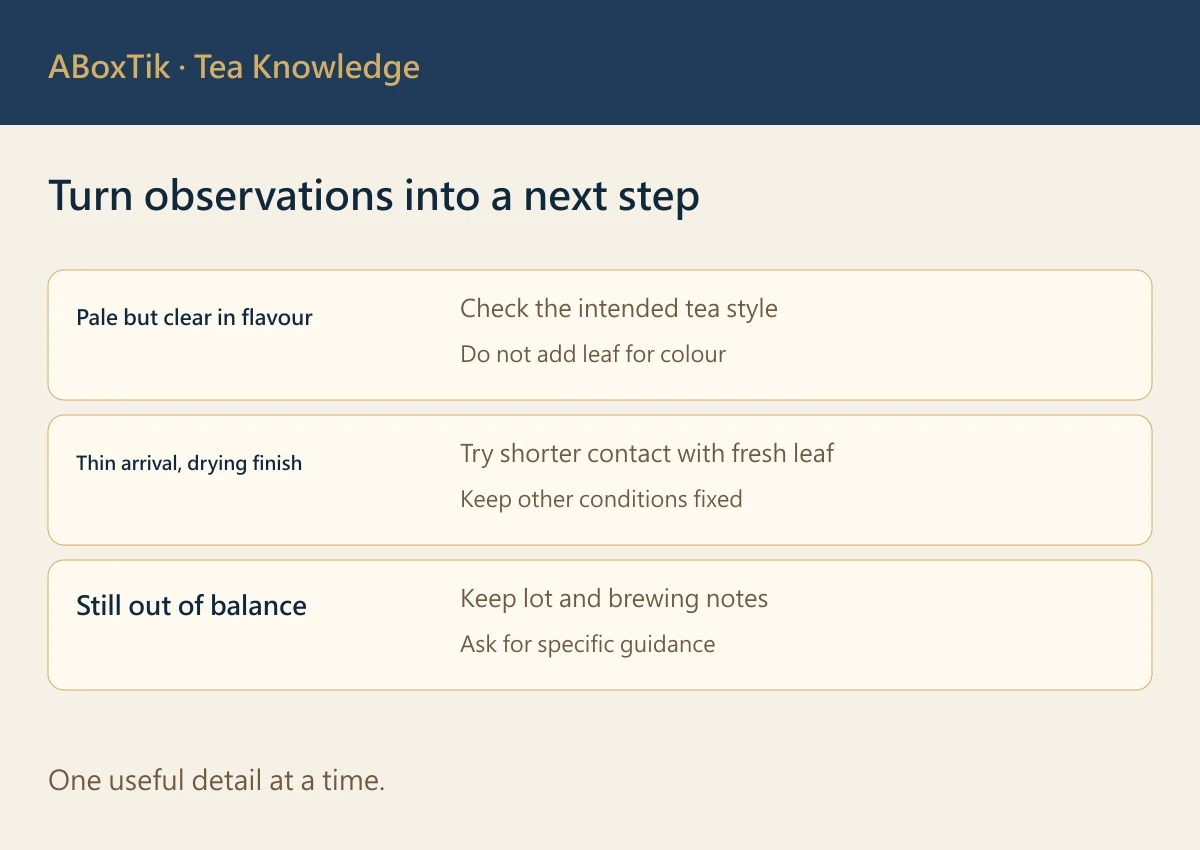
| Is body light? | Thin arrival, drying finish | Water volume, ratio and time |
| Is only the color light? | Pale gold, clear flavor | The tea’s intended style |
| When does drying appear? | At arrival or after swallowing | Intensity and persistence |
The guide to bitterness and astringency explains the basic distinction. Here we are investigating their awkward combination with apparent weakness, using a household comparison rather than a quality verdict.
Why more leaf may strengthen the wrong part
Leaf material, shape, water, temperature, ratio and contact time all contribute to the cup. The Tea and Beverage Research Station discusses how water conditions and brewing temperature influence extraction and sensory results. That supports checking several variables; it does not establish one temperature that suits every tea. Leaf quantity is one control among several.
If a cup already dries the mouth noticeably, adding leaf can increase an unwelcome feature along with strength. Nor does extra tea remove detergent odor from a cup or restore aroma lost through poor storage. Give aroma observation and tea storage their own checks. A quieter diagnosis is often kinder to the remaining packet.
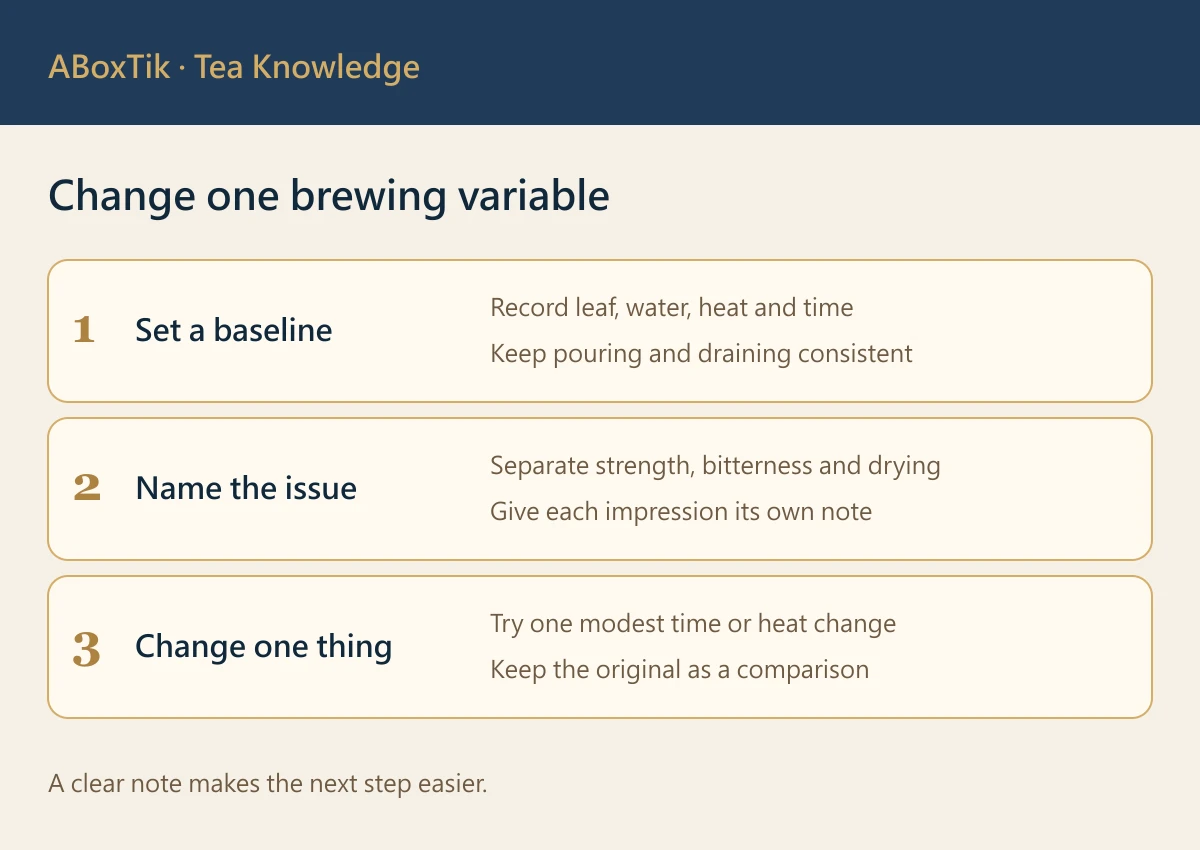
Make a baseline you can repeat
Use fresh dry leaf from the same batch and begin with the package instructions. Record leaf weight, actual water volume, water source, temperature at pouring, contact time and vessel. If you estimate water from the pot’s advertised capacity, measure the level you normally fill instead. A rim-full capacity and today’s working fill are not automatically equal.
For a tea bag, record the water in the mug and remove the bag at the chosen time. For loose tea, separate liquor from leaf. Tea left sitting with its leaves continues having contact while the conversation moves on; the timer does not cancel that contact. The steeping-time guide helps standardize timing, while teapot brewing steps cover the practical pour.
Smell the clean empty vessel and the plain brewing water first. If the cup has an odor before any tea arrives, change the vessel. There is no need to let the leaves provide an unexpected guest performance for washing-up liquid.
Check time, then temperature, then ratio
- Time first: if drying dominates the baseline, use an equal fresh portion and shorten contact modestly. Keep other conditions unchanged. Do not compare the first and second infusion as if time were their only difference; previously brewed leaves are already altered.
- Temperature next: if the balance still feels wrong, start another fresh comparison and adjust temperature within the tea’s guidance. Changing temperature and extending time together makes interpretation difficult.
- Ratio last: when the cup is genuinely thin but otherwise comfortable, try a small increase in leaf or decrease in water. Choose one of those changes, not both.
Let each cup reach a comfortable drinking temperature and note aroma, body, bitterness, drying and finish separately. For background, explore oolong brewing temperatures and how rolled leaves unfold. A tighter rolled leaf and a broken leaf should not be treated as identical material simply because both weigh the same.
A troubleshooting sheet with a reason for each round
| Round | Keep fixed | Change | Ask afterward |
|---|---|---|---|
| A: baseline | Package method, fully recorded | Nothing | Which sensation needs attention? |
| B: time | Fresh leaf, water, weight, vessel | Contact time | Less drying with aroma retained? |
| C: heat | Fresh leaf, ratio and time | Pouring temperature | Is the balance more comfortable? |
| D: ratio | A comfortable time and heat | Leaf or water, separately | Does added body remain pleasant? |
There is no need to finish four rounds in one afternoon. A baseline and one shorter brew already provide a useful result: “less drying, still faint aroma” is more informative than a low score. When sharing, write separate notes before discussing them, so the first speaker does not accidentally become the official voice of everyone’s palate.
Consider a hypothetical cup whose color is light but whose flavor is clear. It may need no increase at all. Another cup may have faint aroma and persistent drying even after shorter contact. That result directs attention toward water, storage and seller guidance rather than an automatic second spoonful. Use the examples to decide which condition your next comparison should examine.
What to ask the seller if the combination persists
Keep the tea name, batch information, packaging and opening dates, plus the two fresh-brew records. A useful message is: “At the package method, aroma seems faint and the finish dries my mouth. A fresh portion with shorter contact reduced drying, but body still feels light. Could you suggest a water volume or describe this batch’s intended style?” That gives the seller conditions they can actually respond to.
If there is an odor that makes drinking unpleasant, or a concerning visible change, stop the tasting and retain the packaging while asking the seller how to proceed. More swallowing is not a requirement for a complete note. Astringency alone also cannot identify a manufacturing fault. Read about withering and oolong oxidation for context, while keeping the immediate decision practical.
Follow ABoxTik: save extra leaf for when it helps
Weak yet astringent tea is a reason to describe the cup more carefully, not to question whether you are qualified to enjoy it. Establish the end of contact, then examine heat and ratio. If a different style sounds more inviting, compare fresh and roasted tea directions in small portions. The aim is a clearer next cup, with room to enjoy what fits everyday life.

Related reading and tea choices
- Classic Taiwan tea selection: check current contents
- Separate bitterness from astringency
- Taiwanese tea, place and craft
Sources
- Tea and Beverage Research Station: water quality and brewing temperature
- Tea and Beverage Research Station: tea astringency
Sources checked: 24 October 2026.